
The BYD Vertical Integration Premium: Why the EV King is Still Rated a Wall Street “Strong Buy”
BYD’s expansive Pingshan complex in Shenzhen is one of those factory tours that leave a lasting impression. One...
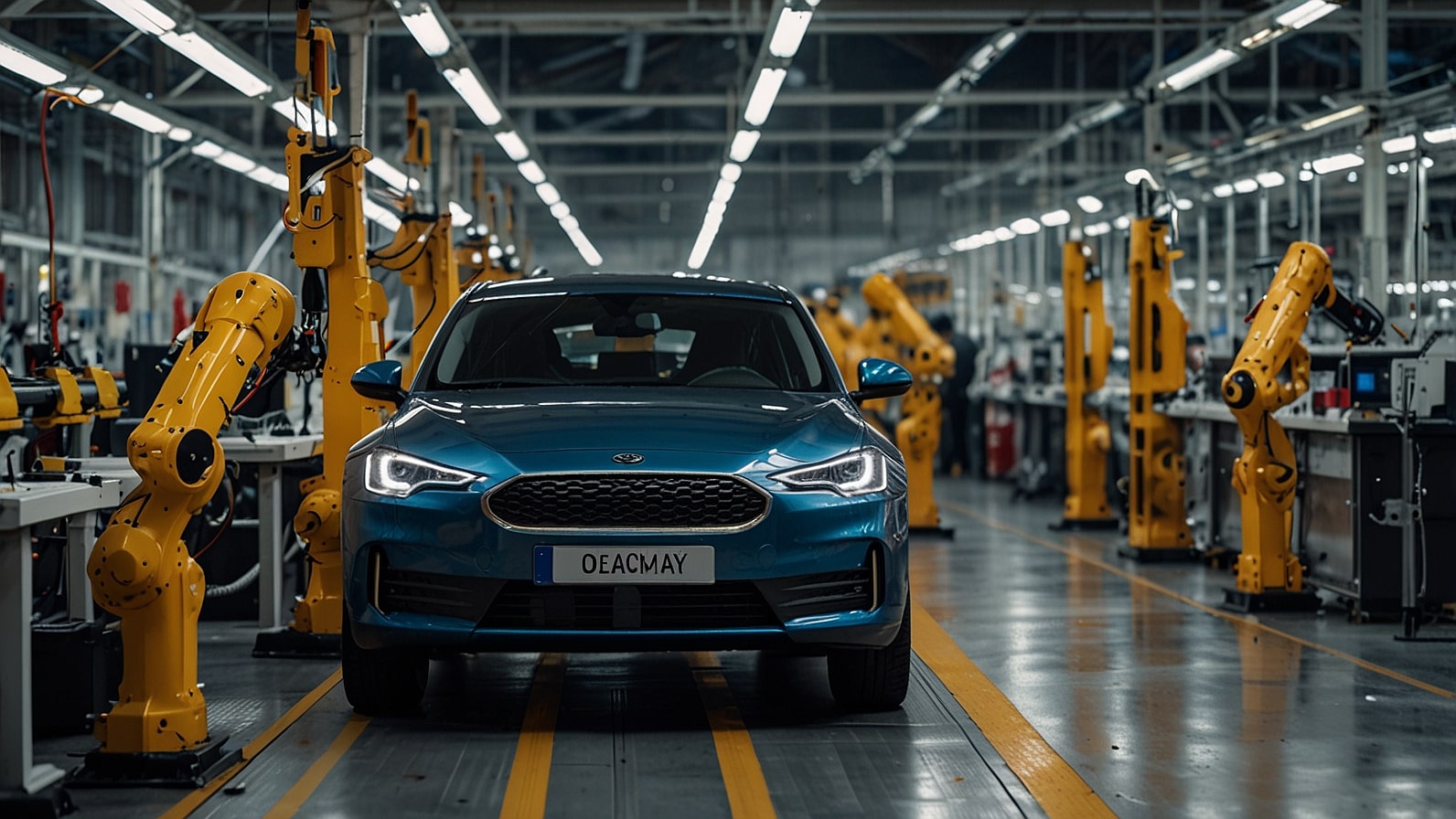
Assuming you are as connected to the car scene in the UK as I am, you are likely to have heard the most recent production figures, and they are not something that anyone can rejoice about. The Society of Motor Manufacturers and Traders (SMMT) reported that in July 2025, vehicle production in the UK had decreased by 10.8% compared to the same month the previous year, with a total of 72,006 vehicles produced.
It is an extension of a rough year, yet there is more than that. The production of cars is, in fact, beginning to breathe life, whereas the commercial vehicles are being beaten up. It is time to unravel the numbers, to find out why this is occurring, and to have a glimpse at the future.
To start with, we need to bring into perspective the figures. The total amount of vehicles produced in July declined by 10.8, with cars increasing by 5.6 per cent with 69,127 vehicles being manufactured. It is the second month of passenger car growth, which is a tiny but positive sign. In the meantime, commercial vehicles as well as vans and trucks fell to an 81.1-per cent fall, at only 2,879 units. The leading cause of the general decline is the steep decline.
When zoomed out to the first seven months of 2025, production has decreased by 11.7 per cent to 489,238 vehicles. The UK manufacturing is mainly based on exports, which suffered a blow of 9.9% in July, and 79.4% of the vehicles were exported compared to 80.9% last year.
The largest market has been the EU, absorbing 45.6% of the exports, and exports declined by 7.9%. The US, however, had the 6.8 per cent increase, where the US took 18.1 per cent of exports, and Turkey climbed by 35.4 per cent. In the domestic market, the UK output declined by 14%.
Taking the entire year, SMMT projects a 15% contraction of the year 2025 with output projected at approximately 755,000 units. The decline had already reduced to 417,232 units by 11.9 per cent in the first half of the year. One bright spot? Over 41% of cars, or hybrids, plug-in hybrids, and full EVs, constituted a record of 160,107 vehicles in the first half, or 1.8% up.
What is triggering this downturn, then? It is not a single problem- a mixture of factors that have been hitting the industry hard. The enormous decline in commercial vehicle production is due to a retooling of the factories and a stringent comparison with July last year, which was a stellar month in the production of commercial vehicles. When vegetation changes to new systems, it may hold everything up a notch.
At a larger level, world trade has been shaken, and economic unpredictability is complicating life among the manufacturers. As trade protectionism is on the rise and supply chains become increasingly intertwined, it becomes more challenging to ensure exports run smoothly. A new US-UK trade deal has alleviated some of the pressure by cutting taxes on British cars, but in other areas, tariffs and trade tensions continue to drag.
Another large puzzle is the conversion to electric cars. The UK is now moving aggressively towards EVs, but it does not come easily. The expense of high energy is consuming profits, and local suppliers of EV parts do not exist, forcing reliance on imports, which may be both expensive and time-consuming.
There have also been some downtimes due to the retooling of factories towards new EV models, especially at the beginning of this year. To this, there is a slow market- both in the UK and the world at large, where people are tightening their belts and purchasing fewer new cars.
Given that I have been tracking the auto industry for some period, it seems like 2025 will be a reset year. Firms are also spending a lot on new technologies, which, though they require time to yield results, are being complicated by snarls in the supply chain.
This decline does not concern only the figures but also real people and the economy. Thousands of jobs in the UK are supported by the auto industry, including factory employees, logistics teams, and others.
A 15 per cent drop in the year might imply reduced shifts or a reduced rate of hiring, but we are not yet witnessing massive lay-offs. The fact that there is an increase in the manufacture of electrified vehicles is a positive development, as it indicates that some sectors of the industry are changing with the times.
To people like us who want to purchase a car, the difference may be minor – expect to wait longer to get my desired model of a car or pay more for the more expensive ones. The July car registration declined by 5 per cent to 140,154 vehicles, and thus, dealers continue to clear their inventory.
The silver lining is that it may be, in fact, a bad day. The SMMT forecasts 2025 as the year of transition, and this time the production is likely to grow 6.4% in 2026 to above 800,000 units, compared to the estimated 2.7% of the EU. Electrification and local supply chains are beginning to establish themselves with government programs such as the DRIVE35 program.
Nevertheless, it is not going to sail smoothly. Future policy changes, such as changes to the zero emission vehicle requirement or energy subsidies in the Autumn Budget, will be made or bought in the industry. The chief of the SMMT, Mike Hawes, concluded it rather aptly: it is a difficult period, yet with the necessary assistance, the industry will provide employment and more environmentally-friendly transportation.
The UK auto sector has already endured hard times, Brexit, chip crises, you name it, and triumphed. This 10.8 per cent decline is a portion of a larger move, but as the production of cars is climbing and a recovery is on the horizon, there is cause for optimism. I will be monitoring the following set of statistics. You think so–do you think the EV boom will reverse the situation, or should we do more substantial trade fixes? Let me know in the comments.
BYD’s expansive Pingshan complex in Shenzhen is one of those factory tours that leave a lasting impression. One...

A Chinese car is still not available for purchase at an American dealership. Through two administrations, multiple rounds...

You’ll notice something that wasn’t there five years ago if you stroll through a BYD showroom in Bangkok...