
The BYD Vertical Integration Premium: Why the EV King is Still Rated a Wall Street “Strong Buy”
BYD’s expansive Pingshan complex in Shenzhen is one of those factory tours that leave a lasting impression. One...
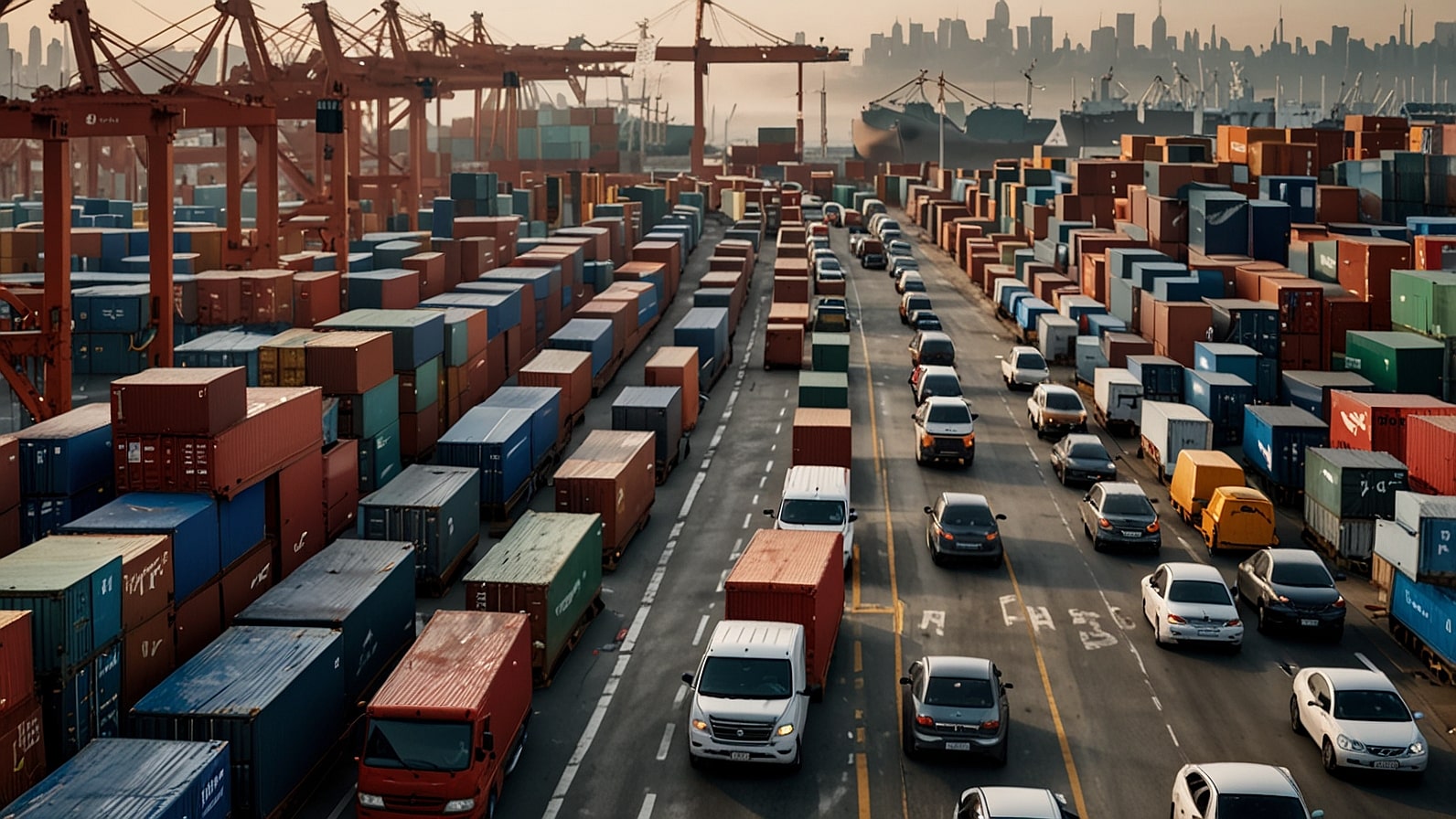
Unless you have been living in a cave lately, you have likely heard about the brewing trade tensions and new tariffs being introduced by the U.S. The auto industry is the world’s monster, and it takes centre stage. The administration of President Trump released plans to impose 25 per cent tariffs on imported vehicles and parts in Canada and Mexico, beginning April 2, 2025.
A 10 per cent increase on Chinese goods has already been implemented. These actions have the potential to cause waves across showrooms, chains and your wallet. Based on recent developments, let us examine what is happening, its potential impact on the car market, and what it will mean to you as a buyer or enthusiast.
The first thing to do is to bring these tariffs to grips with. By the beginning of 2025, the U.S has imposed a 25% tariff on Canadian and Mexican vehicles and auto parts that make up the North American supply chain.
China is experiencing a new tariff on top of existing tariffs, amounting to 10% and this has introduced some duties up to 145% on some commodities. These are not insignificant figures but meant to increase the cost of imported car units and part,s forcing the firms to reconsider where they are to construct and source.
The United States-Mexico-Canada Agreement (USMCA) provides a partial exemption: cars containing at least 75 per cent of North American-made parts will escape the entire tariff, but anything under that will receive the 25 per cent tariff on the non-compliant part.
Tariffs on auto parts are scheduled to increase to May 3, 2025, regarding more parts, and raw materials such as steel and aluminium already face 25 per cent or less tariffs. Canada and China have retaliated with their own tariff – Canada equal to the U.S. 25 per cent and China levying a 15 per cent tariff on U.S. farm products – this is now a trade war.
Who wins and who loses then? Industry analysts believe that it depends on the location of building cars and the origin of parts by the companies. Domestic companies such as Ford, GM and Stellantis may be at an advantage as they assemble a portion of their cars within the U.S. However, even though they are not safe, many are having to source components in Mexico or Canada, and these prices may increase.
Cox Automotive approximates that if tariffs are enacted, the price of U.S.-assembled vehicles would increase by more than $1,000 and up to $5,700 for fully imported ones. That’s a big jump for buyers.
Offshore plants are more challenging for foreign brands, such as Toyota, BMW, and Hyundai. The current tariff would add 25 per cent to a $40,000 imported SUV and increase the price to 10,000. This may also increase the car sales that deal with used cars, but then, new car prices may drive customers into the used car market.
According to the Centre for Automotive Research, the industry is expected to experience a blow of up to $ 107.7 billion, and the Big Three in Detroit will incur additional costs of up to $ 41.9 billion. This may result in a smaller number of options on lots, and 6.8 million vehicles would be affected.
Conversely, firms that have a significant domestic manufacturing presence in the United States, such as Tesla or the EV activities of GM, might get an edge should they maintain their costs low. None of them is fully insulated, though, as the supply chain is so good that even American-made cars can contain foreign components.
Let’s talk about you, the buyer. With higher prices of the vehicles due to tariffs, the average price of a new car (48,000) may easily reach 50,000 or even higher. The Anderson Economic Group adds price increases of between 3,500 and 10,000 dollars on the basis of the origin of parts in a car.
That is a lot considering that the current rates of loans are at about 7 and 11 per cent on new and used vehicles, respectively. Instead of paying, say, $970 a month in monthly payments on a typical new car loan, it could increase to more than $1,100 a month in a typical new car loan, and that is without insurance or gas.
Dealers are pin-strained also. A Nissan dealer manager in Los Angeles confessed to CBS News that they are not sure how they can advise their customers about the price in case of the tariffs. There are buyers who may run out to purchase before April, yet others may wait in hope of a solution. In any case, insecurity is worrying us all.
The used cars would provide a solution to some extent since the demand would be high in case the new cars become too expensive. However, you should not count on a bargain bonanza; the prices of used vehicles are already increasing by 6 per cent per year, and tariffs on parts may push them higher.
EVs may suffer a blow, particularly when it comes to Chinese involvement in battery materials. Electronics and rare earth minerals attract high taxes, and it may hold the EV boom back at a time when it is gaining momentum.
The supply chain of the auto industry is a worldwide jigsaw, and tariffs are clearing bits off the table. Parts manufacturers are scrambling to reroute parts or to change production; however, that is time and money.
According to S&P Global, the North American production may reduce to 20,000 units per day, unless tensions are reduced. This is a major one in a country that is a major importer of auto parts, cars, engines produced in Mexico, or transmissions made in Canada.
There are companies that are already changing. Toyota and others are looking at production in the U.S. more, but construction of new plants is not a fast solution. The cost of shipping has also increased, with the volumes of ports in the US declining by 40 per cent as importers stall or resort to alternative shipment routes. This may translate into a tightening of inventory by mid-2025, particularly among brands that depend on imports in huge amounts.
There are a few ways out of this mess, in case you are in the market:
The situation on tariffs is dynamic. In the case of Canada and Mexico, tariffs are set to be lifted in 2025, after a surprising May 2025 agreement with China made some of the tension less tense.
In the event of a deadlock in the negotiations, there are additional retaliatory actions, which will make the market more complicated. On the positive side, the industry has demonstrated its resilience in the past, prior to the COVID recovery, and consumer demand is strong.
Meanwhile, be knowledgeable and tactical. And no matter what model you are looking at, it might be a rocky road to 2025 in the auto world with these tariffs. Have ideas of how that would influence your next car purchase? Drop them in the comments. Safe driving!
BYD’s expansive Pingshan complex in Shenzhen is one of those factory tours that leave a lasting impression. One...

A Chinese car is still not available for purchase at an American dealership. Through two administrations, multiple rounds...

You’ll notice something that wasn’t there five years ago if you stroll through a BYD showroom in Bangkok...