

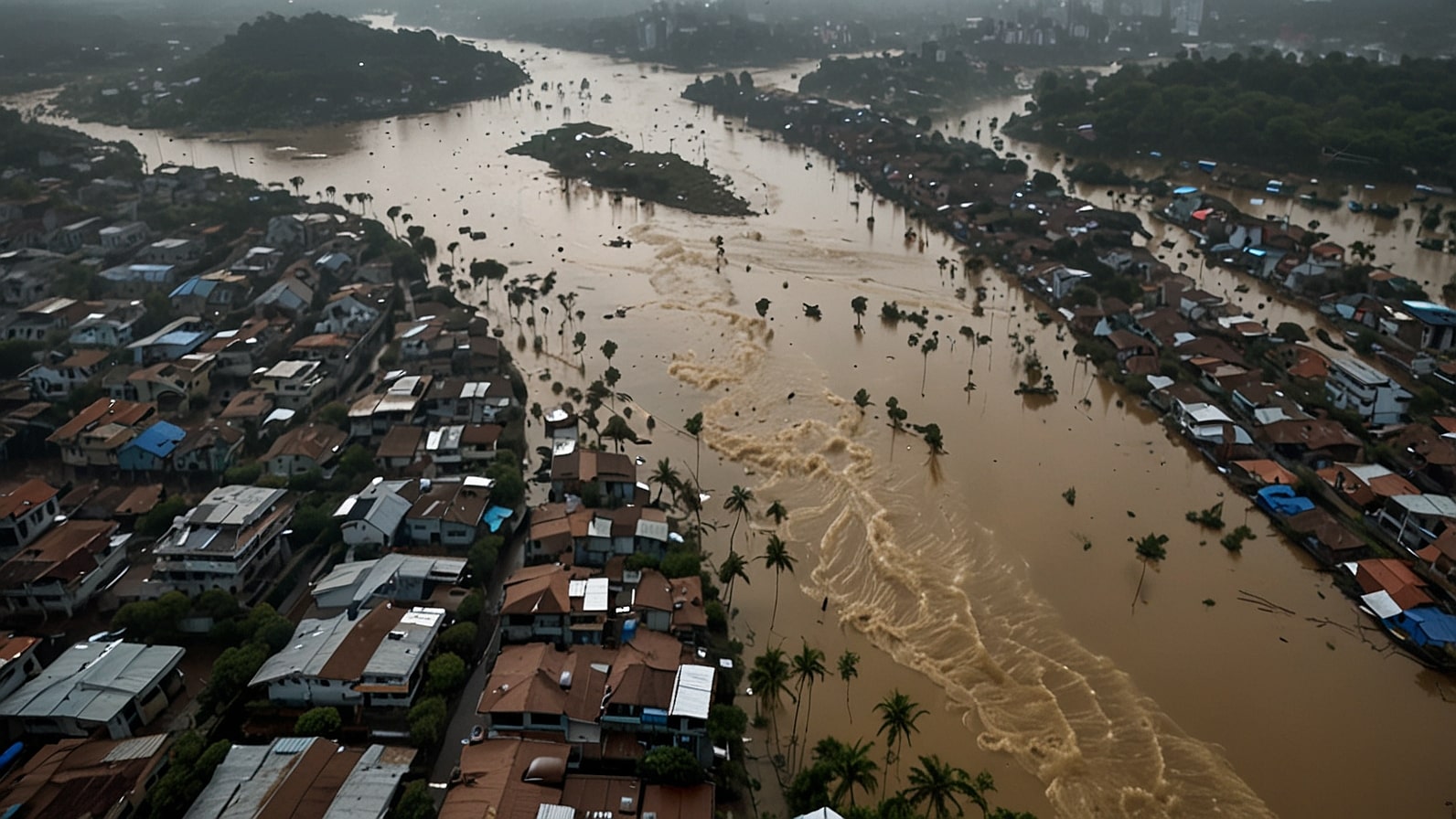
Super Typhoon Yagi struck a devastating blow to Southeast Asia by destroying many and causing at least 850 fatalities in several nations, and Vietnam was the most affected country. One of the most severe storms to strike the area in 75 years, it caused catastrophic floods and landslides that destroyed homes, infrastructure and livelihoods.
The disaster has caused the world to panic at the mounting effects of climate change, with rescue missions ongoing in apocalyptic scenes, making headlines and attracting emergency international efforts to assist.
The Onslaught of Yagi: A Region in Chaos
On September 7, 2025, Super Typhoon Yagi struck near Haiphong, Vietnam, with a maximum wind speed of 230 km/h, becoming a Category 4 storm. The intensity of the typhoon caused heavy rainfall of up to 500 mm in 24 hours in some places, leading to massive flooding and landslides.
Cities on the coast, such as Hai Phong and Quang Ninh, were inundated, while inland areas, including Hanoi, experienced unprecedented flooding. Some villages have been wiped out, roads have collapsed, and communications systems have broken down, leaving thousands of people stranded.
More than 600 lives have been lost in Vietnam alone, with hundreds of other reported fatalities in the Philippines, Hainan Island in China and Thailand. State media in Vietnam showed devastating images of families confined inside their homes as the floods soared high.
In mountainous regions, landslides covered whole communities, making rescue efforts more difficult. Emergency services assisted by military units have rescued more than 10,000 people, but many are still missing, and the numbers may increase. Hospitals are overwhelmed, and temporary shelters are not coping with displaced survivors.
Early observations suggest that the storm’s rapid growth was driven by abnormally warm sea surface temperatures, a classic feature of climate change. The Vietnam Meteorological and Hydrological Administration wrote that Yagi was the most powerful cyclone to strike Vietnam since the country’s meteorological records began, even more destructive than the extremely destructive Typhoon Xangsane of 2006. The sheer magnitude of the disaster has pushed local authorities into a frenzy, and now international aid agencies are churning into action to help.
The Human Toll: Stories of Loss and Resilience
Victims of Yagi cut across the entire country’s workforce, including farmers in rural provinces and city dwellers in Hanoi. In Quang Ninh, dozens of people lost their lives as monstrous waves capsized their boats in a fishing community.
One heart-wrenching account came out of Thai Nguyen, in which a schoolteacher, Nguyen Thi Lan, perished trying to protect her students as a roof fell down on them. Tran Van Minh, a Hanoi shopkeeper who survived, said he had to wade through water as deep as his chest to save his very old parents, only to discover their home had been torn down to the ground.
The financial cost is truly immense, as the region has suffered damages amounting to $14 billion, of which only a small part, $1.6 billion, is insured. The agricultural sector in Vietnam, which forms the backbone of its economy, has been severely impacted, as rice fields and fisheries are destroyed in the run-up to the harvesting period.
Already a hard-pressed post-COVID recovery, small businesses have years to rebuild. But human cost is where it counts, and social media is awash with tributes and petitions to aid under the hashtags such as YagiRelief and VietnamStrong.
Investigation and Response: A Race Against Time
The government of Vietnam has launched an unprecedented response to this outbreak, with Prime Minister Pham Minh Chinh declaring a state of emergency. More than 20,000 soldiers and volunteers are helping with rescue and relief operations, food, water and medical supplies.
The National Disaster Management Authority is working in liaison with the United Nations and ASEAN to attract international aid, with nations such as Japan and Australia promising to be more than cooperative. Helicopters and drones are deployed to access isolated places hit by landslides, but heavy rains are still impeding operations.
The unusual power of Yagi, which meteorologists are examining, is attributable to climate change. Experts observe that warmer oceans meant the energy yielded by the rapid intensification of Yagi into a super typhoon less than 48 hours after it was a tropical storm.
In response to such rare but devastating storms caused by global warming, dubbed grey swan events, the Vietnam Institute of Meteorology, Hydrology, and Climate Change is urging the need to renew forecasting models.
Difficulties still persist, including destroyed infrastructure and hindered relief efforts. Hanoi airports and schools are closed, and power cuts hit millions. The government has been accused of issuing warnings too late, and some residents have stated that they did not have sufficient time to evacuate. The government is currently focusing on communication and debris clearance to help provide aid.
Global Outcry: Leaders and Experts Weigh In
Prime Minister Chinh took on the podium and termed Yagi a tragedy of historic proportions, promising to rise again stronger. The President of Vietnam, To Lam, implored the world to unite as he pointed out the necessity of climate adaptation funds.
Worldwide, leaders were horrified: U.S. President Kamala Harris sent her condolences and assistance, and China’s Xi Jinping pledged to help in both Vietnam and Hainan. Simon Stiell, climate chief at the United Nations, said that the Yagi was a wake-up call that the world needed to do more on emissions.
Climate researchers, such as the IPCC scientists, have attributed the strength of Yagi to increased global temperatures, as storms are becoming extremely erratic and destructive.
Environmental organisations are pressuring richer countries to comply with their financial requirements on climate change, because developing countries such as Vietnam are getting a disproportionate share of the burden. It is also another disaster that has sparked debate about Vietnam’s dependence on coal, as activists now advocate for renewable energy sources to mitigate the risks of such an event in the future.
Vietnam’s Climate Vulnerability: A Growing Crisis
The disastrous state of Vietnam, highlighted by Yagi, indicates that the country is in dire need of climate change mitigation measures. The country has more than 3,200 km of coastline and is often struck by typhoons, though their intensity is pushing limits. During 2024 alone, Vietnam experienced several storms, among them Severe Tropical Storm Trami, which brought about a lot of destruction.
The Mekong Delta, a crucial agricultural region, also faces the challenge of rising sea levels, which poses a threat to food security. Without sufficient infrastructure improvements and reforestation, the experts caution, such disasters will occur more often.
This storm has also brought out socioeconomic differences. Communities based in rural areas have a more difficult time recovering due to a lack of resources available in cities such as Hanoi.
The most vulnerable groups are women and children, and thousands of displaced families require emergency help, according to UNICEF. The impact on the economy may reverse the gains made in poverty reduction in Vietnam, experts fear.
A Global Call to Action: Rebuilding and Adapting
Vietnam is embarking on the long and difficult journey of recovery, with concerns on both the short-term and long-term fronts. The government is considering plans to strengthen the defence along the coast and enhance early warning systems; however, funding is a problem.
Foreign donors are intervening, and the Asian Development Bank has promised to contribute $50 million to immediate reconstructions. Another development gaining momentum to reduce future flooding is community-led programs, such as mangrove restoration.
This tragedy has prompted the world to sit up and take notice, as Yagi has been used as a poignant reminder of the devastating effects of climate change. With rescue teams tirelessly at work and survivors already beginning to rebuild, the world is closely observing how Vietnam responds, hoping its efforts will help other countries work more closely together. As a country, we are currently lamenting our losses, all saddened by the same fate, but with a mindset to come out as a better nation.