Treasury sets up taskforce to test home electricity tariffs at slow EV chargers and adds £100m from 2027
A Budget taskforce will explore domestic tariffs at slow public EV chargers, as a review finds prices there up 69% since 2021 and £100m cuts costs from spring 2027.

The government will set up a taskforce to test home electricity tariffs at slow public chargers, after a review found prices there up 69% since 2021 in real terms.
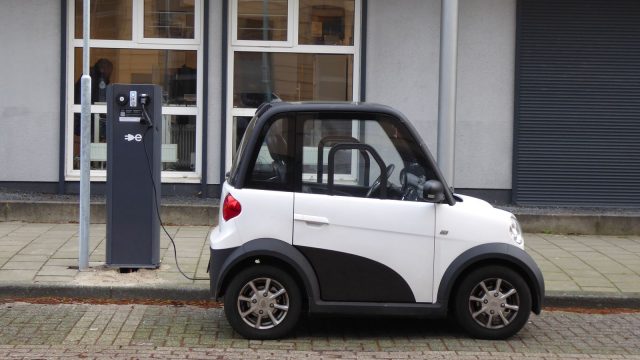
From spring 2027, HM Treasury said, the government will provide £100m over two years to cut costs at lower-powered public chargers near homes, saving drivers around £150 a year on average.
These chargers are typically on residential streets and make up around a third of the current network. Autocar reported that the £150 is based on 8,000 miles a year at 3.3 miles per kWh, and that it is unclear how the money will reach drivers.
The independent review says funding “would be dependent on clear pass through to consumers”.
The taskforce, led by industry experts, is to explore letting drivers use their cheaper domestic tariff at certain public chargers. It is not yet a commitment to deliver that, and the Department for Transport will set out more details “in due course”.
The Cost of Public Electric Vehicle Charging Review, chaired by Philip New, found that prices at higher-powered chargers rose 94% over the same period.
The gap with home charging is set out in pence per mile. A typical home-charging driver pays 8p to 12p, standard AC public charging costs 12p to 16p, and a driver relying on a mix of public chargers pays 17p to 20p at current prices.
Overnight EV-specific domestic tariffs can cost as little as 2p per mile, the review says.
Zapmap data cited by Autocar puts the average AC charger price at 54p per kWh, against 26p under the Ofgem cap and 7p off-peak on some tariffs. The review’s cost figures show standard AC chargers making “significant losses on each kWh sold” at that price.
Under the review’s model, called porting, the driver would pay an access fee on top of electricity billed by their domestic supplier. Its example is £200 a year, equal to spreading the cost of a £1,000 domestic charger over five years.
The review calls porting the “best long-term structural response to the equity challenge”. It says the combined measures could cut local public charging costs by around 15p to 20p per kWh, and the case rests on public EV charging costs that fall hardest on drivers without a driveway.
Around a third of UK drivers have no access to their own driveway, the review says, and 89% of EVs are driven by those with home charging.
New wrote: “An EV transition that works only for people with driveways is not a fair or durable transition.”
Delivery will take time. Porting needs changes to charger and supplier software and to settlement codes, the review says, and it recommends the taskforce agree a timeline with Ofgem and Elexon. It also notes “commercial complexities” around local authority and charge point operator concession contracts.
Public charging carries 20% VAT, while domestic charging is at 5%, cut to 0% from October 2026 for a limited period. Highways Magazine reported that Finance Bill 2026-27 legislation, taking effect from 1 November, will confirm the 20% rate for public and workplace charging. Motor Trade News reported that Chancellor John Healey made no cut to that VAT.
Ben Nelmes, CEO at campaign group New AutoMotive, said it is “not fair that people who cannot charge their electric car at home must pay significantly more for their electricity”. He added: “It is vital that this work moves at pace to end Britain’s driveway divide.”