
IonQ’s $1.8 Billion Bet: How a Quantum Underdog Is Trying to Outbuild Everyone
Nearly all of IonQ’s predictions about the future of the quantum industry can be found in a building...
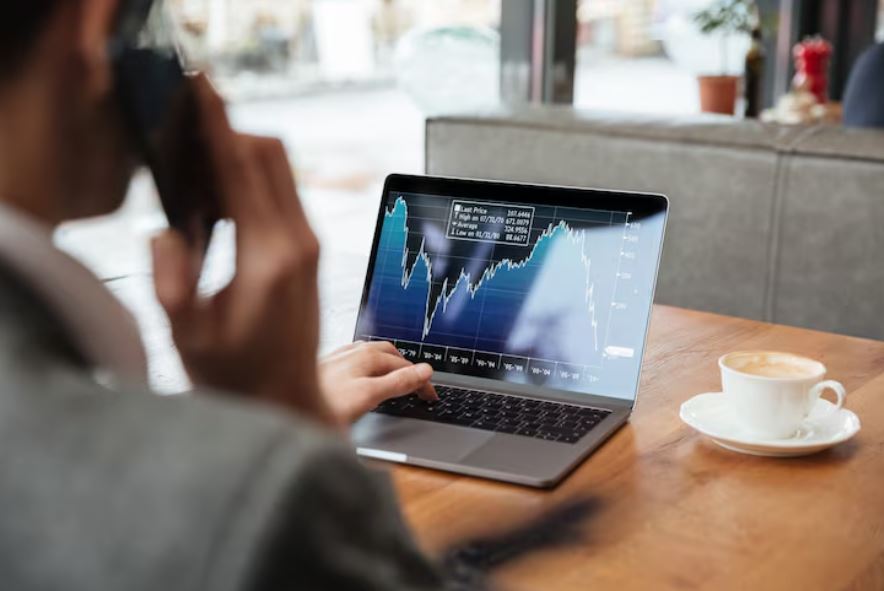
The fact that Dell reached an all-time high in 2026 is almost comical. The PC manufacturer, which went private in 2013 and returned to the public market in 2018, spent the majority of the previous 20 years in a sort of investor purgatory. It was mostly dismissed as a low-margin box shipper dependent on a declining laptop market. That call was not being made aloud by anyone who had Dell pegged as a turnaround story this aggressively. And yet, here it is. After reaching $239.45 during the day, shares ended Wednesday at $238.80, up more than 10% for the day. The stock has increased by about 73% so far this year. It was close to $93 twelve months ago.
AMD’s earnings this week served as the catalyst, causing a domino effect throughout the AI hardware complex. More than most, Dell rode that wave. Hewlett Packard Enterprise hardly moved at all, but Super Micro did, which gives you an idea of how investors are currently ranking these names. Dell is being viewed less as a legacy server provider and more as one of the selected vendors supplying the AI build-out, including storage, networking equipment, racks, and the entire stack. The market has finally caught on to this quiet repositioning that has been going on for about eighteen months.
The figures that support it are truly startling. In fiscal 2026, Dell closed more than $64 billion in orders for AI servers; however, at the beginning of the following year, the company still had a $43 billion backlog. For fiscal 2027, management plans to generate about $50 billion in revenue from AI-optimized servers, which is more than twice as much as the previous year. Chief operating officer Jeff Clarke stated back in February that “the AI opportunity is transforming our company.” That struck a different chord than the typical executive boilerplate, especially coming from a man not known for exaggeration. Naturally, it’s still unclear if the orders convert at high margins. Compared to conventional enterprise equipment, AI servers are infamously low-margin, and memory prices have been erratic.
The move to Texas was this week’s other story. Dell’s board unanimously decided on Monday to move the company’s legal incorporation from Delaware to Texas; shareholders will cast their votes on June 25. Michael Dell presented it in an almost sentimental light; the company was founded in Austin in 1984 while operating out of a University of Texas dorm room, and its headquarters have long been in Round Rock. He claims that it simply makes things cleaner to align the operational and legal homes. The cynical interpretation is not the same. According to Bloomberg Law, the Texas redomestication may tighten regulations regarding shareholder proposals and limit the channels through which shareholders can bring derivative lawsuits. The June vote’s result is almost certain because Silver Lake and Michael Dell have the majority of the voting power.
As this develops, it’s difficult to ignore how completely the AI cycle has changed the landscape for hardware companies that the majority of investors had given up on. Ten years ago, the market abruptly concluded that Tesla was not a car company. Although Dell isn’t quite there yet, the comparison makes sense. The technicals are stretched; the stock is trading well above all significant moving averages, the RSI is flashing overbought, and Traders Union analysts are publicly cautioning that a pullback below $211 could occur quickly if momentum stalls. Traders are now observing the $223 zone as the new floor after it shifted from resistance.
What hyperscalers do with their capital expenditures in 2027 will likely have a greater impact on whether Dell maintains these levels than Michael Dell. As of right now, the market is willing to pay up, the backlog is real, and the orders are converting. Until it isn’t, that is sufficient.
Nearly all of IonQ’s predictions about the future of the quantum industry can be found in a building...

BYD’s expansive Pingshan complex in Shenzhen is one of those factory tours that leave a lasting impression. One...

A Chinese car is still not available for purchase at an American dealership. Through two administrations, multiple rounds...