
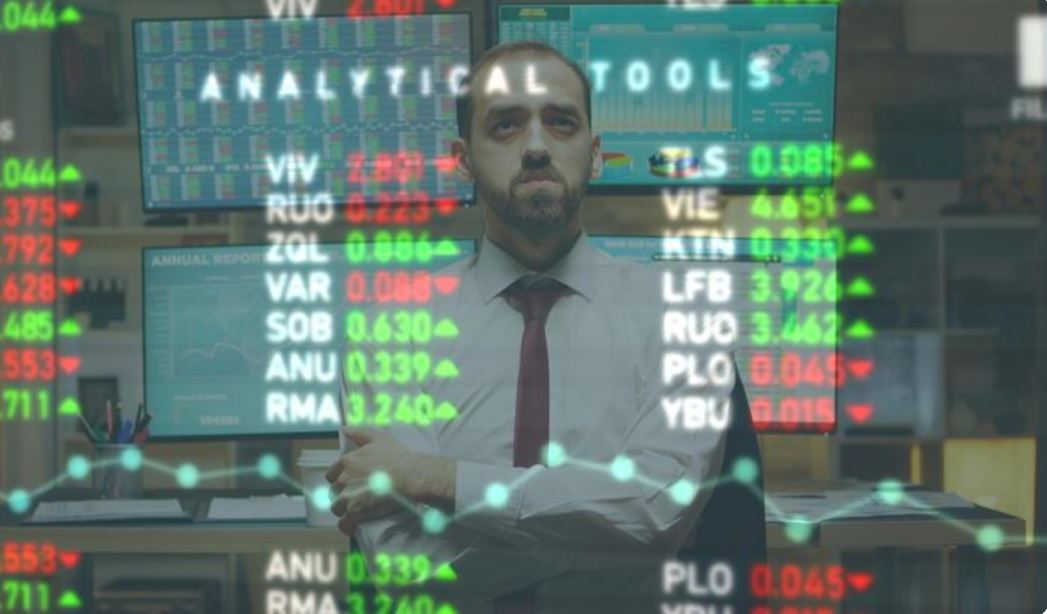
Monday seemed to be the type of session that traders half-expect but still detest when it happens. After an Iranian-flagged cargo ship was seized in the Gulf of Oman, Truth Social posts threatened Iranian power plants, and traffic through the Strait of Hormuz choked off once more just days after Tehran declared the passage “completely open,” Sunday’s events caused Dow Jones stock market futures to drift calmly. The Dow contract had dropped more than 300 points in a single stretch by the time U.S. futures opened, and the rally euphoria that ended last week seemed to have happened a month ago.
In these situations, oil did what it usually does. A significant portion of Friday’s decline was erased when West Texas Intermediate punched up nearly 7% to settle near $89.61 and Brent followed to $95.48. The collective sigh on trading desks was almost palpable. This type of morning was referred to as a “two-screen day” by a trader I spoke with during a different flare-up last year: one for the tape and another for State Department headlines. That’s exactly how Monday appeared.
However, the damage was strangely courteous when the bell eventually rang. Less than five points were lost by the Dow. A quarter of a percent was lost by the S&P 500. The Nasdaq’s longest winning streak since 1992—13 sessions—finally came to an end, with a 0.26% decline. It’s not a crash. This market has already absorbed the news of the war and has made the decision to remain unfazed, at least for the time being.
That’s for a reason. The early numbers have been stubbornly positive, and earnings season is picking up speed. When the dust settles, FactSet’s first-quarter S&P 500 earnings growth estimate typically undershoots by a few points. Until it doesn’t, investors appear to think that a geopolitical scare can be mitigated by the profit picture. When naval ships are engaged in combat, David Wagner of Aptus Capital told CNBC that the war is “in the rearview mirror” for the market. This is a bold but not unjustifiable statement.
In fact, the Russell 2000 closed at a record. Software stocks saw a slight increase. BlackBerry, yes, that BlackBerry, reached a 52-week high on an expanded Nvidia partnership, and Marvell Technology surged upon learning of a possible Alphabet chip deal. It’s difficult to ignore how divided the tape has become: quiet euphoria in pockets of tech and small-caps, a shrug in blue chips, and panic in the oil complex. One market contains three markets.
The Dow futures had risen 0.22% to 49,749 by Tuesday morning, and the S&P and Nasdaq contracts were also up. Before the next headline, traders appeared to be positioning themselves for a bounce, or at the very least, a pause. Tehran has already hinted that U.S. negotiators may not visit Pakistan this week to meet with Iranian counterparts. A ceasefire lasts for a few days. Kevin Warsh discusses his nomination for Fed chair in testimony before the Senate Banking Committee. Tesla reports on Wednesday following the close.
For just one week, there are a lot of pressure points. After five years of missing the 2% inflation target, Chicago Fed President Austan Goolsbee is publicly concerned about the central bank’s credibility, the 10-year yield is hovering around 4.25%, gas prices are once again above $4 per gallon, and the Fed hasn’t lowered interest rates. There is no clean pricing for any of that. The belief that negotiators will engage in negotiations, that crude will decline again, and that earnings will cover the remaining costs is what’s priced in.
Perhaps. According to the old market theory, stocks climb a wall of fear, with a reorganized Fed on one side and Hormuz on the other. As this develops, the volatility isn’t the odd thing. It’s the extent to which it hasn’t appeared at the index level. No one on the floor seems to be certain yet whether that is resilience or complacency.