

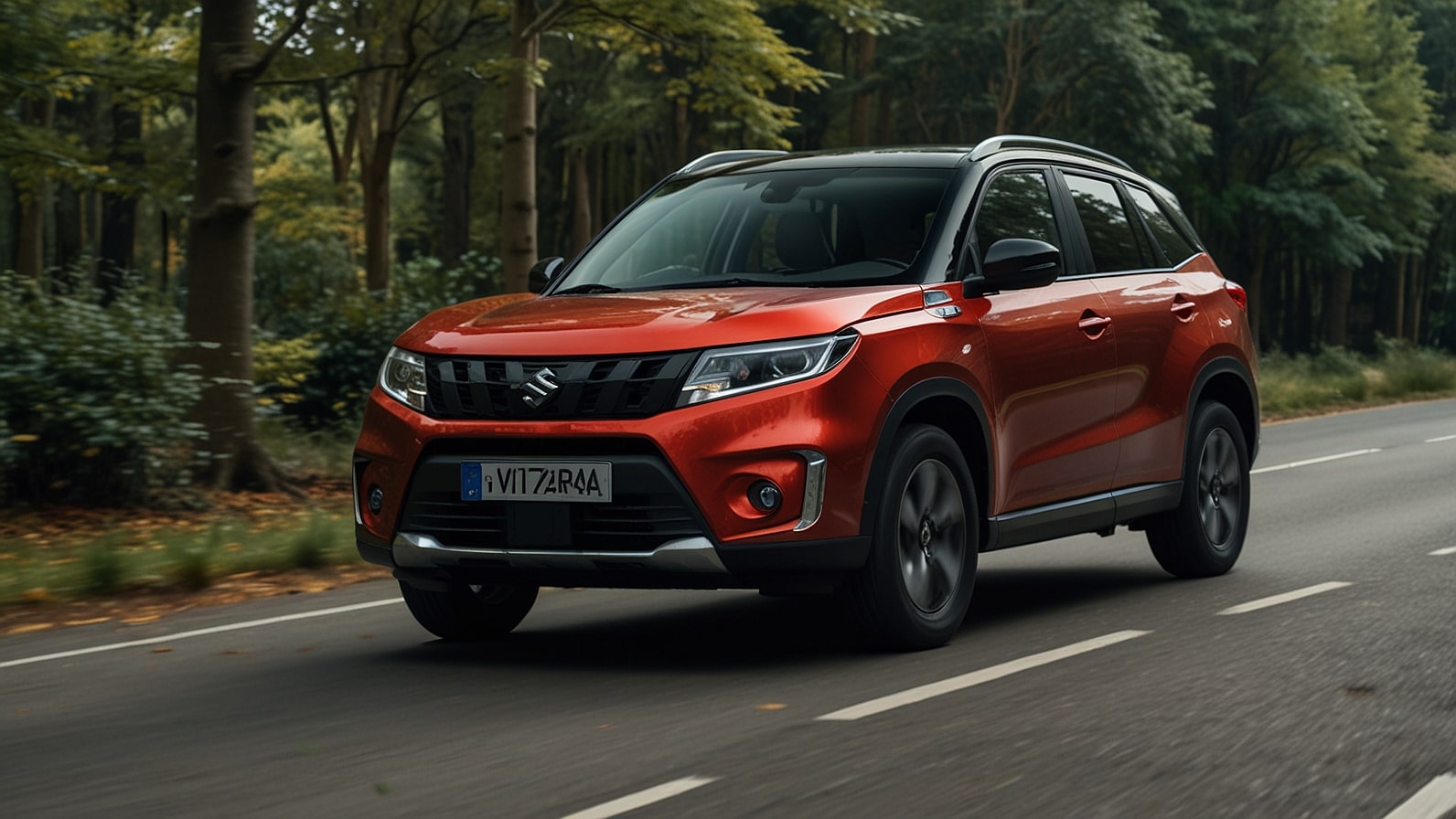
Suzuki has led the way in the already hectic world of electrification with its first fully electric small-scale SUV, the e-Vitara, which achieved a worthy 4-star rating in the coveted Euro NCAP crash tests. This feat was announced on September 9, 2025 and underscores Suzuki’s move into the realm of sustainable transportation and its focus on passenger safety in an increasingly competitive EV market.
With the e-Vitara set to launch in markets like Europe and India, where the demand for affordable electric SUVs is rapidly increasing, this rating will be crucial in the eyes of customers seeking reliable and eco-friendly vehicles amidst rising fuel prices and environmental concerns.
The e-Vitara is a turning point for Suzuki during the EV revolution as it provides flexible battery options to both urban commuters and long-distance travellers. The model will compete with giants in the small EV sector, as thousands of units have been shipped out of the Indian manufacturing centres to the shores of the European continent.
With rigorous tests going beyond the norms of the standard, including adult and child safety, pedestrian protection, and the advanced driver-assist technology, our deep analysis of the e-Vitara allows us to conclude that this model has solid all-purpose performance.
Still, the question arises on how Suzuki can be willing to go the extra mile to achieve the 5-star rating in future models. Rated at four stars, the e-Vitara proves to be efficient in all aspects of its performance, yet one cannot help but wonder how the company will achieve the desired results.
Euro NCAP is one of the most independent safety authorities in Europe. The simulated scenarios of accidents include everyday crashes, such as head-on crashes and side swipes, along with a closer look at the preventive systems that may prevent the accident before it occurs. In the case of the e-Vitara, the outcome is a blend of solid structural design and contemporary electronics, along with the identification of areas for refinement.
As the global EV sales are expected to be off the scale, possibly reaching more than half of all new vehicles sold in Europe by 2030, these crash test ratings have never been more influential as they affect not only the choice of buyers, but also the insurance premium and even government incentives on green mobility.
Detailed Breakdown of Euro NCAP Scores for Suzuki e-Vitara
The Suzuki e-Vitara achieved a total 4-star Euro NCAP score, with the breakdown showing strengths in key areas: 77 per cent in adult occupants, 85 per cent in child safety, 79 per cent in vulnerable road users, and 72 per cent in safety assists.
These measurements are the result of long and gruelling tests that evaluated all parameters, including cabin life span and airbag effectiveness, as well as sensor precision. The e-Vitara shares the same base as the Maruti Suzuki and therefore does not compromise on the underlying safety; thus, it is worth noting as a new addition to the expanding list of battery-powered SUVs.
This rating is achieved at a time when EV safety is under scrutiny, as the handling of heavy battery packs in the event of a vehicle accident is a special case. The performance of the e-Vitara demonstrates that Suzuki has effectively addressed the challenges presented, with a high level of reinforcements to distribute impact forces.
It is interesting because it compares with the 5-star performance of the standard Vitara in the Bharat NCAP tests in India, highlighting variations in testing and regional adaptations that astute buyers should consider when comparing models.
Adult Occupant Protection: Strengths and Key Insights
The e-Vitara has performed well in the adult protection tests where it was not hit in the frontal offset crash, the cabin was intact and was able to cushion crucial parts of the body, such as knees, thighs, etc, of both front seats. The deployment of airbags and the belt system was smooth and achieved high-scoring points on side barrier, pole impacts, as the torso and head were cushioned satisfactorily.
Nonetheless, the full-width frontal test revealed some limitations, especially for the rear passengers, where head and chest protection was found to be an average rating, but not the best, since the passengers were moving forward.
This can be improved by enhancing rear restraints and reducing whiplash in rear collisions, as the vehicle is prone to being bright in urban driving. This is the highest possible 77, which proves the e-Vitara as a reliable option in everyday commuting, but those who like to travel on highways can find additional guarantees.
Child Occupant Safety: A Family-Friendly Highlight
Child protection can be viewed as a significant victory of the e-Vitara with an effectiveness of 85%. Lateral and frontal tests provided the highest-quality defence to the dummies of 6 and 10-year-olds, and full scores in impact measurements. Its popularity among parents is increased by user-friendly ISOFIX points and tethers that make fixing car seats very easy.
The fact that the front airbag is programmable to deactivate when using a back-facing infant carrier is convenient. Still, the absence of an automatic child detection system (now standard in high-end EVs) seems to be a safety gap in the modern world. This good performance is well in line with the trend of family EVs, where the safety of minor occupants is the factor that frequently swings buying choices.
Vulnerable Road User Protection: Pedestrian and Cyclist Focus
With a 79 per cent score in this category, the e-Vitara is highly concerned with urban harmony by use of bumpers that are highly rated in covering lower body parts in pedestrian collisions. Its Dual Sensor Brake Support II system is impressive, as it can detect and brake walkers, bikers, and riders under various circumstances, such as crossings or turns, to mitigate collisions.
However, the edges and pillars of the windscreen were even more resistant, which may increase the severity of head injury. The technology is also behind Pedestrian alerts when the car is reversing, as well as when passengers are leaving the car at the door, two areas that can be updated as cities focus on bike paths and pedestrian friendliness.
These elements have the potential to make the e-Vitara more useful in safer and more environmentally friendly societies in an age of shared roads.
Safety Assist Systems: Prevention at the Forefront
The 72 per cent safety assist score indicates a competent suite of equipment, such as emergency braking, which works effectively when colliding with other cars, and all-around seatbelt warnings. Driver drowsiness eye-monitoring is a proactive addition, but it did not have standard reliability in testing.
Lane-keeping assists and navigation-driven speed limit recognition assist in keeping road control. Add-ons such as auto-emergency calls and secondary braking after hitting add up to the package. Although effective, software adjustments, which are often done with EVs through updates, can improve this to the levels of leaders in autonomous safety technology.
What Sets the Suzuki e-Vitara Apart and Future Enhancements
The main strengths of the e-Vitara are a long-lasting frame, child safety, and reliable braking, which are suitable in a variety of conditions, such as in Indian traffic jams or on European highways. These render it an intelligent choice for EV followers who need to be mindful of their expenses and focus on a middle ground rather than luxury.
New crash shields and increased pedestrian technology could also be an area for improvement that draws inspiration from Suzuki’s experiences elsewhere. The analysts suggest that refinements would enable the vehicle to earn 5 stars in the future, thereby boosting its position in the market over rivals such as the Hyundai Kona Electric or Volkswagen ID.3 in the small SUV segment.
Market Impact and Broader EV Trends in 2025
With aggressive EV policies in the EU and subsidies in India, the e-Vitara’s safety nod gives people confidence to switch to electrics. Indian manufacturing is not only cheaper but also exports, making Suzuki a worldwide manufacturer of affordable EVs, where safety ratings are a sales/perception driver.
This may be the direction Suzuki’s hybrid expansions are taking as the industry looks towards autonomy and sustainability. To shoppers, the e-Vitara offers range, value, and security without the stereotypes, and it’s worth a further look at Japanese innovation in the EV surge.
In summary, Suzuki’s e-Vitara 4-star Euro NCAP rating is an indicator of a promising start for this electric compact SUV, which offers solid safety and forward-thinking features. Not quite perfect, it prepares Suzuki for an electric future, attracting eco-conscious drivers and families seeking a safe and sustainable ride in the fast-paced 2025 market.