
Operation Epic Fury Purple Hearts: Three Soldiers Acted Under Fire to Save Lives
Three U.S. Army soldiers received Purple Hearts for their actions during the Operation Epic Fury Purple Hearts ceremony...
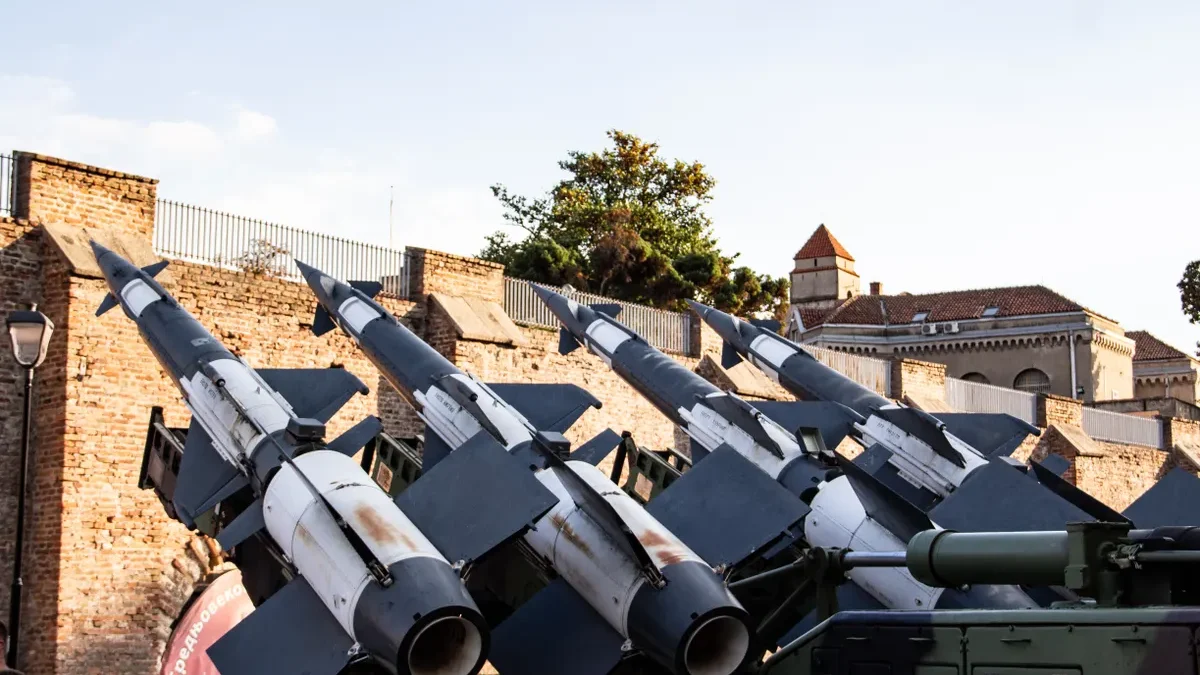
The U.S. Army’s $1.2 billion PrSM Increment 2 contract for early missile production extends a funding architecture that already committed $4.94 billion to the broader program, reframing this award as acceleration rather than a fresh start. For Lockheed Martin (LMT), the timing reflects both a production mandate and an operational reality: the Army is restocking a missile it has already used in combat.
The award is structured as an indefinite-delivery, indefinite-quantity agreement covering initial production and future orders. The Army characterizes it as supporting an early operational capability, meaning Lockheed is transitioning into limited production before the full test program concludes.
PrSM Increment 2 is a materially different weapon from the base variant. Its multimode seeker can track moving targets on land and engage ships at sea, extending land-based HIMARS and M270 launchers into a maritime strike role the original system lacked. Range runs to roughly 500 kilometers, against roughly 300 kilometers for the Army Tactical Missile System the program replaces.
The second flight test, launched from a HIMARS, completed in August; additional tests are scheduled for 2027, per Lockheed Martin’s announcement. Moving into production ahead of a test schedule that runs into 2027 is deliberate risk acceptance, one driven by the Army’s operational calculus rather than engineering confidence.
The PrSM Increment 2 contract is the newest layer on a much larger stack. In March 2025, the Army awarded Lockheed Martin a separate IDIQ contract valued at up to $4.94 billion for PrSM production, per the Lockheed Martin newsroom. Then, in March 2026, Lockheed Martin and the Department of War announced a framework agreement to accelerate that ramp, with combined actions targeting a quadrupling of PrSM production capacity, per a Lockheed Martin announcement. The $1.2 billion Increment 2 award extends the program into the next-generation variant within that same structure.
Dave Griser, Lockheed Martin’s vice president for precision fires, said the award “marks an important step in delivering PrSM Increment 2 to the warfighter,” adding the company is “ready to move from flight testing into production and provide the Army with an expanded long-range precision fires capability.”
Underlying the contract stack is a demand argument the Army did not have a year ago. PrSM made its combat debut in the Iran war, and the U.S. military reportedly faces a shortage of strike and air defense missiles after expending large numbers in that conflict, including PrSM weapons. Rebuilding depleted inventory gives the quadrupling target a near-term pull-through rationale beyond any future-conflict planning assumption.
The combat debut also carries controversy. Analysts believe a PrSM missile killed dozens of civilians in the Iranian city of Lamerd on February 28, the first day of U.S.-Israeli strikes. U.S. Central Command has denied the accusation. The denial may prove out, but the allegation introduces congressional and export-control risk that is harder to quantify than order backlog.
The bull case is the contract depth. A $4.94 billion commitment in early 2025, a quadrupling framework signed in early 2026, and now the $1.2 billion PrSM Increment 2 contract layered on top point to sustained revenue in Lockheed’s precision fires segment over multiple years. Postwar stockpile rebuilding provides demand pull that extends beyond any single contract ceiling.
The bear case is engineering exposure. Committing to production with 2027 test events outstanding means a seeker or guidance failure discovered in testing could require costly retrofits on already-manufactured units. The Lamerd investigation, however it resolves, remains a political overhang on export potential.
The evidence leans bullish for LMT near term. The Army has demonstrated willingness to fund production before test completion, operational demand is documented, and the contract architecture signals a multi-year commitment. The 2027 test calendar and the civilian casualty investigation are the two variables most likely to shift that read.
Three U.S. Army soldiers received Purple Hearts for their actions during the Operation Epic Fury Purple Hearts ceremony...

Vector Defense and Nammo announced an expanded partnership Monday at the Association of the United States Army’s annual...

The TSMC earnings season preview is the week’s focal point, with Taiwan Semiconductor Manufacturing (TSMC) reporting Thursday as...