
Operation Epic Fury Purple Hearts: Three Soldiers Acted Under Fire to Save Lives
Three U.S. Army soldiers received Purple Hearts for their actions during the Operation Epic Fury Purple Hearts ceremony...
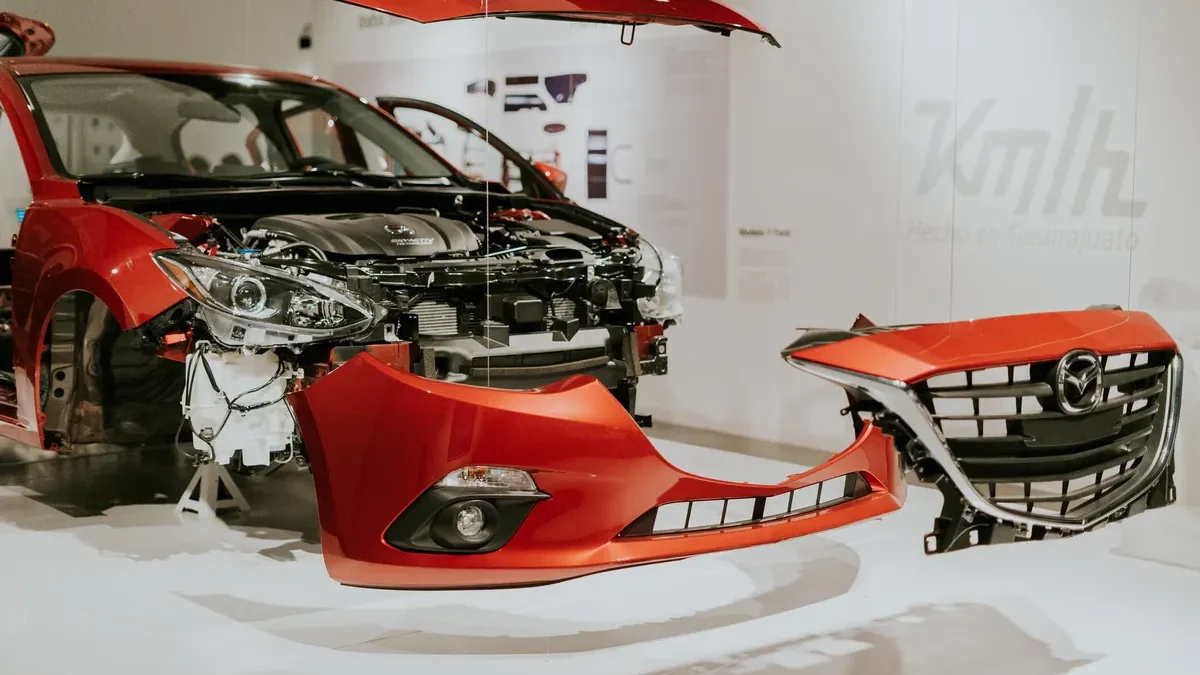
Leapmotor global car sales hit a record 240,000 units in Q2 2026, up 84% year-over-year, surpassing Subaru’s 230,000 and Mitsubishi’s 170,000 for the first time. The milestone is less a story about one strong quarter than about a structural advantage that rivals will struggle to replicate.
The numbers sit inside a broader market reversal. Toyota (TM) delivered 2.71 million units in Q2 (down 4%) and Volkswagen 2.07 million (down 9%), confirming that pressure at the top of the global rankings is as real as the disruption in the middle. Leapmotor is moving in the opposite direction on both volume and trajectory.
The engine behind Leapmotor’s ascent is Leapmotor International, the joint venture formed with Stellantis in October 2023, when Stellantis simultaneously acquired a roughly 21% stake in Leapmotor’s parent company for €1.5 billion, according to a Stellantis press release on the May 2026 partnership expansion. The 51%-Stellantis, 49%-Leapmotor structure handed the Chinese brand access to more than 850 European points of sale almost immediately. BYD and Nio have spent years and billions of dollars assembling comparable networks independently.
Leapmotor International began European operations in September 2024 across nine countries, targeting 500 sales points by 2026. Europe’s contribution to Leapmotor global car sales has since accelerated sharply: overseas markets grew from 6% of total volume a year ago to roughly 20% in Q2 2026, with more than 80% of that overseas volume coming from Europe. In Italy alone, sales jumped thirteenfold year-on-year to 24,450 vehicles between January and August, capturing 27% of the country’s EV market against Tesla’s 9%.
Tariff exposure, the constraint that has blunted most Chinese EV entrants in Europe, is increasingly ring-fenced. Stellantis is adding Leapmotor B10 production at its Zaragoza plant in Spain during H2 2026. Spain abstained from the EU tariff vote, making it a preferred manufacturing base, as Yahoo Finance reported when Stellantis halted earlier T03 production in Poland, a country that supported the tariffs. Stellantis also plans to transfer its Villaverde plant in Madrid to Leapmotor International for a new model from the first half of 2028, with both arrangements structured to meet the EU’s forthcoming “Made in Europe” content requirements.
The cost structure reinforces the distribution advantage. Leapmotor develops roughly 65% of its components in-house, including batteries, drive units, and electronic architecture, delivering around a 10% per-vehicle cost advantage over competitors reliant on outside suppliers. The T03, priced at around €15,900 (US$18,300) in Italy, remains the top European seller. WardsAuto reported that the May 2026 expansion also introduced joint purchasing cooperation, combining scale to lower consumer prices by blending Chinese production methods with European supply chain capabilities.
The brands that Leapmotor just overtook are not suffering a bad quarter. Subaru has delayed four in-house EV models indefinitely, converted a planned dedicated EV factory back to combustion production, and absorbed a JP¥57.8 billion (US$363 million) impairment on its electrification assets. Financially, the pressure is compounding: Subaru’s operating profit dropped 44% to ¥42.6 billion in the quarter ending June 2026, missing consensus by a wide margin, according to Investing.com.
For the full fiscal year ended March 31, Subaru reported a 13% decline in operating profit to $2.7 billion and a 4.1% retreat in global sales to 936,000 vehicles, per Yahoo Finance. CEO Atsushi Osaki has flagged approximately $2.5 billion in potential tariff impact in the current fiscal year if no mitigation steps are taken, with Subaru relying on Japanese imports for roughly half its US sales. The brand now sells approximately 100 units a month in China.
Mitsubishi has paused its own proprietary EV development entirely. Both brands now depend on partners for EV technology, leaving them without the cost architecture that makes Leapmotor’s pricing defensible across Europe.
Stellantis is extending the same underutilized-plant formula to Dongfeng, with a non-binding agreement to build Dongfeng’s Voyah crossover at its Rennes plant in France, absorbing roughly 40,000 units of spare annual capacity under the same 51-49 ownership split. Automotive World has reported that under CEO Filosa’s strategy, Stellantis is concentrating resources on four core brands, with remaining nameplates developing models on architectures sourced externally.
The read on Leapmotor global car sales from here is that the structural tailwinds are real but the execution gap is wide. The 1 million unit target for 2026 implies a run rate the brand has not yet demonstrated, with only 35.6% to 45.8% of that goal reached by mid-year. The 2027 overseas target of 350,000 to 400,000 units rests heavily on European demand that has historically proven volatile. If appetite softens or EU policy shifts, Leapmotor’s quarterly records start looking less like a trend line and more like a ceiling.
Three U.S. Army soldiers received Purple Hearts for their actions during the Operation Epic Fury Purple Hearts ceremony...
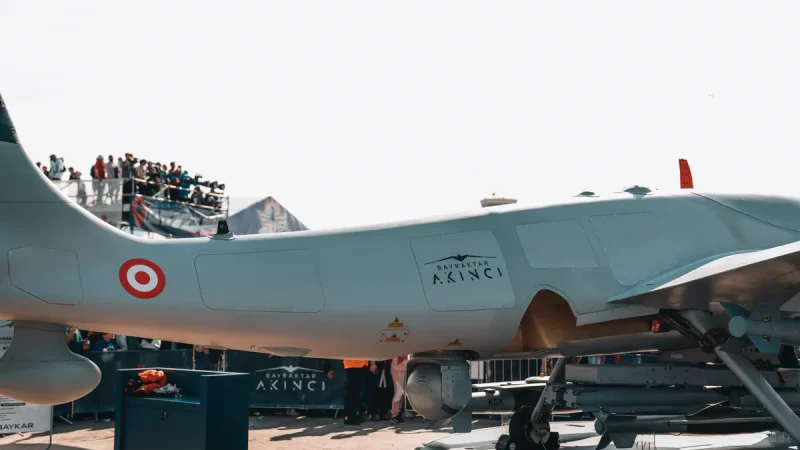
Vector Defense and Nammo announced an expanded partnership Monday at the Association of the United States Army’s annual...

The TSMC earnings season preview is the week’s focal point, with Taiwan Semiconductor Manufacturing (TSMC) reporting Thursday as...