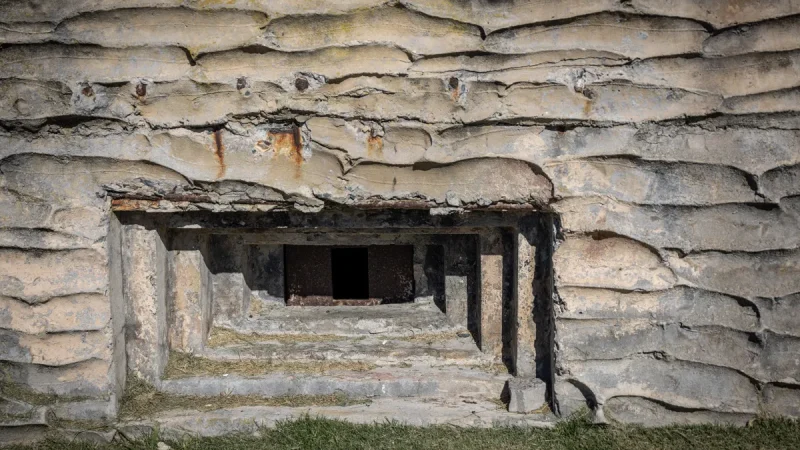
Operation Epic Fury Purple Hearts: Three Soldiers Acted Under Fire to Save Lives
Three U.S. Army soldiers received Purple Hearts for their actions during the Operation Epic Fury Purple Hearts ceremony...
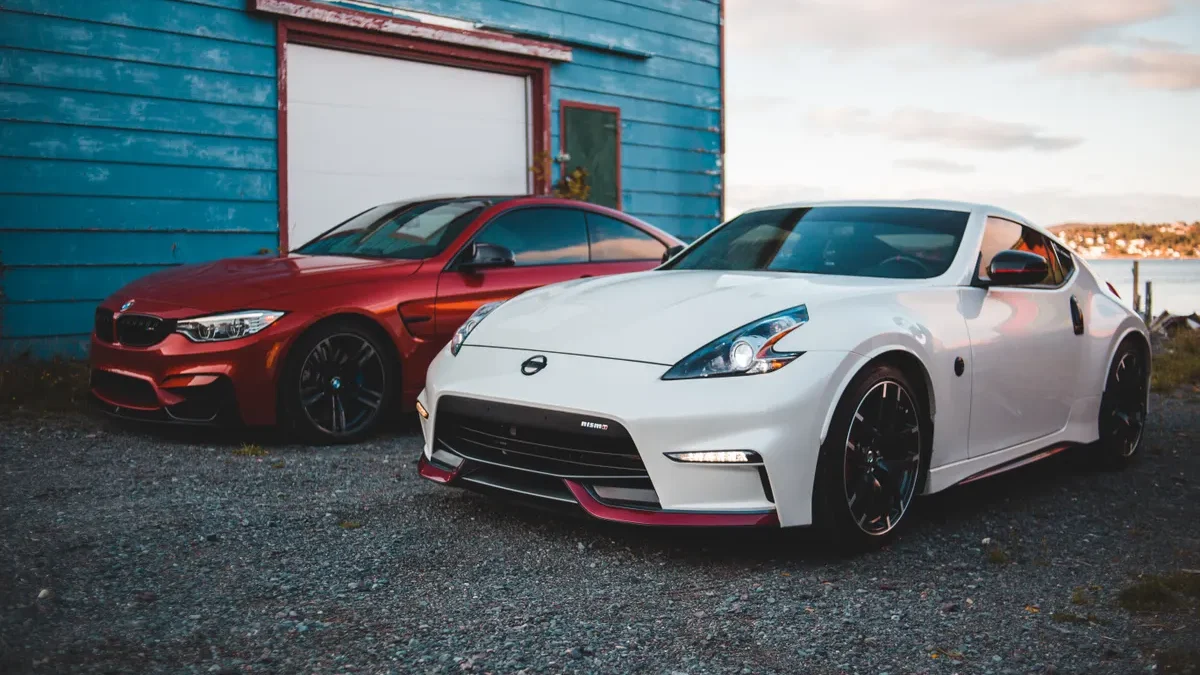
The Volkswagen Porsche writedown disclosed on September 18 is not simply an accounting event: it signals that the one division reliably subsidizing Volkswagen’s weaker brands is itself under structural pressure, with no near-term fix in sight. Volkswagen AG flagged €10 billion ($11.5 billion) in one-off charges, slashing its 2026 operating margin guidance to up to 1% from a prior range of 4% to 5.5%, with roughly €6 billion of the charge stemming from a goodwill impairment on Porsche.
Volkswagen now expects group sales revenue of around €315 billion for fiscal year 2026, per the company’s own ad-hoc filing. Adjusted for special effects, the full-year operating return on sales would amount to about 4%, but the reported figure lands at up to 1%, against a prior analyst consensus of 4.1% and the group’s own 2025 return of 2.8%. That gap is the real story.
Of the €10 billion total charge, roughly €2 billion relates to restructuring costs: early retirement schemes agreed with the works council, the planned sale of the Osnabrück plant, and China-related asset write-downs. The remaining bulk is the Porsche goodwill impairment. Reuters reported Volkswagen shares fell 5.6% on the news.
The damage radiates upward through the ownership structure. Porsche Automobil Holding SE posted a group result after tax of minus €2.2 billion for the first half of 2026, against a positive €0.3 billion in the prior-year period, after recording impairment losses of €3.0 billion on its investment in Volkswagen AG and €0.2 billion on its investment in Porsche AG. Following the September 18 warning, Porsche SE updated its expected impairment on its Porsche AG stake to a range of minus €2.5 billion to minus €3.5 billion, up from a prior range of minus €1 billion to minus €2 billion, while its expected impairment on its Volkswagen AG stake was said to tend toward the lower end of a range of minus €7 billion to minus €20 billion, per a Porsche SE ad-hoc filing.
Porsche SE’s chairman Hans Dieter Pötsch stated: “The Volkswagen Group is at a historic crossroads. For the sake of the company and its sustainable competitiveness, everyone must now step up and take responsibility.”
Porsche, in which Volkswagen holds a 75.4% stake, has been caught between US tariffs and collapsing Chinese luxury demand. The brand’s operating margin fell to just 1.1% last year, a steep drop from the 5.5% to 7.5% range CEO Michael Leiters had confirmed as the 2026 guidance target at the company’s AGM in June, per Reuters. That guidance is now void.
Handelsblatt reported that Porsche is considering more than 4,000 additional job cuts to address an estimated €700 million ($803.8 million) overhead shortfall. Those would come on top of 4,000 positions already cut earlier in 2026 and 5,000 more agreed in July, pushing agreed reductions toward roughly 13,000 by 2035. Reuters noted both Volkswagen and a Porsche spokesperson declined to comment on the reported supervisory board plans. The scale amounts to roughly one in five of the total Porsche workforce. Volkswagen can recommend such measures at Porsche but cannot mandate them, as the two companies are separately listed.
At the June AGM, Deka fund manager Ingo Speich was direct: “We shareholders look at Porsche today and see a shambles.” The share price tells the same story. Morgan Stanley cut its price target on Porsche AG to €38 from €65 on September 18, the same day as the profit warning, per Investing.com.
Finance chief Arno Antlitz framed China’s decline explicitly as non-cyclical, citing a 20% contraction in the country and expanding Asian rivals in Europe. “There is no sign of consolidation,” he said. “We cannot escape this trend.” Volkswagen lost its position as China’s top-selling automaker to BYD in 2024 after decades of market leadership.
CEO Leiters is due to present a new strategy, dubbed “Sports Car Forge 2035,” at a Capital Markets Day in Weissach on October 7. The three pillars outlined at the June AGM, refocusing on sports car DNA and exclusivity, reducing model variants while retaining combustion and hybrid powertrains (including keeping the 911 combustion-hybrid rather than fully electric), and streamlining operations, per the Porsche AG newsroom, now arrive against a backdrop of a freshly disclosed writedown rather than a stable financial base.
The broader group context compounds the pressure. Volkswagen’s supervisory board has approved a separate plan to cut 100,000 jobs group-wide by 2030, leaving four German plants without a secured production future. Porsche traditionally subsidized the group’s weaker divisions; that function is now impaired alongside the goodwill on its balance sheet.
The read here is that Porsche’s crisis is a leading indicator for Audi and Volkswagen’s other premium divisions: the same combination of US duties and collapsing Chinese luxury demand applies across the higher-margin brands. October 7 is when Leiters must show whether the new strategy goes beyond what internal doubters already consider insufficient. If it does not, the writedown will look like the beginning, not the end, of the adjustment.
Three U.S. Army soldiers received Purple Hearts for their actions during the Operation Epic Fury Purple Hearts ceremony...
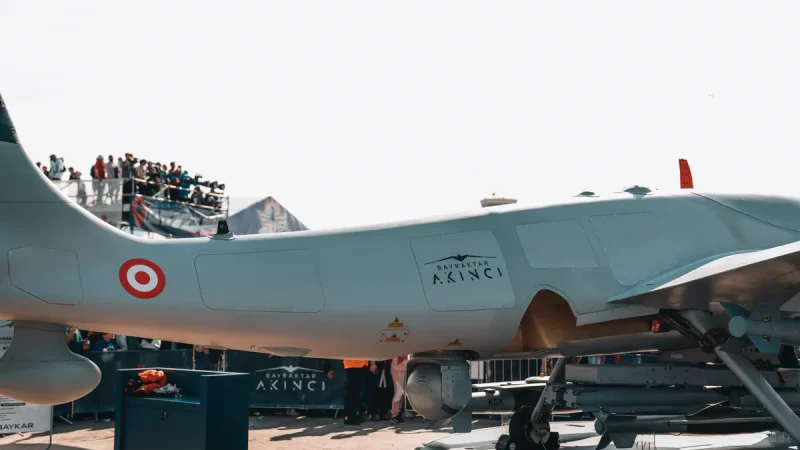
Vector Defense and Nammo announced an expanded partnership Monday at the Association of the United States Army’s annual...

The TSMC earnings season preview is the week’s focal point, with Taiwan Semiconductor Manufacturing (TSMC) reporting Thursday as...