Echodyne MESA Radar Lands Kongsberg Deal, Eyes European Factory

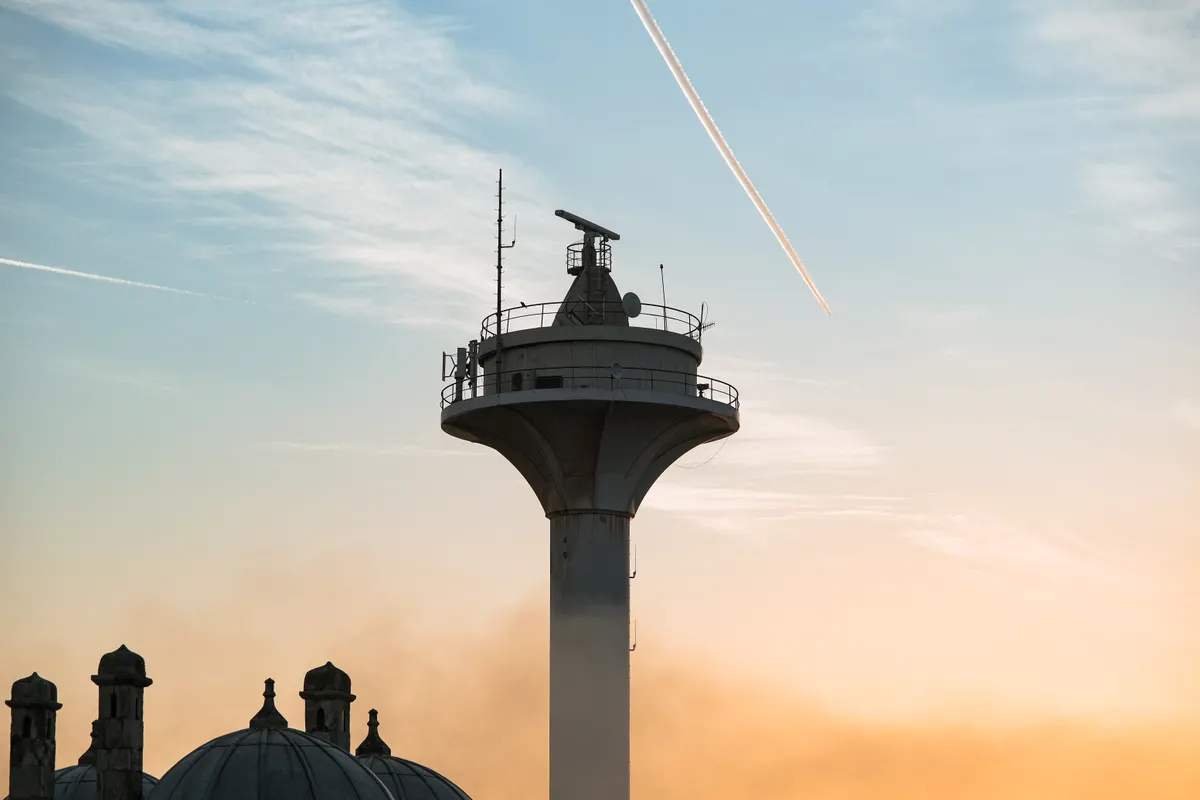
Echodyne’s MESA radar has found its highest-profile integration partner yet: Norway’s Kongsberg has selected the platform for its Protector RS4 and RS6 remote weapon stations, plugging a US sensor into the world’s most widely fielded remote weapon system family. The deal is less a distribution win than a market-access inflection point, and it comes as Echodyne weighs whether to open a European manufacturing site.
CEO Eben Frankenberg made the announcement at the MSPO defense show in Kielce, Poland, telling Defense News that the Kongsberg relationship stretches back years and that the Protector integration will sharply lift Echodyne’s profile across European defense markets.
What the Echodyne MESA Radar Brings to the Protector Family
The Protector line is not a niche product. Kongsberg has delivered more than 25,000 Protector units to armed forces in over 31 nations, accumulating more than 8 million combat hours. That installed base is the real prize: every Protector system that gets upgraded with counter-UAS software becomes a potential Echodyne radar sale.
The RS4 and RS6 were not originally designed for counter-drone missions. The Protector RS4 mounts heavy machine guns, automatic grenade launchers, and optional anti-tank guided missiles across a wide range of platform types. The Protector RS6 is an up-gunned variant carrying medium-caliber cannons and short-range air-defense weapons for heavier armored vehicles. Echodyne’s MESA radar, a compact solid-state electronically scanned array, pairs with Kongsberg’s Collaborative Fire Control software and can operate on static sites, crewed vehicles, and uncrewed platforms without the size, weight, and power footprint of conventional high-performance radars.
Frankenberg framed it plainly: Echodyne’s solutions will make “those remote weapon stations, which weren’t originally designed to counter drone threats, effective at countering drone threats. And this is something we do with a lot of companies.” The subtext is that Echodyne is positioning itself as the radar layer that unlocks C-UAS functionality across a broad set of existing ground-combat platforms, not only Kongsberg’s.
According to the Echodyne newsroom, the two companies spent multiple years integrating, testing, and demonstrating the solution. Beyond the Protector integrations, they are exploring additional uses across air and surface missions in the broader Kongsberg portfolio, with joint work continuing on resilient sensing, networked fire control, and scalable defenses.
Why European Manufacturing Is Now on the Table
The commercial logic behind a European factory becomes clearer when you look at the order pipeline. In February 2026, Kongsberg signed a contract with Patria worth approximately EUR 140 million for several hundred Protector RS4 units supporting the German and Swedish Common Armored Vehicle System program, with potential for substantial follow-on orders. That contract explicitly includes the option to upgrade with Counter-UAS functionalities, which is precisely where Echodyne’s radar fits.
European governments are pushing for local content in defense procurement, and that preference is only hardening as the continent accelerates rearmament. Frankenberg acknowledged the dynamic directly: “There’s obviously a big European demand and there’s rightfully some interest from European countries in having more local content. We’re thinking about where it would make the most sense.”
Echodyne opened an 86,350-square-foot manufacturing facility in Washington state in July 2026 under a $40 million investment. The plant is designed to produce more than 30,000 radar systems per year at full capacity and is expected to support more than 100 new jobs, scaling to up to 200 as production ramps, according to the Echodyne facility announcement. Frankenberg described the Washington site as a blueprint: “Part of the plan with the new facility was that it gives us a template or blueprint to be able to open other new facilities in the future. Because now we know exactly all the machines we need to have, all the workstations, the number of people to equip them.”
The bull case is straightforward: a replicable factory model, a pipeline anchored to the world’s largest RWS program, and European procurement policy that rewards local production. The bear case is execution: standing up a foreign manufacturing operation is capital-intensive and operationally complex, and Echodyne has not yet committed to a location or timeline.
The deciding variable is whether European governments will make local content a formal contract requirement rather than a preference. If the Kongsberg-Patria CAVS follow-on orders carry that stipulation, a European facility stops being optional and becomes a competitive necessity.