
Accenture Earnings Beat Signals the AI Pivot Is Paying Off
Accenture’s (ACN) earnings beat in fiscal Q4 2026 was not a mild outperformance: it was the company’s strongest...

BYD’s export gap with Chery has compressed to roughly 7,500 units, and the company’s August BEV volumes cleared 256,000 units for the first time, but neither record changes the arithmetic on a full-year sales target that is slipping further out of reach with every passing month.
BYD sold 440,293 new-energy vehicles (NEVs) in August, a 17.8% year-over-year gain and its highest monthly total of 2026. BEVs drove the outperformance, reaching a record 256,230 units and lifting BEVs to 59.1% of passenger NEV sales, up from 53.7% a year earlier. Plug-in hybrids held essentially flat at 177,154 units.
Exports are the clearest bright spot. BYD shipped 189,466 units overseas in August, up 134.45% year-over-year and a new monthly record. Chery, which has led Chinese automotive exports for decades and in August became the first Chinese automaker to surpass seven million cumulative exports, shipped 196,984 units the same month. The gap is now fewer than 7,600 units.
That proximity matters. Chery International reported June overseas exports of 191,062 units, up 79.7% year-over-year, a pace BYD has already matched and exceeded in August. Chery’s standing is reinforced by its debut on the Fortune China 500 list at 87th place, with its return on equity topping the automotive sector, per Chery International’s own disclosure. Both automakers are building aggressively in European and Latin American markets; which one leads the next phase of China’s export expansion is the live question.
The wider export surge reinforces that this is not a BYD-specific story. Geely’s exports rose 205% year-over-year to 110,000 units in August. Chery Group’s total sales grew 15.4% to 280,100, with exports up 52.1%. Leapmotor delivered more than 100,000 units for a second consecutive month, up 80.7%, partly on the back of new model launches and its entry to Argentina.
The export story cannot offset what is happening at home. Domestic sales fell 14.3% year-over-year to 250,827 units in August, and through the first eight months of 2026 BYD has moved 2.67 million NEVs, down 6.84% year-over-year. Domestic volumes for that period are off 32.72%.
The trajectory from here is steep. After selling 1.81 million vehicles in the first half of 2026, BYD needed to average approximately 530,000 units a month for the rest of the year to reach the lower end of its 5.0–5.5 million unit annual target, according to Bloomberg. August’s 440,293 units, while a monthly high for 2026, falls well short of that threshold. There are no visible catalysts for a domestic recovery in the near term.
BYD has not revised the 5.0–5.5 million unit target. That silence is its own signal. The company is either confident in a historically large final-quarter surge or unwilling to publicly concede the target was set before China’s domestic market deteriorated as sharply as it has.
The overseas target tells a similar story of guidance that needed catching up. BYD’s original 2026 overseas sales guidance, announced at a media briefing in Shanghai by brand and PR general manager Li Yunfei, was 1.3 million units, representing roughly 25% growth from the 1.05 million delivered abroad in 2025, per Yahoo Finance. BYD subsequently raised that figure to 1.5 million on its March post-earnings call. Having surpassed one million overseas units with four months remaining, a final tally in the 1.6–1.7 million range now looks more likely than the official figure.
Elsewhere in China’s NEV sector, Li Auto rebounded to 37,700 units in August, up 32.1% year-over-year and 23.7% from July, after completing a delayed transition to its new-generation L-series models. Huawei-backed HIMA posted its first year-on-year decline, falling 5.6% to 42,101 units. Xiaomi held above 30,000 deliveries for a fifth straight month, but needs roughly 80,000 units a month through year-end to reach its 550,000-unit target, a steeper climb than Leapmotor’s path to one million.
The bull case for BYD rests on export momentum compounding further and a domestic stabilization in the fourth quarter. The bear case is that 530,000 units per month was always a stretch from a base of 440,000, and BYD’s reluctance to revise the target downward tells investors nothing useful about where management actually expects to land. If domestic volumes do not show a meaningful turn in September, the full-year number will settle well below five million, and the export record will be the headline that masked the miss.
Accenture’s (ACN) earnings beat in fiscal Q4 2026 was not a mild outperformance: it was the company’s strongest...
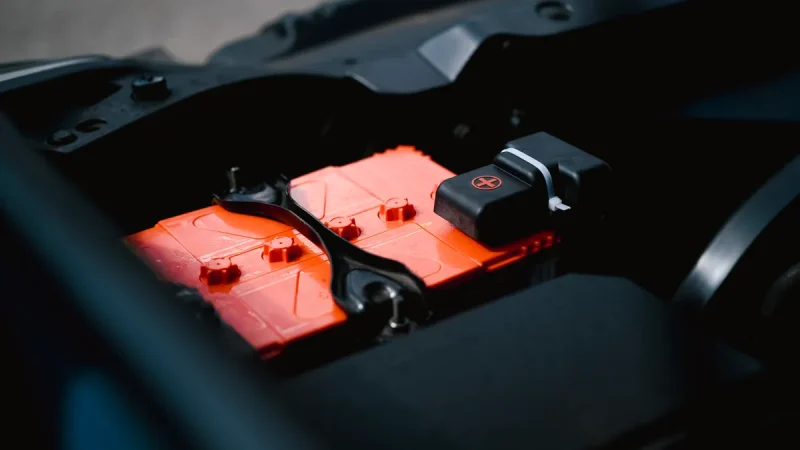
The BMW Neue Klasse battery plant at Irlbach-Straßkirchen, Bavaria, has entered series production ahead of its original timeline,...

The Raytheon SM-6 missile contract, worth up to $24.4 billion over five years with two additional option years,...