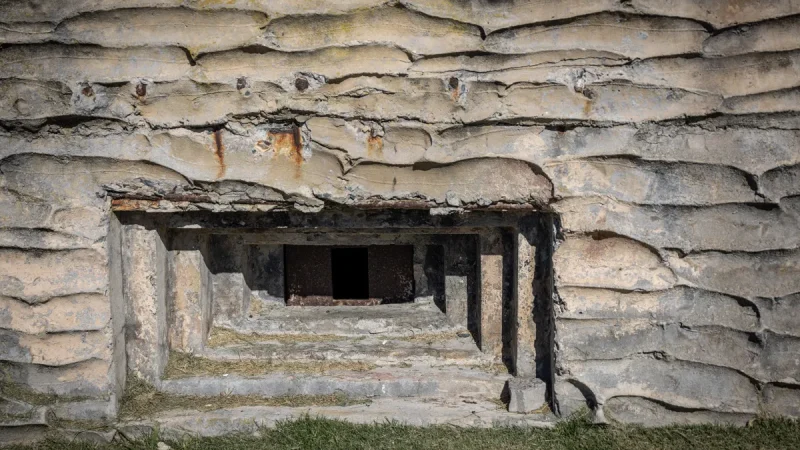
Operation Epic Fury Purple Hearts: Three Soldiers Acted Under Fire to Save Lives
Three U.S. Army soldiers received Purple Hearts for their actions during the Operation Epic Fury Purple Hearts ceremony...
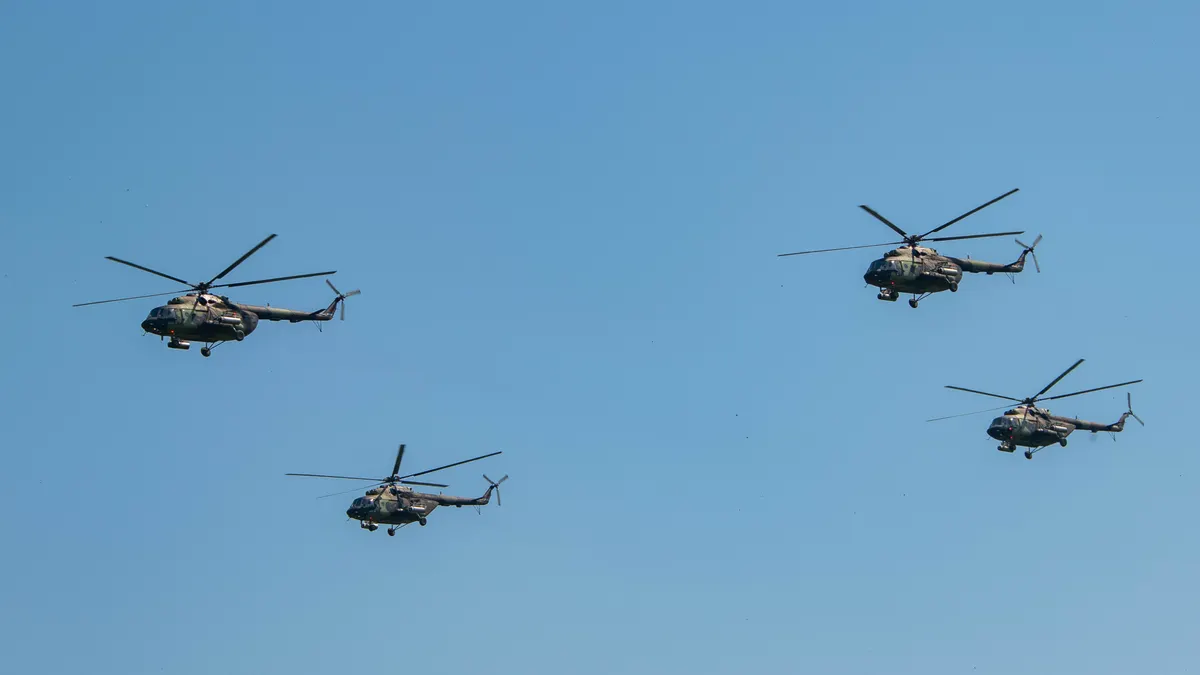
The State Department’s Iraq helicopter sale approval, announced August 31, 2026, clears the path for an $800 million Foreign Military Sale of Bell rotorcraft, weapons, and supporting equipment to Baghdad, as Reuters confirmed. For Bell-Textron, the Fort Worth-based principal contractor, it is the latest chapter in an expanding FMS relationship with Iraq that has been building for years.
The investment case here is straightforward: this is a government-to-government pipeline with long logistics tails, which means recurring revenue well beyond any initial hardware sale. The catch, as always with FMS approvals, is that no contract has been signed. Quantity, configuration, and final price can all shift as the deal moves through the FMS process.
The package is built around rotary-wing capability across transport, reconnaissance, and attack roles. Specific armament includes GAU-19 three-barrel machine gun launchers and M260 seven-tube rocket launchers for 2.75-inch rockets. The sensor suite features Bell-Textron partner equipment: L-3 Wescam MX-15HDI electro-optical/infrared sensors and AN/AAR-60 Block 2 missile launch detection systems.
Supporting elements include Very High Frequency radios, spare parts, ground support equipment, technical publications, and new-equipment training for Iraqi pilots and maintenance crews. U.S. government and contractor personnel would provide engineering, technical, and logistics support on an ongoing basis.
The State Department said the sale supports a “strategic partner” relationship with Iraq and advances U.S. foreign policy and national security interests by strengthening Baghdad’s rotary-wing capabilities against current and future threats.
Context matters here. A 2026 Department of Defense Office of Inspector General report on Operation Inherent Resolve noted that Iraq’s Ministry of Defense had submitted FMS requests for four Bell 412EPXs and 16 Bell 412Ms to replace Russian-made Mi-17 helicopters, plus 15 Bell 407Ms to replace existing 407s in the light-attack role. Those figures come from the OIG report and should not be read as the confirmed quantities or configuration of the newly approved $800 million sale, which may differ.
What the OIG figures do illustrate is the strategic driver: Iraq is working to reduce its dependence on Soviet-era Russian platforms and replace them with Western alternatives. That is a durable demand signal, not a one-time purchase.
The relationship has earlier roots. A November 2023 Defense Security Cooperation Agency press release (Transmittal No. 23-63) shows the State Department had already approved a separate possible FMS covering Bell Contracted Logistics Support for Bell 505 aircraft and three 407 variants, the 206B3, OH-58A/C, and Huey II, requiring U.S. government and contractor personnel in-country for multi-year support. Bell has, in other words, been threading itself into Iraq’s maintenance infrastructure for some time.
Iraq’s eligibility for the Foreign Military Sales program traces to Presidential Determination 2004-40, dated July 21, 2004, formalized in DSCA Policy 04-35, effective September 10, 2004. That two-decade FMS relationship has now produced a pipeline of helicopter acquisitions that the current sale extends further.
The bull case rests on two pillars. First, the Mi-17 replacement program is not complete. Iraq operates a mixed fleet, and Western political pressure to reduce Russian hardware dependency is not going away, which implies additional tranches. Second, the logistics and training components of these deals generate follow-on revenue that is stickier than hardware sales alone. Bell’s existing contractor presence in Iraq lowers the cost of winning the next contract.
The bear case is shorter but real. FMS approvals are not contracts, and Iraq’s defense procurement history includes delays, budget pressure, and political complexity. The State Department has not specified how many helicopters the current sale covers, which means the $800 million ceiling could shrink materially if quantities are trimmed during negotiation. Currency and geopolitical risk in Iraq also never fully disappears.
On balance, the evidence tilts toward the bull case. The Defense Security Cooperation Agency approval represents congressional notification cleared, a procedural hurdle that reflects genuine government-to-government intent. With Bell already embedded in Iraq’s logistics chain through prior CLS agreements, the path from approval to contract is shorter here than for a new entrant. The number to watch is whether Iraq’s Ministry of Defense formalizes the full $800 million letter of offer and acceptance, or whether budget constraints force a phased approach that stretches the revenue timeline.
Three U.S. Army soldiers received Purple Hearts for their actions during the Operation Epic Fury Purple Hearts ceremony...
Vector Defense and Nammo announced an expanded partnership Monday at the Association of the United States Army’s annual...

The TSMC earnings season preview is the week’s focal point, with Taiwan Semiconductor Manufacturing (TSMC) reporting Thursday as...