
Operation Epic Fury Purple Hearts: Three Soldiers Acted Under Fire to Save Lives
Three U.S. Army soldiers received Purple Hearts for their actions during the Operation Epic Fury Purple Hearts ceremony...
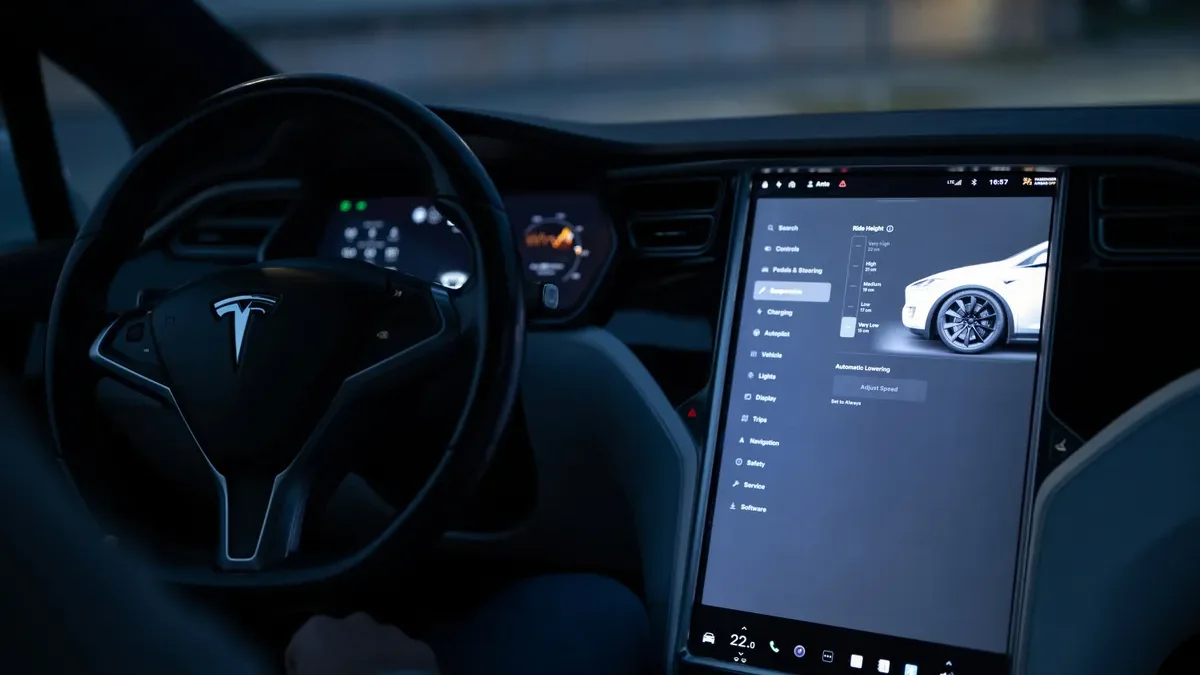
Nvidia and MediaTek’s automotive partnership, backed by a $3.5 billion Nvidia investment in MediaTek convertible bonds, positions the two companies as the central architecture team for AI-defined vehicles. The investment is not a passive financial stake: it funds co-development of the cockpit and autonomous driving compute platforms that automakers will build around for the next decade. The competitive question this raises is which silicon vendors end up inside the vehicles, and this deal makes the answer look increasingly settled.
The Nvidia MediaTek automotive collaboration pairs two distinct compute layers inside a single vehicle. MediaTek’s Dimensity Auto Cockpit, which integrates the Nvidia Blackwell GPU, handles the infotainment and driver-monitoring stack. According to Nvidia’s automotive partners page, the platform is designed to accelerate on-device multimodal large language models for low-latency features including real-time driver alertness detection and immersive entertainment across multiple displays. Sitting alongside it, Nvidia DRIVE AGX manages autonomous driving compute.
The architectural logic here is that cockpit intelligence and autonomous driving no longer need separate integration projects. Automakers get a shared silicon and software foundation spanning both domains, which compresses development timelines and reduces the number of vendors they need to qualify. That is a meaningful procurement argument.
The Foxtron deal, announced on June 1, 2026, shows the platform is already in production programs. MediaTek’s press release confirmed a strategic, global, and multi-year collaboration with Foxtron Vehicle Technologies, a subsidiary of Hon Hai Technology Group (Foxconn), to integrate the MediaTek Dimensity AX C-X1 platform into premium automotive solutions. That agreement moves the Nvidia-MediaTek Dimensity Auto platform from roadmap to design win.
The $3.5 billion covers more than automotive. According to the Nvidia investor relations press release, the expanded partnership brings MediaTek onto Nvidia’s NVLink Fusion platform, letting customers develop custom AI chips (XPUs) that connect directly to Nvidia-powered AI systems and data centers. The agreement also covers advanced packaging, memory architecture, interconnects, and rack-scale system integration.
That scope matters for the investment thesis. MediaTek is not just supplying cockpit chips; it is embedded in Nvidia’s edge-to-cloud architecture at the silicon design level. The two companies co-designed the GB10 Grace Blackwell Superchip used in Nvidia’s DGX Spark edge AI computer. MediaTek’s press release on the GB10 states the chip delivers up to 1 PFLOP of AI performance, supports a 20-core Arm CPU, and carries 128 GB of unified memory, supporting AI models up to 200 billion parameters. Two DGX Spark units linked via ConnectX-7 networking can run inference on models up to 405 billion parameters.
The RTX Spark superchip extends the same logic to consumer PCs and AI workstations. According to the Nvidia newsroom, MediaTek contributed to the custom CPU design for RTX Spark, covering power efficiency, performance, and connectivity. The chip pairs a Blackwell RTX GPU with 6,144 CUDA cores and fifth-generation Tensor Cores to a 20-core Nvidia Grace CPU via NVLink-C2C, and can run 120-billion-parameter language models with 1 million tokens of context. That is a machine built for local AI inference, not just for the data center.
Rick Tsai, Vice Chairman and Chief Executive of MediaTek, framed the scope clearly: “NVIDIA’s investment strengthens a collaboration that spans cloud AI infrastructure, local AI computing and automotive in the era of physical AI.” Jensen Huang described the partnership as bringing Nvidia’s accelerated computing to new markets and enabling customers to build differentiated AI systems.
The bull read is straightforward. MediaTek gains Nvidia’s GPU and AI IP embedded across its product lines, giving it a credible answer at every compute tier: vehicle cockpit, edge AI PC, and data center-connected XPU. The Foxtron design win signals automaker adoption is already happening, not projected.
The bear case is execution depth. Co-development across automotive generations, custom XPU silicon, and rack-scale integration simultaneously is an enormous surface area. Any one of those programs slipping could delay MediaTek’s revenue recognition from the partnership. The convertible bond structure also means Nvidia’s $3.5 billion converts under terms that are not yet public, creating dilution optionality for Nvidia and uncertainty for MediaTek shareholders on ownership impact.
The evidence leans bullish for Nvidia’s automotive revenue trajectory. Locking the cockpit and autonomous compute layers behind a shared platform with a design-win at Foxtron means the next question is how many OEMs follow. For MediaTek investors, the convertible terms are the variable that shapes whether this is a partnership or eventually a deeper structural tie-up. Watch for those conversion details in MediaTek’s next regulatory filings.
Three U.S. Army soldiers received Purple Hearts for their actions during the Operation Epic Fury Purple Hearts ceremony...
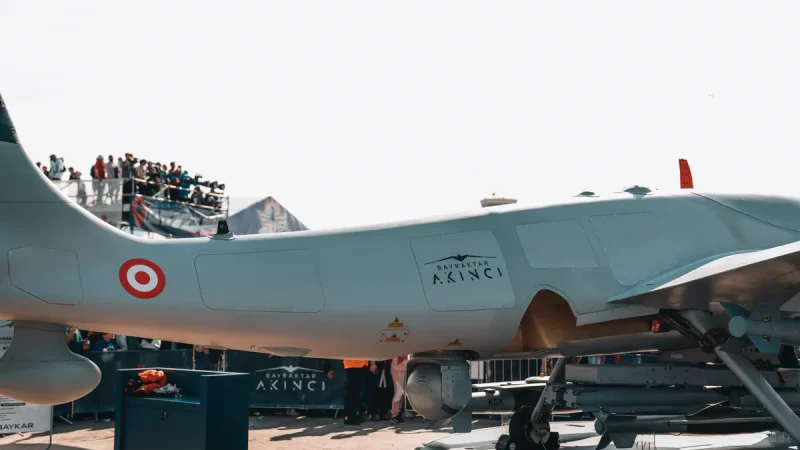
Vector Defense and Nammo announced an expanded partnership Monday at the Association of the United States Army’s annual...

The TSMC earnings season preview is the week’s focal point, with Taiwan Semiconductor Manufacturing (TSMC) reporting Thursday as...