
Operation Epic Fury Purple Hearts: Three Soldiers Acted Under Fire to Save Lives
Three U.S. Army soldiers received Purple Hearts for their actions during the Operation Epic Fury Purple Hearts ceremony...
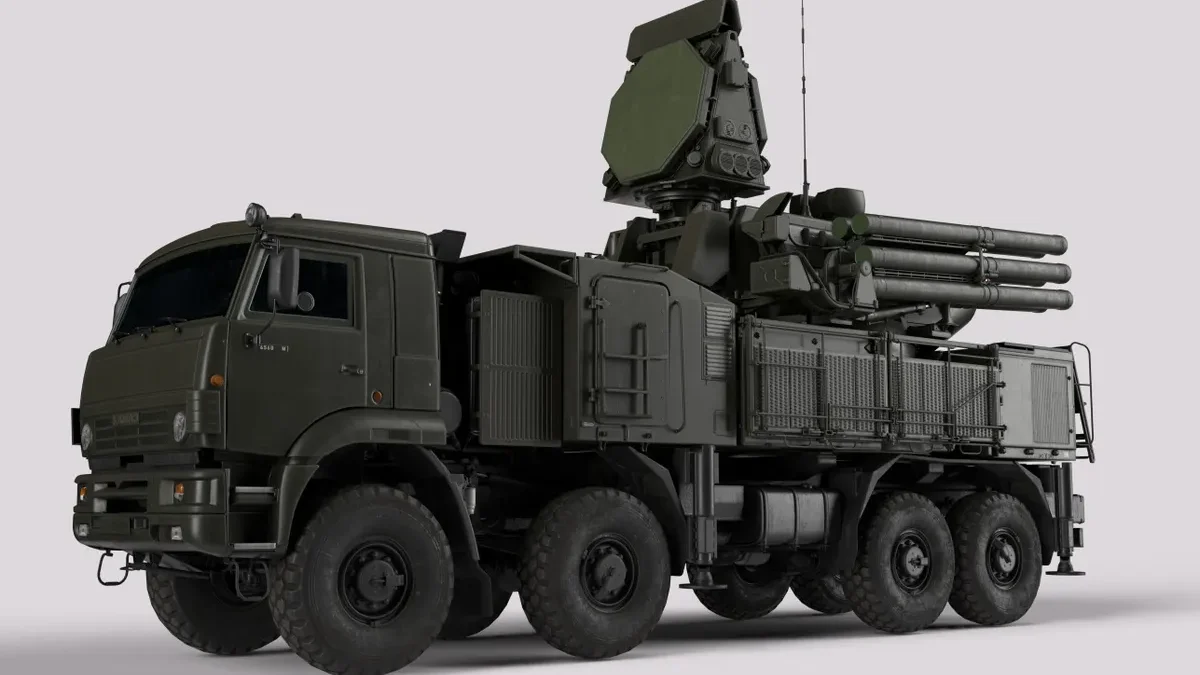
The Pentagon has secured framework agreements with General Dynamics Ordnance and Tactical Systems (GDOTS) and Lockheed Martin (LMT) to underwrite a Patriot and THAAD production surge, but the funding is contingent on annual congressional appropriations, which is the detail that matters most for investors. The agreements establish the legal and contractual scaffolding for a seven-year ramp in missile output. Whether that ramp becomes a real revenue stream depends on Capitol Hill.
The urgency behind these deals is measurable. The Center for Strategic and International Studies estimated in a July report that the U.S. has consumed roughly 65% of its pre-war Patriot interceptor inventory and 38% of its THAAD interceptors, drained across two fronts: the ongoing conflict with Iran and large transfers of Patriot and Army Tactical Missile Systems to Ukraine.
The Iran campaign alone has burned through more than two-thirds of pre-war Patriot stocks, according to CSIS. The think tank also reported, per The Hill, that the U.S. expended over 45% of its Precision Strike Missile stockpiles during that air and missile campaign. The read here is that U.S. munitions drawdown has been broader and deeper than the headline interceptor figures suggest.
CSIS has projected that systems used most heavily, including THAAD and Patriot, will take three or more years from the time of its report to return to prewar inventory levels, according to its analysis on rebuilding U.S. missile inventory. That timeline is the critical context for what the framework agreements are actually promising.
The production targets are ambitious on paper. Under a framework agreement signed January 29, 2026, Lockheed committed to quadrupling THAAD interceptor output from 96 to 400 interceptors per year, according to the Lockheed Martin newsroom. Lockheed also broke ground that day on a new Munitions Acceleration Center in Camden, Arkansas, designed to deploy advanced manufacturing, robotics, and digital technologies.
On the Patriot side, an earlier agreement signed January 6, 2026 commits Lockheed to lifting PAC-3 MSE annual production capacity from approximately 600 to 2,000 interceptors per year, according to a separate Lockheed Martin announcement. That agreement also includes delivery accountability provisions and a profit-sharing mechanism tied to new equipment and volume efficiencies.
GDOTS’s role centers on the subcomponents that Lockheed integrates: motor cases, seeker housings and midsections, and shroud deployment systems for both PAC-3 MSE and THAAD interceptors, per the Department of War release. GDOTS President Josh Thompson said the company is “already investing ahead of demand in capital expenditures, long-lead materials” in connection with the agreement. That forward investment is a positive signal on execution confidence, though contract definitization has not yet occurred.
Under Secretary of War for Acquisition and Sustainment Michael P. Duffey framed the deals as a structural shift: “General Dynamics and Lockheed Martin have answered the call. We are cutting red tape, shortening timelines, and rapidly scaling our domestic manufacturing capacity to deliver the advanced air and missile defense” capabilities the Pentagon needs.
The framework agreements are not funded contracts. The Pentagon was explicit that the surge in production quantities is subject to annual congressional appropriations. That distinction matters for modeling LMT’s revenue trajectory: these are ceiling-setters, not purchase orders.
Current PAC-3 MSE production sits at roughly 650 interceptors per year, with about half of deliveries going to the U.S. and the rest to allies and partners, according to CSIS’s interceptor inventory analysis. Allied backlog is substantial and competes for output. The jump to 2,000 per year is a four-year build at minimum, and CSIS’s three-plus-year rebuild estimate was based on current rates, not the target rates. Even if Congress appropriates fully, inventory recovery is a late-decade story.
This is also the third round of framework agreements the Pentagon has announced in recent weeks. Earlier this month, the Department of War announced equivalent deals with Northrop Grumman and Lockheed to expand Patriot and THAAD production. The layered structure, combining prime integrators and a subcomponent supplier, is coherent industrial policy. The catch is that coherent policy and funded contracts are two different things.
For LMT specifically, the production targets represent a potential step-change in missile segment revenue, but only if appropriations follow and the manufacturing ramp executes on schedule. The Camden facility and GDOTS’s ahead-of-demand capital spending suggest the supply chain is building in earnest. Congress’s willingness to fund the surge at the scale the Pentagon has outlined is the variable that decides whether these agreements translate into earnings or remain an ambition on paper.
Three U.S. Army soldiers received Purple Hearts for their actions during the Operation Epic Fury Purple Hearts ceremony...

Vector Defense and Nammo announced an expanded partnership Monday at the Association of the United States Army’s annual...

The TSMC earnings season preview is the week’s focal point, with Taiwan Semiconductor Manufacturing (TSMC) reporting Thursday as...