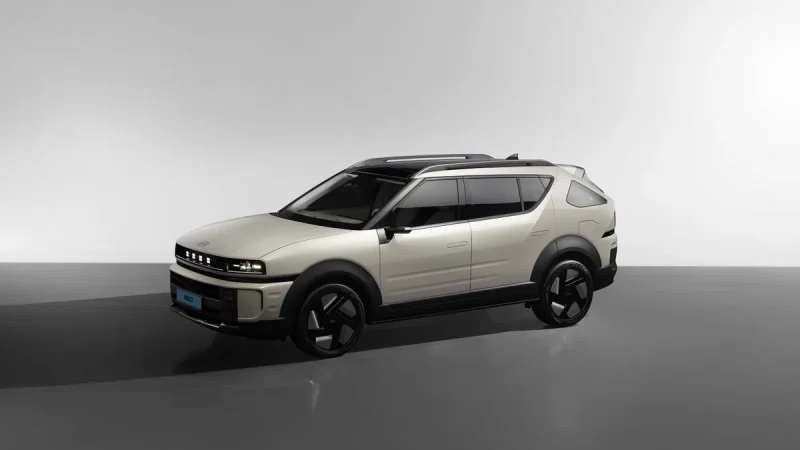
Xiaomi Sky Nomad Orders Can’t Close the 2026 Delivery Gap
Xiaomi Sky Nomad orders crossed 70,000 in the model family’s first month, a result that lifted the stock...
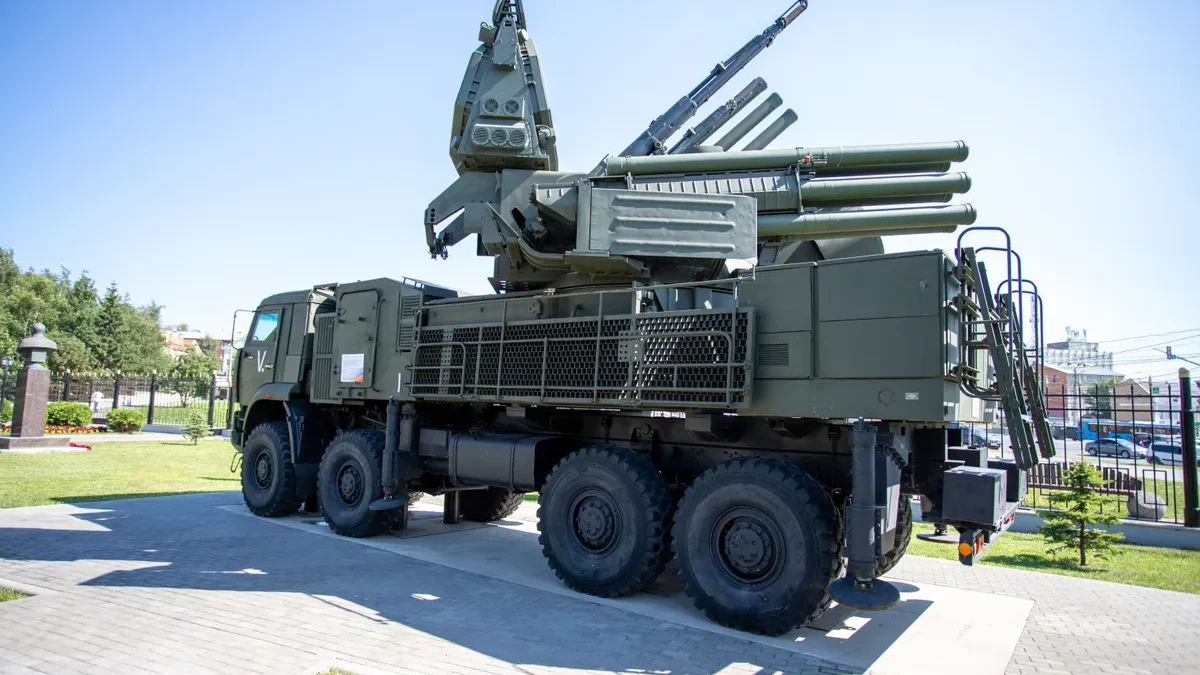
The Switzerland air defense budget is about to expand again: the Swiss Federal Council is asking parliament to approve an additional 970 million Swiss francs ($1.2 billion) in supplementary appropriations for 2026, framing the request as a race against a tightening global arms market rather than a simple spending increase.
The Swiss Federal Council broke the 970 million franc request into four buckets: 650 million francs for medium-range ground-based air defense systems, 250 million francs for short-range systems, 60 million for a medium-range radar, and 10 million for drone-counter systems. All of it is advance payment, not final procurement cost.
The underlying contracts are already known. Switzerland plans to spend 1 billion francs on Diehl’s IRIS-T SLM for medium-range coverage and 800 million francs on the Oerlikon Skynex short-range system from Rheinmetall, per the 2026 defense-equipment program. The supplementary credit locks in production slots before delivery queues close further.
The IRIS-T SLM contract runs through the Federal Office of Equipment, Information Technology and In-Service Support of the German Armed Forces (BAAINBw), with armasuisse, Switzerland’s federal defense procurement agency, having authorized the arrangement. The system reaches ranges of up to 40 kilometers and altitudes of up to 20 kilometers, and uses the TRML-4D AESA radar sensor from Hensoldt. Switzerland is procuring five IRIS-T SLM batteries under that structure.
On the short-range side, Rheinmetall announced in July 2026 a contract to supply four Skynex systems to an undisclosed international customer, valued at several hundred million euros, described as a first-time deal with that buyer. Whether that customer is Switzerland has not been confirmed publicly, but the timing and Skynex’s role in Switzerland’s published program make the overlap worth watching.
The Federal Council’s rationale is blunt: international arms markets are fully booked for years to come, delivery times are lengthening, and manufacturers are demanding substantial down payments. Failure to meet those payment demands, the government warned, could push urgent procurements back by several years.
The council framed the threat picture in equally direct terms. “Hybrid operations and attacks from a distance pose the most likely threats to Switzerland,” it said. “At the same time, the armed forces lack the necessary resources to adequately protect Switzerland from aerial threats.”
This supplementary credit sits inside a broader armament cycle. In March 2026, Reuters reported that the Federal Council had already requested parliament approve CHF 3.4 billion (approximately $4.32 billion) in overall defense spending for the 2026 armament program, centered on expanding ground-based aerial defense, drone protection, and cyberspace capabilities. That same program included a supplementary CHF 394 million request to cover cost overruns on F-35A fighters, which reduced the planned fleet from 36 jets to approximately 30.
Stack the layers together: the March armament program, the F-35A supplementary credit, and now this 970 million franc advance payment request, and Switzerland’s 2026 defense outlay is shaping up as one of the most ambitious in its modern history. The fiscal room comes from higher income tax revenues, the council said, which is the rare good-news element in an otherwise pressured procurement picture.
The Switzerland air defense budget story also has a long-range chapter still unresolved. In March, the government said it was considering a second long-range system after Patriot deliveries from the US looked set to slip by four to five years. By June it had opened negotiations with French, Israeli, and South Korean manufacturers. SRF Schweizer Radio und Fernsehen reported the French-Italian SAMP/T NG system, produced by Eurosam and armed with MBDA’s Aster interceptor, as the front-runner for that contract.
Separately, the council plans 100 million francs over coming years to harden more than 60 military sites with fencing, video surveillance, electronic access controls, and secure rooms, with implementation required by early 2029.
The council expects parliament to act during the fall session, at which point advance payments can begin. For Diehl Defence and Rheinmetall, that timing matters: a confirmed Swiss advance payment shores up the production schedule certainty both manufacturers need to hold delivery commitments. For investors watching European defense names, Switzerland’s urgency to pay early is another data point on how tightly capacity is allocated across the continent. The risk to the bull case is political: if parliament delays or scales back the supplementary credit, the delivery timelines the Federal Council is trying to protect begin to slip.
Xiaomi Sky Nomad orders crossed 70,000 in the model family’s first month, a result that lifted the stock...
Delta Air Lines (DAL) slashed its Delta Air Lines 2026 outlook on Friday, cutting full-year adjusted earnings per...
The Tesla (TSLA) production outlook for 2026 points to a genuine volume recovery, but the more pressing question...