
Xiaomi Sky Nomad Orders Can’t Close the 2026 Delivery Gap
Xiaomi Sky Nomad orders crossed 70,000 in the model family’s first month, a result that lifted the stock...
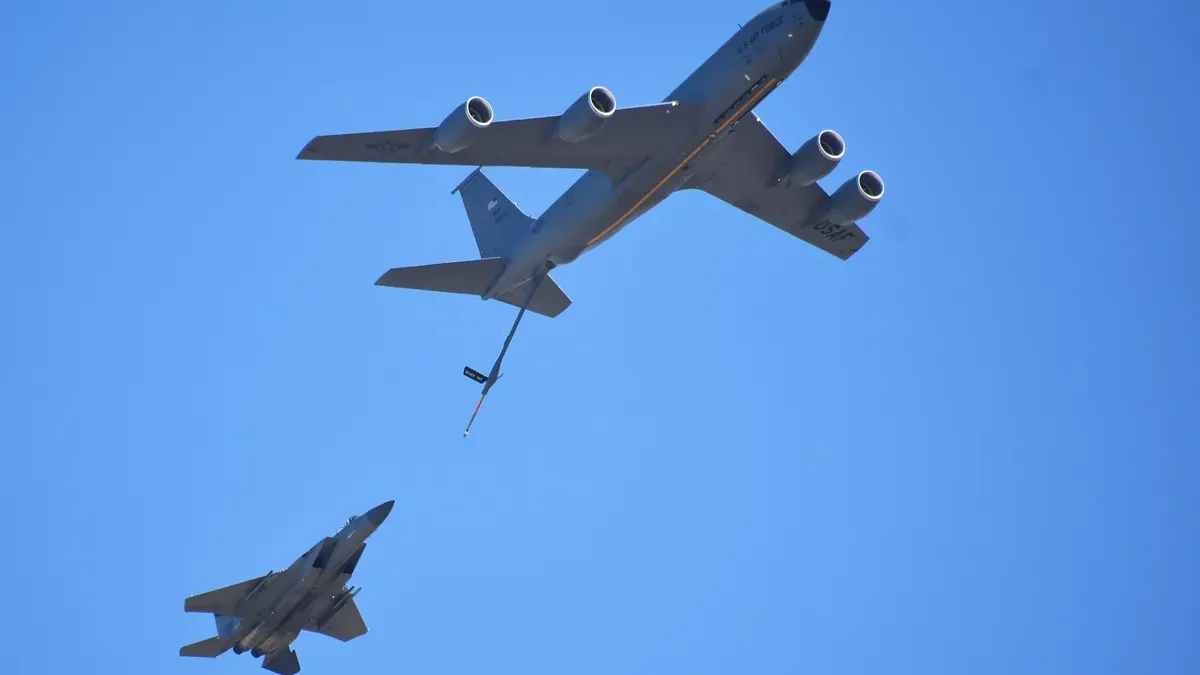
The State Department’s approval of a potential Qatar KC-46A sale, valued at up to $4.5 billion, puts Boeing at the center of the Gulf’s most consequential aerial-refueling acquisition in years and deepens a defense relationship Washington has been cultivating since the 2003 basing agreement at Al Udeid Air Base.
Qatar’s government has requested up to four KC-46A Pegasus tankers, along with a support package whose specifics go beyond the headline number. According to the State Department’s official notification, the deal includes eight PW4062 turbofan engines (four installed, four spares), 10 AN/ALR-69A radar warning receivers (four installed, six spares), and 15 Guardian Laser Transmitter Assemblies for Large Aircraft Infrared Countermeasure systems (12 installed, three spares), along with eight LAIRCM system processor replacements.
The notification also flags missile warning sensors as part of the non-major defense equipment component, alongside precision navigation gear, training equipment, and logistical support. The spares-heavy structure reflects standard Foreign Military Sale practice: the buyer pays upfront for operational redundancy rather than sourcing parts piecemeal later.
Principal contractors are Boeing, which builds the KC-46A airframe; RTX Corporation, whose Pratt & Whitney Military Engines division supplies the PW4062; and Northrop Grumman, which provides the LAIRCM systems. The notification states the U.S. government is not aware of any offset agreement connected to the potential sale, with any such arrangement left to bilateral negotiations between Qatar and the contractors.
The State Department frames the Qatar KC-46A sale as an interoperability play rather than a pure capability transfer. The notification’s language is deliberate: the sale will “increase Qatar’s capability to meet current and future threats by enhancing its defense capabilities and interoperability with U.S. and allied forces and reinforcing Qatar’s strategic role in regional security.”
That framing matters for how Congress will evaluate the notification. The State Department also concluded that “Qatar will have no difficulty absorbing these articles and services into its armed forces” and that “the proposed sale of this equipment and support will not alter the basic military balance in the region.” Those are the two standard tests a major arms sale must clear before lawmakers are likely to let it proceed without a challenge resolution.
The KC-46A’s pitch to partner nations rests on its generational leap over the KC-135 Stratotanker: greater fuel offload capacity, cargo flexibility, and aeromedical evacuation capability on a single airframe. For Qatar, operating the same tanker type as the U.S. Air Force means shared maintenance doctrine and interchangeable training pipelines, which is exactly what Washington wants from a partner hosting one of its largest overseas air hubs.
This deal is not an isolated transaction. The Defense Security Cooperation Agency approved a separate Foreign Military Sale to Qatar on March 26, 2025, covering MQ-9B Remotely Piloted Aircraft and related equipment at an estimated $1.96 billion. Stack the two approvals together and Qatar has been the subject of roughly $6.5 billion in U.S. arms notifications across roughly 16 months, a pace that reflects both Doha’s spending capacity and Washington’s intent to cement its Gulf positioning.
The bear case here is procedural: congressional notification opens a 30-day review window during which lawmakers can move to block the sale. The Qatari-donated aircraft controversy referenced in recent coverage provides political cover for any legislator who wants to slow-walk the deal on optics grounds alone, even if the strategic rationale is sound. A hold or resolution of disapproval is unlikely given bipartisan support for Gulf security partnerships, but the political backdrop adds a timing risk that did not exist six months ago.
For Boeing (BA), the bull read is straightforward: every KC-46A delivered to a foreign customer extends the production run and spreads fixed costs across more airframes, improving program economics at a time when the domestic tanker contract has faced well-documented performance challenges. Four aircraft is a modest order by volume, but the associated support and sustainment tail, engines, countermeasures, training, and spares, is where long-term revenue accrues. The contractors with the most sustained exposure are RTX and Northrop Grumman, whose LAIRCM and engine programs generate recurring revenue long after delivery.
The decisive variable is whether Congress lets the notification pass cleanly. If it does, this sale reinforces the case that Gulf FMS demand is becoming a structural backstop for U.S. defense primes, not a one-off windfall.
Xiaomi Sky Nomad orders crossed 70,000 in the model family’s first month, a result that lifted the stock...
Delta Air Lines (DAL) slashed its Delta Air Lines 2026 outlook on Friday, cutting full-year adjusted earnings per...

The Tesla (TSLA) production outlook for 2026 points to a genuine volume recovery, but the more pressing question...