
Xiaomi Sky Nomad Orders Can’t Close the 2026 Delivery Gap
Xiaomi Sky Nomad orders crossed 70,000 in the model family’s first month, a result that lifted the stock...
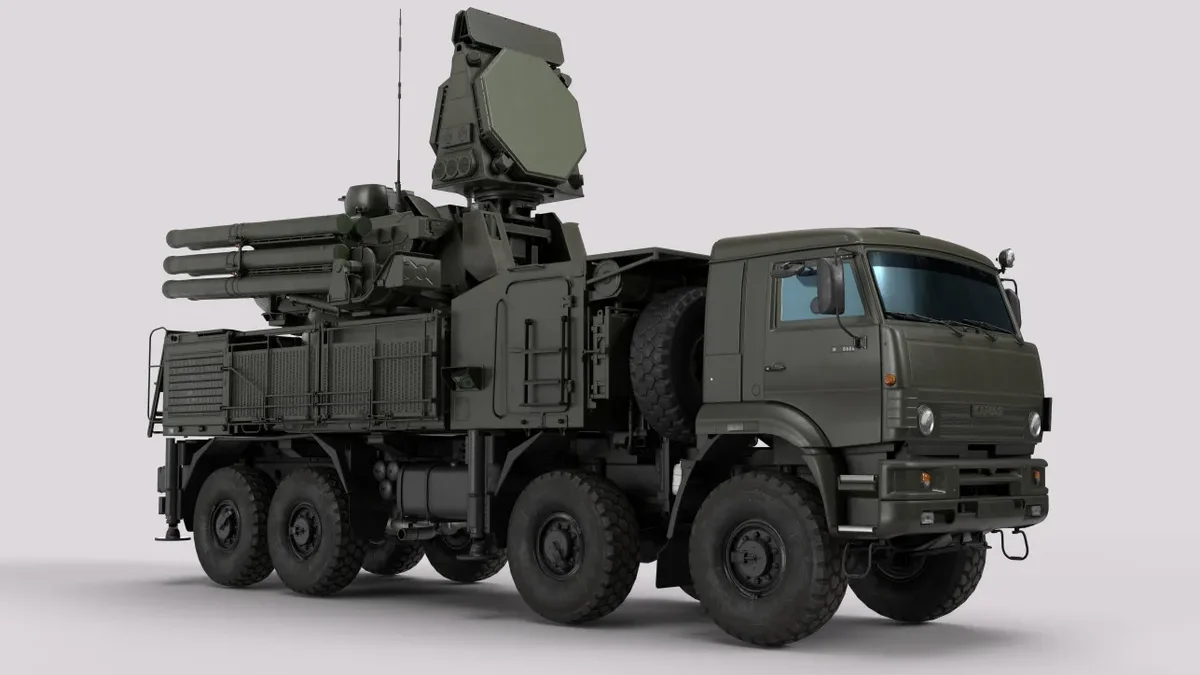
The Patriot production deal with Ukraine is losing momentum, and the reason, according to a Republican official on Capitol Hill, has less to do with technology security than with corporate self-interest. Lockheed Martin (LMT) and Raytheon are hedging on a joint-production agreement while two competing antiballistic programs accelerate around them, threatening to commoditize a market both companies currently control.
The White House set this in motion at the July NATO summit in Ankara, when President Trump pledged Ukraine a license to produce Patriot interceptors. “We’re going to give a license to you to make Patriots. That’s pretty cool. This way, you can’t complain that we’re not giving ’em enough,” he said, noting the companies had not yet been consulted. Within days, he reversed course at a Camp David Cabinet meeting: “We have not agreed to that. We’re talking about it, but it’s a hard thing to give away that kind of technology.”
The Republican official told The Atlantic the companies’ public framing around IP theft and tech transfer obscures the actual concern. “Their real worry is that the Ukrainians will find a way to improve the Patriot and then produce them at scale faster and for much less money than what the existing production lines in the U.S. could do,” the official said. The real threat is competition from Ukraine’s partners, not from Ukraine itself.
That threat is now concrete. One day after Lockheed unveiled its new PAC-3 ACE interceptor at the Farnborough International Airshow, Tim Cahill, president of Lockheed Martin Missiles and Fire Control, described production talks with Ukraine as simply “early.” Raytheon’s process “has just started,” its president of land and air defense systems, Tom Laliberty, said at the same show, with the company working with the U.S. government “to determine what is feasible and what is best for Ukraine.”
The economics driving urgency are severe. Defense News reports the existing PAC-3 MSE costs an estimated $4 million per round, against a roughly $35,000 price tag for an Iranian Shahed drone. The conflict with Iran has drained an estimated two-thirds of America’s pre-war Patriot interceptor inventory, and replenishment at current prices is not realistic at scale.
Lockheed’s response is the PAC-3 ACE, which the company says is designed to defeat a wide range of air and missile threats for less than half the cost of a PAC-3 MSE per unit, with deployment targeted “in record time” alongside American and European industry partners. Earlier reporting puts the price at roughly $2 million a round. Aviation Week notes Lockheed did not disclose a specific target cost or the technical differences from the MSE in its official announcement, limiting independent verification of the claims.
The U.S. government is also moving independently. The Missile Defense Agency announced a Low-Cost Interceptor program in August 2025 targeting a prototype within 18 months at $750,000 per unit. The Army is running a separate competition for an interceptor compatible with the existing M903 Patriot launch system at less than $1 million a round, according to Aviation Week.
Five days after Trump’s initial pledge, Ukraine and nine European nations, including France, Germany, the United Kingdom, and six others, launched the Freyja coalition in Paris. The program is built around the FP-7X interceptor developed by Ukrainian company Fire Point, priced at roughly one-fifth of a Patriot round.
Breaking Defense reports that Thales, Airbus, Destinus, MBDA, and Safran separately signed a Letter of Intent on the sidelines to establish the “Bliksem EXO,” a multinational European industrial partnership targeting an exo-atmospheric interceptor. Zelenskyy described the Freyja architecture to Reuters as “Lego, slotting together pieces of equipment from defense industry leaders,” with manufacturers tasked with developing interchangeable parts.
Reuters reports Ukraine’s goal is a minimum viable product by the first half of 2027, with Ukraine prepared to supply both launcher and interceptor. Reuters also notes that the Franco-Italian SAMP/T and German IRIS-T have not yet proven capable of downing ballistic missiles, positioning Freyja as targeting a capability gap neither existing Western system fills.
U.S. NATO Ambassador Matthew Whitaker told Fox News on August 3 that a long-term production agreement with Ukraine “will not be concluded before this winter.” Zelenskyy, for his part, told Ukrainian television over the weekend that “the decision has been made” by Trump and “other important American government institutions.” American officials have not responded to that claim.
The bear case for LMT and RTX is straightforward: every month the Patriot production deal with Ukraine stalls, Freyja gains engineering momentum and European political backing. If the FP-7X reaches its mid-2027 MVP milestone, the window for Lockheed and Raytheon to shape the next generation of antiballistic production on favorable terms closes considerably. The companies may be protecting their current margin while forfeiting the architecture of the next one.
Xiaomi Sky Nomad orders crossed 70,000 in the model family’s first month, a result that lifted the stock...
Delta Air Lines (DAL) slashed its Delta Air Lines 2026 outlook on Friday, cutting full-year adjusted earnings per...
The Tesla (TSLA) production outlook for 2026 points to a genuine volume recovery, but the more pressing question...