
Xiaomi Sky Nomad Orders Can’t Close the 2026 Delivery Gap
Xiaomi Sky Nomad orders crossed 70,000 in the model family’s first month, a result that lifted the stock...
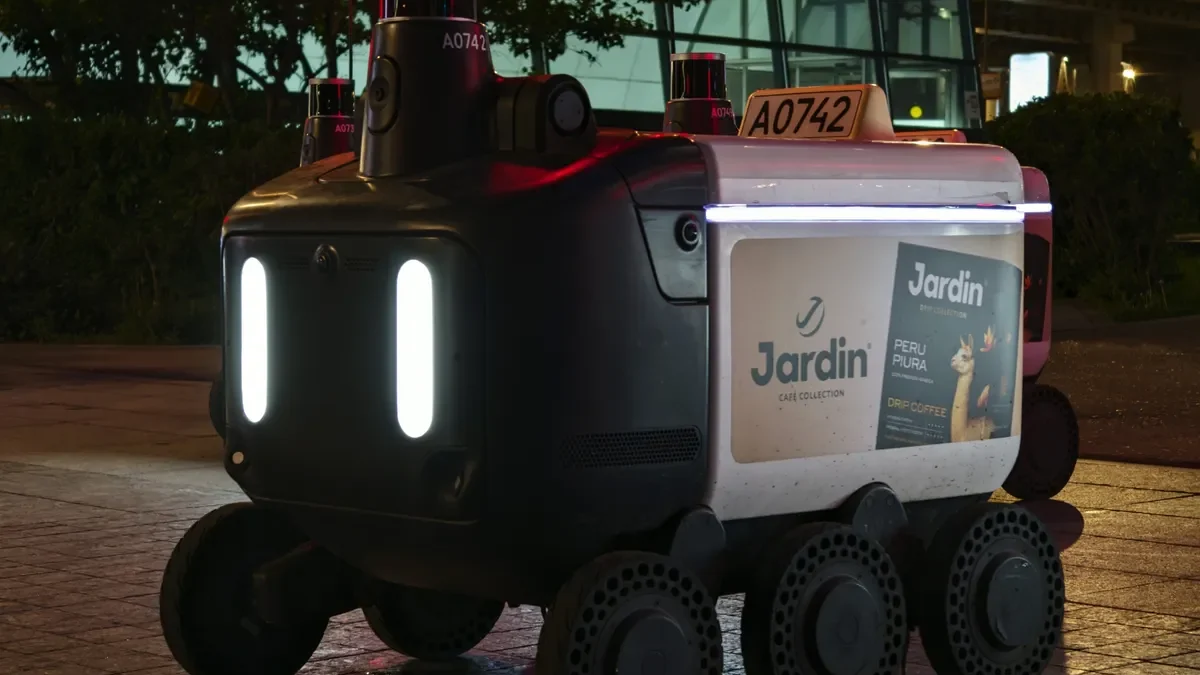
WeRide’s asset-light model delivered its first detailed public accounting this quarter, and the numbers confirm the structural logic while exposing how far the economics still need to travel. WeRide (WRD) shares fell as much as 9.9% in Hong Kong trading on August 13 before stabilizing around 6% lower after the company reported a CN¥400.7 million net loss, wider than the CN¥300 million analysts broadly expected.
Revenue surged 82% year-on-year. The miss was entirely a cost story.
Citigroup analysts led by Jeff Chung attributed the shortfall to core service margins outside WeRide’s AI infrastructure and SAE Level 3 driving system, which faced seasonal pressure and costs tied to domestic robotaxi deployment. International operations continued outperforming, but that strength was not enough to offset the spending on the home market.
The headline revenue composition is worth unpacking. According to the Q2 2026 earnings call transcript, WeRide’s L4 robotaxi revenue reached RMB125 million in the quarter, up 47% year-over-year. The faster-moving line was ADAS: L2+/L3 system revenue grew 2,600% year-over-year, consistent with the company shipping approximately 30,000 units of its WRD 3.0 end-to-end solution across more than 30 vehicle models during the period.
Management targets more than 100,000 installed vehicles by year-end and cumulative deliveries surpassing 500,000 by 2027. Whether those volumes arrive on schedule matters more than any near-term revenue figure, because the ADAS ramp is the credible path to gross margin expansion.
The cost side is harder to dismiss. Quarterly R&D expenses of CN¥434 million (US$64.4 million) ran at nearly twice quarterly revenue, and gross profit of just CN¥87 million (US$12.9 million) fell well short of covering research spending alone. For context, WeRide’s Q1 2026 Form 6-K shows R&D of RMB363.3 million (US$52.7 million) that quarter, excluding share-based compensation, which itself ran RMB322.3 million, up 15.9% from RMB278.0 million in Q1 2025. The trajectory is up, not down.
WeRide disclosed its overseas monetization structure for the first time this quarter. Rather than owning vehicles, the company charges local partners technology-service and per-mile fees, with management expecting more than US$50,000 in annualized revenue per vehicle once operations normalize. Partners including Avomo in Spain and Rydera in Switzerland absorb vehicle purchase costs, depreciation, and daily operations.
International markets now account for nearly 40% of company revenue, up 164% year-over-year. The overseas fleet roughly doubled to around 400 vehicles across a dozen countries. The MENA corridor is the centerpiece: Uber’s investor relations press release confirms the two companies were operating robotaxis in three of the 15 cities outlined under their agreement at announcement, with the remaining 12 cities targeted by 2030, and all 1,200 vehicles bookable via the Uber app. WeRide had more than 200 robotaxis in the region at the time of that announcement. Critically, the Uber partnership operates on the same asset-light basis: Uber or local operators handle fleet operations, not WeRide.
The balance sheet shows the burn rate this model must outrun. Cash and cash equivalents fell to roughly CN¥5.4 billion at the end of June, down from CN¥6.97 billion at end-2025. WeRide’s Q1 2026 SEC Form 6-K filing places the March 31, 2026 aggregate cash position at RMB6,224.7 million (US$902.4 million), confirming the drawdown accelerated through the second quarter. The company’s own target is positive cash flow in a single quarter by 2028, which requires both overseas fleet density and ADAS installation volumes to scale considerably faster than the current run rate.
Domestically, Beijing resumed issuing robotaxi permits in July after a lengthy suspension, giving WeRide a second growth lever. Guangzhou metrics improved: average daily rides per vehicle reached 21, up 24% quarter-on-quarter. The China market is crowded, though. Baidu’s Apollo Go, Pony.ai (whose fleet surpassed 1,700 vehicles), Momenta, AutoX, and Didi all compete for the same corridors, and Momenta expanded robovan operations into Suzhou in July.
The bull case rests on per-vehicle economics compounding as MENA density builds and ADAS volumes scale: if 1,200 Uber-deployed vehicles each generate US$50,000-plus annually, that alone approaches US$60 million in annualized revenue before any other market contributes. The bear case is simpler: R&D is already consuming more cash per quarter than the company earns in gross profit, the 2028 cash-flow target leaves little room for deployment slippage, and China competition keeps domestic margins under pressure. The evidence leans cautiously toward the bull case on structure but not yet on pace. WeRide has the right model; the question is whether the fleet density compounds fast enough before the balance sheet demands a response.
Xiaomi Sky Nomad orders crossed 70,000 in the model family’s first month, a result that lifted the stock...
Delta Air Lines (DAL) slashed its Delta Air Lines 2026 outlook on Friday, cutting full-year adjusted earnings per...
The Tesla (TSLA) production outlook for 2026 points to a genuine volume recovery, but the more pressing question...