
Xiaomi Sky Nomad Orders Can’t Close the 2026 Delivery Gap
Xiaomi Sky Nomad orders crossed 70,000 in the model family’s first month, a result that lifted the stock...
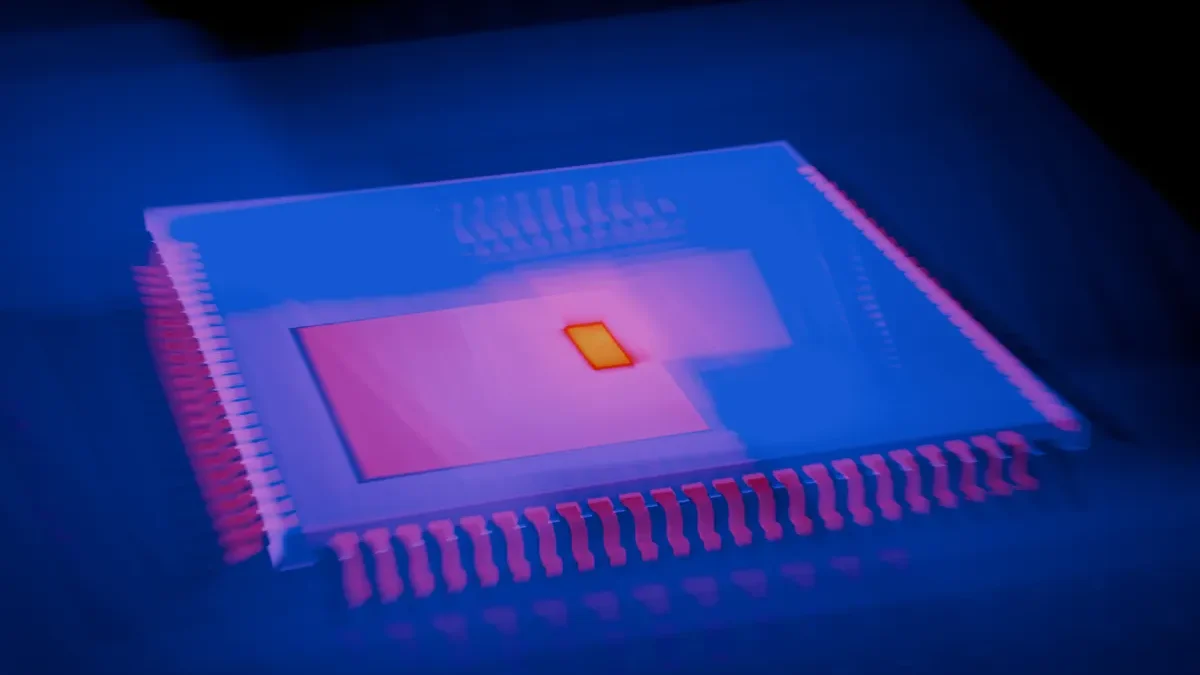
A Cerebras earnings guidance raise failed to hold the stock after hours Wednesday: Cerebras Systems (CBRS) tumbled roughly 14% in extended trading despite lifting its full-year core revenue outlook, and a lock-up release tied directly to the Q2 report is the structural detail that puts the sell-off in context.
The headline financials were not the problem. Q2 core revenue came in at $210 million, outpacing total revenue of $180 million, which reflects the company’s pass-through revenue accounting. That compares to Q1 2026 core revenue of $191.3 million, a solid sequential step-up.
Cerebras also raised its full-year core revenue guide to $880 million to $890 million, up from a prior range of $855 million to $865 million, and set Q3 core revenue guidance at $214 million to $216 million. Core gross margin is expected to expand to 38% to 40% in Q3, addressing a persistent investor concern.
The net loss for Q2 was $450.5 million, a sharp swing from a profit of $309.5 million, or $1.91 per share, a year earlier. The bulk of that swing traces to stock-based compensation of $386.6 million, a non-cash charge that inflated the headline loss but does not change the operating trajectory.
So why the drop? The answer sits in the Cerebras S-1/A filing with the SEC. Approximately 36.4 million shares held by directors, officers, non-executive employees, and other holders become eligible for sale at 6:00 a.m. Eastern Time on the second trading day following the Q2 earnings release. A further approximately 14.6 million shares unlock on August 19, 2026. That is roughly 51 million shares entering a market where the stock had already run 42% above its May IPO price of $185.
The underlying demand story is not in dispute. Cerebras holds $25.4 billion in remaining performance obligations, which the company describes as evidence of extraordinary future demand. CEO Andrew Feldman said AI demand is “through the roof” and that customers are paying a premium for specialty inference chips built for low-latency, interactive workloads the company calls “fast inference.”
On gross margin, Feldman’s position is that pricing supports expansion: “Gross margins are in a good spot, and growing, because fast inference is priced at a premium,” he said, adding that Cerebras has increased the AI output of its systems.
The scale argument is also taking shape operationally. Feldman laid out the logic directly: “We will manufacture more efficiently. We’ll get better pricing on componentry. We’ll amortize our manufacturing organization over more units. All of those point up and to the right.” The company expects revenue to triple in the next fiscal year.
Two recent partnership announcements reinforce the demand narrative. Cerebras confirmed a deal with Advanced Micro Devices, an Nasdaq-listed Nvidia rival, with products entering production later this year. More visibly, Cerebras is powering what the company calls “Ultrafast mode” in the OpenAI API for GPT-5.6 Sol, running the model at up to 750 output tokens per second and up to 14 times faster than standard processing, according to the Cerebras investor relations announcement. The service launched in limited preview to OpenAI customers on August 13, 2026.
Cerebras’s cloud segment generated $126 million in revenue during the June quarter, demonstrating that software-layer monetization is scaling alongside chip sales.
The bull case: guidance raised, gross margin expanding, $25.4 billion in backlog, and a differentiated product in fast inference that commands pricing power. The stock at Wednesday’s close of $262.06 still sits well above its IPO, reflecting genuine investor conviction in the AI inference market.
The bear case: the 14% after-hours drop reflects rational behavior by holders watching roughly 51 million newly-eligible shares enter the float. At current prices, that overhang represents a substantial dollar value relative to average daily volume for a stock with no prior lock-up release. Gross margins at 38% to 40% also remain well below those of established semiconductor leaders, and the path to profitability is still obscured by heavy stock-compensation charges.
The lock-up mechanics here are the near-term catalyst, not the fundamentals. If the stock absorbs the share release without a sustained break below the IPO price, the guidance raise and backlog story regain control of the narrative. A sustained move lower on heavy volume in the days following the August 19 unlock date would signal that the overhang is larger than the demand story can currently support.
Xiaomi Sky Nomad orders crossed 70,000 in the model family’s first month, a result that lifted the stock...
Delta Air Lines (DAL) slashed its Delta Air Lines 2026 outlook on Friday, cutting full-year adjusted earnings per...

The Tesla (TSLA) production outlook for 2026 points to a genuine volume recovery, but the more pressing question...