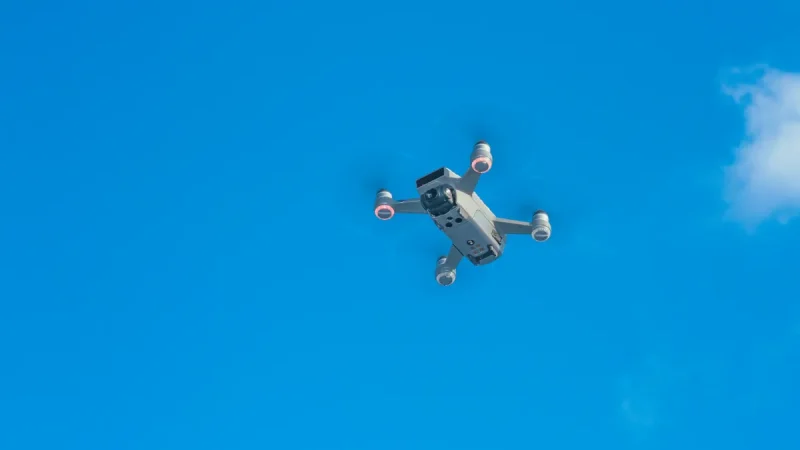
Kongsberg Poland Counter-Drone Plant to Open in 2028 With $51M Investment
Kongsberg’s Poland counter-drone factory plan, announced at the Warsaw Security Forum on October 12, is more than a...

CoreWeave’s revenue backlog hit $104 billion at the close of Q2 2026, and the market liked what it saw: shares of CoreWeave (CRWV) jumped 14% in extended trading after the AI cloud provider topped Wall Street estimates on both revenue and guidance. The read here is straightforward: demand is outrunning supply capacity, customers are signing long-duration contracts at rising prices, and the stock is pricing in that combination staying intact.
Revenue grew 112% year-over-year in the quarter, and Q3 guidance of $3.4 billion to $3.6 billion implies roughly 158% growth at the midpoint, well ahead of the $3.43 billion LSEG consensus. Full-year 2026 revenue guidance was raised to $12.4 billion to $13.2 billion, up from the $12 billion to $13 billion range CoreWeave set in May.
The CoreWeave revenue backlog of $104 billion is the figure that commands attention. That total excludes more than $25 billion in new Q3 commitments, and it compares to a Q1 2026 backlog of $99.4 billion, itself up 284% year-over-year. In practical terms, CoreWeave has years of contracted revenue already on the books.
The bear case sits in the cost structure. According to CoreWeave’s Q2 2026 SEC earnings filing, cost of revenue nearly tripled to $879 million from $313 million a year earlier, while technology and infrastructure expense rose to $1,507 million from $670 million. Adjusted operating income margin compressed to 5% on $128 million, down from a 16% margin and $200 million in Q2 2025. The GAAP net loss widened to $626 million from $290 million a year ago, on $35 billion of debt.
Adjusted EBITDA margin came in at 59% for the quarter, per the company’s investor relations release, versus 62% in Q2 2025. Margin is compressing even as the top line accelerates, which is the tension every CoreWeave bull has to sit with.
CEO Mike Intrator pushed back on the margin compression narrative by pointing to pricing. “Pricing and margins for our Blackwell and Vera Rubin SKUs are setting new highs, while pricing for prior generation SKUs is at or above where it was years ago,” he said. CFO Nitin Agrawal added that CoreWeave is passing component price increases through to customers, which matters given Nvidia’s ongoing hardware cycle.
The customer list backs that up. During the quarter, Meta committed an additional $21 billion, CoreWeave announced a multi-year deal with Anthropic, and Jane Street signed a $6 billion cloud agreement. Jane Street also made a $1 billion equity investment in CoreWeave as part of that arrangement, announced in April 2026. The deal gives Jane Street access to Nvidia’s Vera Rubin platform across multiple facilities, per the 8-K exhibit filed with the SEC.
Longer-term anchor relationships add further visibility. The Next Web reports OpenAI has committed approximately $12 billion to CoreWeave over five years, and Nvidia invested $2 billion in CoreWeave equity in January 2026 while separately agreeing to purchase $6.3 billion in unsold compute capacity through April 2032. When your largest chip supplier is also a customer guaranteeing demand, the backlog is structurally less fragile than it looks at face value.
CoreWeave raised its annual capital expenditure forecast to $35 billion to $39 billion, up from $31 billion to $35 billion in May. Active power capacity is expected to top 1.85 gigawatts by year-end, versus 1.5 gigawatts currently. The company is spending at a pace few pure-play infrastructure providers have ever attempted, funded almost entirely by debt.
On regulatory risk, New York Governor Kathy Hochul signed an executive order in July placing a moratorium on new large-scale data centers. Intrator said on the earnings call that “none of those numbers will be impacted by the regulatory pushback as of today,” while acknowledging in a separate CNBC interview that resistance in parts of the US “becomes more challenging.” The caveat is important: guidance reflects current capacity and existing permits, so the risk is to future builds, not the near-term backlog.
Competition is a real variable. SpaceX has begun selling excess compute capacity, and rival Nebius gained 5% in extended trading on the same session. Agrawal’s response: “Even with this increased competition, we’re seeing demand, pricing and margin all expanding.” That claim is harder to dismiss when every major customer announcement in the quarter ran to ten figures.
CRWV is up 26% year-to-date against a 13% gain for the S&P 500. The stock’s valuation rests entirely on the backlog converting to cash at current margins. If adjusted operating income margin continues to compress as capex scales, the bull thesis gets harder to hold; if pricing power holds and Vera Rubin deployments lift margins, the guidance range for $960 million to $1.15 billion in 2026 adjusted operating income starts to look conservative. Margin trajectory in Q3 is the number to watch.
Kongsberg’s Poland counter-drone factory plan, announced at the Warsaw Security Forum on October 12, is more than a...

Three U.S. Army soldiers received Purple Hearts for their actions during the Operation Epic Fury Purple Hearts ceremony...
Vector Defense and Nammo announced an expanded partnership Monday at the Association of the United States Army’s annual...