Kongsberg Poland Counter-Drone Plant to Open in 2028 With $51M Investment
Kongsberg’s Poland counter-drone factory plan, announced at the Warsaw Security Forum on October 12, is more than a...
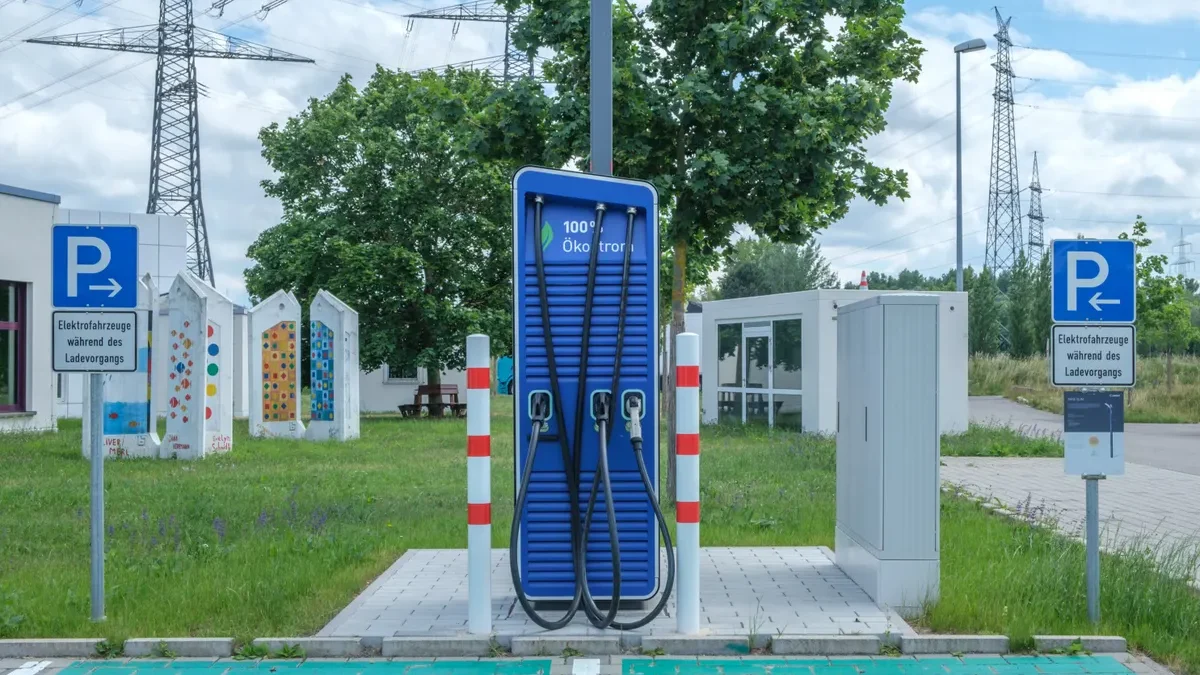
Tesla’s Japan network expansion is accelerating at a pace the company’s own infrastructure was not built to handle, with the automaker adding four delivery locations to its existing seven after first-half 2026 sales already surpassed its entire 2025 result. The investment signals that Japan has shifted from a curiosity market into a genuine growth engine, driven by a subsidy overhaul that has structurally favored Tesla over its Chinese rivals.
Tesla sold 12,197 vehicles in Japan across the first half of 2026, according to eletric-vehicles.com citing JAIA data, clearing the full-year 2025 total of 10,600 units before the calendar turned to July. For context, Tesla’s full-year 2022 total was 5,900 vehicles, meaning the company has more than doubled its annual Japanese run-rate in roughly three years.
The quarterly breakdown reinforces how quickly momentum built. EVwire, citing JAIA data, reports that Q2 2026 produced 7,034 registrations, Tesla’s best quarter ever in Japan. June alone contributed 3,997 of those, a figure 58% above Tesla’s previous single-month record. That June result also pushed Tesla to second place among all imported brands by monthly registrations, trailing only Mercedes-Benz, the first time it has reached that ranking.
The growth trajectory was already visible earlier in the quarter. basenor.com reports April 2026 registrations rose 200% year-over-year to 1,041 units, while May surged 182% year-over-year to 1,996. In May, the Model Y became the single best-selling imported car model in Japan for the first time, according to eletric-vehicles.com.
Tesla Japan President Richi Hashimoto attributed the June spike to a three-year free fast-charging campaign for new orders and a concentration of deliveries timed to the end of the month. Both factors are real, but the more durable driver sits in Tokyo’s policy architecture.
Japan restructured its national EV incentive in April 2026 around supply-chain security and vehicle-to-everything capability rather than range or efficiency. The practical effect: Tesla’s Models Y and 3 qualify for the near-maximum JP¥1.27 million (roughly $7,970) national tier, while BYD’s Atto 3 and Seal fell from the ¥350,000-¥450,000 range to just ¥150,000, according to auto.pub. The Nissan Ariya was not immune either, its support dropping from ¥1.29 million to ¥1.0 million, which underlines that the restructuring was not purely a mechanism to disadvantage Chinese brands.
Tokyo then compounded the advantage at the municipal level. The city confirmed it would raise its own subsidy to as much as JP¥1.3 million on top of the national scheme. Under Tokyo’s revised framework, driveteslacanada.ca reports that Tesla qualifies for a ¥300,000 manufacturer-based tier, placing it above BYD but below Toyota, Nissan, and Honda. According to electrive.com, a Toyota bZ4X buyer could stack the full national and Tokyo incentives for combined support of ¥2.6 million against a roughly ¥4.8 million list price, a structure that shows Tokyo’s ambition to shift volume quickly.
Tesla’s subsidy position is strong but not at the top of the hierarchy. The read here is that Japan’s framework is designed primarily to benefit domestic OEMs, with Tesla benefiting as a secondary consequence of rules written to exclude Chinese supply chains. That distinction matters for how durable the advantage is.
On the logistics side, Tesla’s Japan network expansion addresses a physical bottleneck. The automaker previously shipped all Japan-bound vehicles through Daikoku Wharf in Yokohama. Since July it has also used Mikawa Port in Aichi prefecture, Japan’s largest vehicle import port, lifting total annual import capacity to around 48,000 vehicles and opening a second distribution route toward western Japan. New delivery centers in Yokohama and Kobe arrive in August, with greater Tokyo and Nagoya following by year-end, bringing the total to 11 sites.
The bull case is straightforward: Tesla is drawing affluent, tech-oriented buyers away from German luxury incumbents in a market where those purchases carry strong margins, and the subsidy structure currently does the selling for it. The bear case is policy risk. Japan’s framework explicitly serves domestic industrial competitiveness. If Tesla’s volumes grow large enough to register as a trade irritant, the subsidy architecture can be rewritten again, and Tesla has no domestic manufacturing presence in Japan to fall back on. The 48,000-unit annual import capacity is a ceiling that will look tight quickly if the H1 run-rate holds through year-end.
Kongsberg’s Poland counter-drone factory plan, announced at the Warsaw Security Forum on October 12, is more than a...

Three U.S. Army soldiers received Purple Hearts for their actions during the Operation Epic Fury Purple Hearts ceremony...
Vector Defense and Nammo announced an expanded partnership Monday at the Association of the United States Army’s annual...