
Why Goldman Sachs Just Said Industrial and Defense Stocks Are the New “Safe Havens” — and What That Means for Tech
A quiet rewrite has been taking place somewhere on the 43rd floor of Goldman Sachs’ Manhattan headquarters. Neither...

A used car lot in late winter has a distinct sound: the hiss of tire pressure checks, plastic tags flapping on windshields, engines turning over in the cold. There are rows of slightly used Teslas, Polestars, and Volvos, some with less than 30,000 miles on them, if you walk through one today in New Jersey or outside of Dallas. Hertz was the source of many. Nobody anticipated the prices to be so low. That tells the tale in just one picture.
It seemed like a turning point when Hertz announced a 100,000-Tesla order after emerging from bankruptcy in 2021. The headline alone—the largest single EV purchase ever, valued at an estimated $4.2 billion—boosted Tesla’s stock price and gave the rental business a glamour it hadn’t had in a long time. The interim CEO at the time, Mark Fields, referred to electric cars as “mainstream.” It sounded like a decisive, even visionary, announcement. In retrospect, it was also the type that deteriorated in public.
The fissures were apparent by 2023. Every EV on Hertz’s books was becoming less valuable every week as a result of Tesla’s continuous price reductions. The cost of repairs was high. Front-end collisions were piled up by renters who were not familiar with regenerative braking at rates that made actuarial spreadsheets cringe. Hertz began restricting the torque of some EVs and directing them toward “experienced users,” which is a polite way of saying that the company had misjudged how much of a learning curve these vehicles require from infrequent drivers.
The sell-off followed. Hertz announced in January 2024 that it would get rid of 20,000 EVs. That number increased to 30,000 by April. Nearly half a billion dollars was directly linked to EV losses as a result of the related fees, which totaled $245 million in Q4 2023 and an additional $195 million in Q1 2024. Hertz ended 2024 with a $2.9 billion loss when you factor in the larger impairment charges, the increased collision costs, and the declining depreciation-per-unit figures. A number like that ceases to be merely a Hertz tale.
The residual value of electric vehicles has been declining worldwide, which is what caused auto lessors everywhere to take notice. According to reports from Europe and Asia through 2025, EV resale values fell more quickly than those of comparable gas vehicles, sometimes by double-digit percentages in a single year. Thousands of three- and four-year contracts are written by leasing companies in Germany and the UK using assumed end-of-term values; these companies have begun re-pricing their books. Some have discreetly reduced their use of EV-heavy leases. Compared to two years ago, banks that finance fleet purchases are now more stringent when it comes to residuals.
Speaking with fleet finance professionals, it seems that the Hertz incident only made the residual value crisis more apparent in US dollars. The fundamental issue is not as complicated as it appears. EVs lose value quickly because used car buyers haven’t yet developed the same level of comfort with a six-year-old electric sedan as they have with a six-year-old Camry, new EV prices continue to decline, and batteries continue to be the main source of uncertainty.
It’s difficult not to feel as though the industry is in an awkward adolescence as you watch this develop. The technology is functional. Even Adam Jonas of Morgan Stanley has commented on how enjoyable the driving experience is. However, the financial aspects of EV ownership, such as financing, residuals, insurance, and repairs, have not kept up. Every lessor from Paris to São Paulo will continue to stare at spreadsheets that don’t balance the way they once did until it does.
A quiet rewrite has been taking place somewhere on the 43rd floor of Goldman Sachs’ Manhattan headquarters. Neither...

If you’ve been following Warren Buffett for some time, you’ll notice a subtle contradiction in the way he...
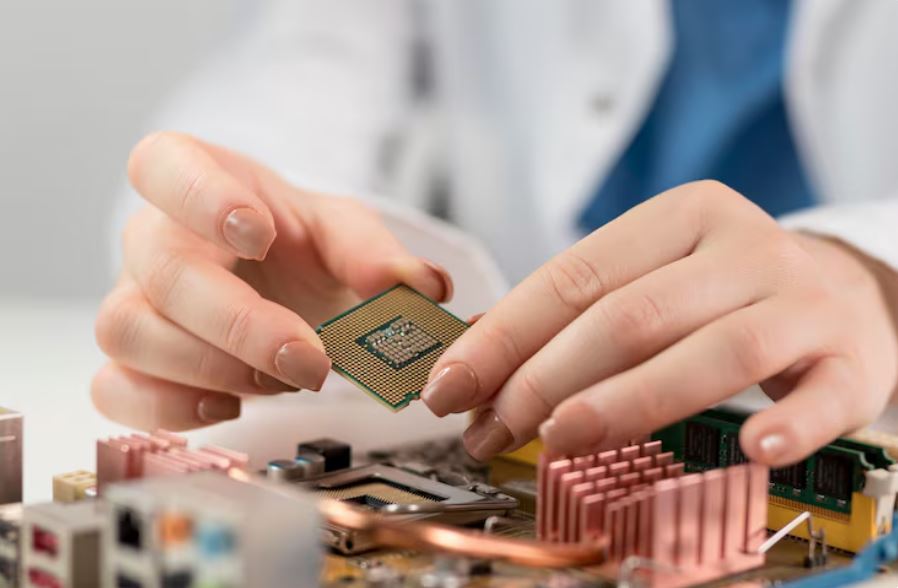
The discourse surrounding semiconductors has mostly adhered to a well-known script for the last two years. Nvidia, GPUs,...