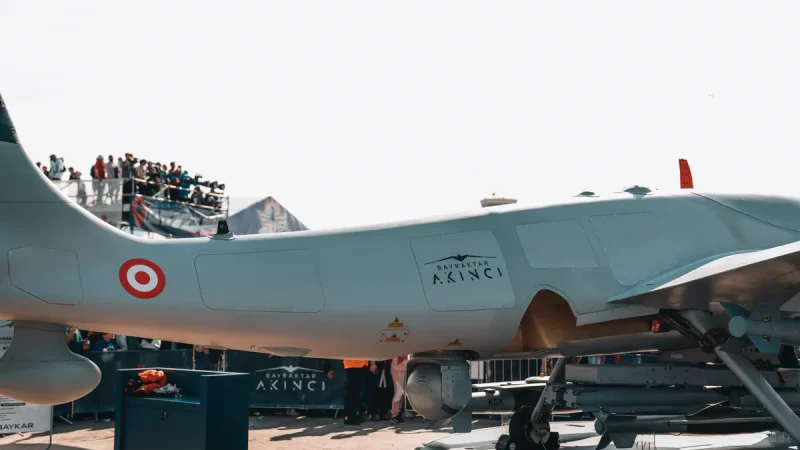
Vector and Nammo Armed Drones Scale Up for Mass Production
Vector Defense and Nammo announced an expanded partnership Monday at the Association of the United States Army’s annual...
The narrative surrounding Tesla’s self-driving technology is encountering significant pressure in California. Recent disclosures from the state’s Department of Motor Vehicles (DMV) and an ongoing legal battle are challenging the very story that has long been pitched to investors as the company’s primary growth engine. This raises a critical question: how close is a viable robotaxi service when regulatory bodies are simultaneously raising the bar for approval?
According to documents released by the California DMV, Tesla reported zero miles of autonomous testing on public roads within the state for the year 2025. This disclosure is particularly striking as the company continues to promote its progress toward a fully autonomous fleet.
Compounding this issue is an active lawsuit Tesla has filed against the same regulatory body. The legal action stems from a DMV determination that the marketing terms “Autopilot” and “Full Self-Driving” are potentially misleading. In response to regulatory scrutiny, Tesla has already adjusted its advertising language; references to “Autopilot” have been removed in some materials, and “Full Self-Driving” is now described as a supervised system.
A further obstacle is Tesla’s current lack of permits for completely driverless operations in California. Present regulatory text indicates the company only holds an entry-level permit, which mandates the presence of a human safety driver behind the wheel. Proposed rules for the next phase of testing would require at least 50,000 miles of supervised autonomous driving—a benchmark that appears difficult to achieve without a substantial increase in documented testing activity.
While regulatory challenges mount in California, strategic developments are unfolding in Texas. Following shareholder approval in June 2024 to move its legal corporate headquarters to the state, Tesla now operates in a region where the electrical grid is under immense strain.
The Electric Reliability Council of Texas (ERCOT) anticipates a sharp rise in connection and power capacity requests from major consumers like industrial plants and data centers. Projections indicate large-scale projects seeking 33,000 megawatts of connection by 2026, with requests potentially exceeding 200,000 megawatts by 2030. In total, current requests already stand at more than 200 gigawatts. For energy-intensive companies like Tesla, grid stability and decentralized energy management are becoming critical factors for operational planning.
Tesla’s regulatory difficulties are emerging against a backdrop of broader automotive industry tension. Competitor Stellantis reported a net loss of 20.1 billion euros for the second half of 2025. The company cited EV-related write-downs totaling 25.4 billion euros for the full year, alongside an adjusted operating loss of 1.38 billion euros, attributing these results to an overestimation of the energy transition’s pace.
In contrast, research from the Fraunhofer Institute supports the fundamental environmental case for electric vehicles. Their data indicates that mid-range EVs generate 40% to 50% fewer greenhouse gases over their lifecycle compared to internal combustion vehicles, despite higher production emissions. The study also highlights potential annual savings of up to 1,000 euros through bidirectional charging and finds no elevated fire risk relative to traditional cars.
The current market sentiment is reflected in Tesla’s share price. Trading at 345.35 euros, the stock sits notably below its 50-day moving average of 371.10 euros, signaling short-term headwinds for the equity.
Investor focus in the coming weeks will likely center on two key issues: whether Tesla can navigate the regulatory landscape in California to enable more robust autonomous testing, and how credible its robotaxi timeline remains in the absence of necessary permits and documented test mileage.
Vector Defense and Nammo announced an expanded partnership Monday at the Association of the United States Army’s annual...
The TSMC earnings season preview is the week’s focal point, with Taiwan Semiconductor Manufacturing (TSMC) reporting Thursday as...
The EU-China hybrid deal announced on October 9 in Beijing is less a resolution than a redirect: Brussels...