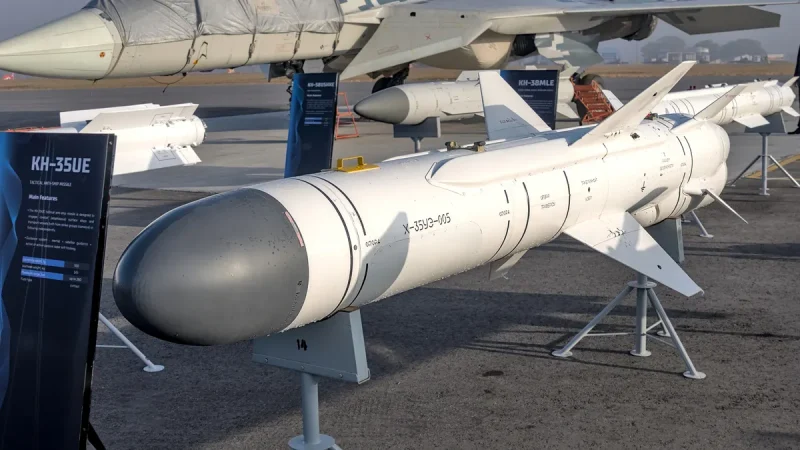
Raytheon SM-3 Block IB Contract Locks In Missile Defense Through 2034
The Pentagon awarded Raytheon a Raytheon SM-3 Block IB contract worth up to $6.3 billion on October 8,...
The EU-China hybrid deal announced on October 9 in Beijing is less a resolution than a redirect: Brussels gets a promised halving of Chinese hybrid shipments, China gets continued market access for its best-capitalised brands, and the underlying overcapacity problem moves downstream rather than disappearing. The mechanism for achieving the cuts remains entirely unspecified, and that gap between ambition and architecture is where the real risk sits.
EU Trade Commissioner Maroš Šefčovič, speaking after two days of talks with Commerce Minister Wang Wentao in Beijing, said the two sides reached “a shared understanding to moderate China’s exports of hybrids and plug-in hybrids to the EU.” He added that this “opens the prospect of cutting China’s exports by more than a half” and would keep “several millions” of Chinese cars out of the EU over the coming years.
The China official government statement confirmed that the second meeting of the China-EU trade and investment consultation mechanism was jointly chaired by Wang and Šefčovič, with the next session under that mechanism scheduled for March 2027. Beijing’s 16-point statement highlighted the hybrid restraint agreement without explaining how exports would actually be curbed, while Šefčovič declined to say whether import quotas or tariffs were still on the table.
The two sides also agreed to continue procedures on company price undertakings in the EU’s anti-subsidy case covering Chinese electric vehicles, and to hold a technical dialogue on the EU’s Foreign Subsidies Regulation, according to the same Chinese government statement. That anti-subsidy case matters for context: under EU Implementing Regulation 2024/2754, countervailing duties on Chinese battery electric vehicles of 17.0% for BYD, 18.8% for Geely, and 35.3% for SAIC, all on top of the standard 10% rate, apply for five years from October 30, 2024. Hybrids escaped that framework entirely, sitting at the standard 10%, and Chinese brands responded predictably.
The results were swift. Chinese brands took a record 12% of European car sales in August, including roughly a quarter of all hybrid sales. EU plug-in hybrid imports rose 86% in the year to September as prices fell 20%. Earlier this year, Eurostat data showed EU car imports from China jumped 77% in Q1 2026 alone. Only days before the deal, Beijing had rebuffed an EU request to cap Chinese hybrids at 15% of the market, citing WTO rules.
Cars are a fraction of a much larger imbalance. Eurostat put the EU-China goods trade deficit at €359.8 billion in 2025, with EU exports to China down 6.5% and imports up 6.4% year on year. The deficit is up a further 12% so far this year. Vehicle imports, at €29.9 billion, ranked as the fourth-largest import category from China, well behind electrical machinery at €164.9 billion. Chinese car exports to the EU stood at €15.1 billion.
The hybrid and plug-in hybrid surge was not accidental strategy; it was the most profitable release valve for a structurally oversupplied industry. Export margins on plug-in hybrids to Europe ran two to three times higher than those available in China’s domestic price war. Restricting that outlet does not eliminate the surplus capacity; it sends the volume back into the domestic market or redirects it toward Latin America, Southeast Asia, and the Middle East, none of which can absorb it at European price points.
The consolidation implication is real. BYD, Chery, and other well-capitalised groups can localise production behind the tariff wall, with plants already operating or under construction in Hungary, Turkey, and Spain. Smaller brands and loss-making state-backed ventures lack the capital to follow. With more than 100 active Chinese brands and regulators long flagging fragmented production as a structural problem, European curbs may inadvertently accelerate the industry shakeout Beijing has so far struggled to impose domestically.
Europe’s own overcapacity problem does not disappear either. Volkswagen and Mercedes-Benz are cutting jobs and closing plants. Curbing Chinese hybrids protects volume for European factories but generates no new demand. EU leaders will review the Beijing outcome at their summit in Brussels next week, with Germany’s trade measures package due before cabinet on October 14, according to Politico. Beijing agreed separately to cut duties on €4 billion of EU goods and to continue fast-tracking rare earth export licenses, and Brussels is already framing the hybrid deal as a template for chemicals and machinery.
The promised halving is measured against projected growth, not current volumes, and neither side has explained the enforcement mechanism. If it holds, the losers are the weaker half of China’s crowded auto industry. The survivors will increasingly build their European cars in Europe, behind the same tariff wall that was meant to keep them out.
The Pentagon awarded Raytheon a Raytheon SM-3 Block IB contract worth up to $6.3 billion on October 8,...
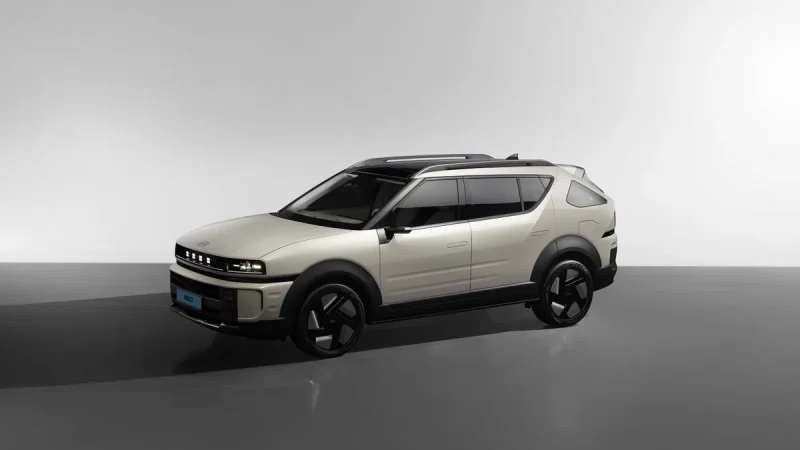
Xiaomi Sky Nomad orders crossed 70,000 in the model family’s first month, a result that lifted the stock...

Delta Air Lines (DAL) slashed its Delta Air Lines 2026 outlook on Friday, cutting full-year adjusted earnings per...