

You’ll notice something strange if you walk into a Hyundai dealership on a Saturday afternoon in a suburban area of New Jersey. They’re not selling the Ioniq 5s by the window. The monthly figures written on the windshields appear almost suspicious, and they are being leased. $199. $229. In one instance, the deal was scrapped and rewritten, and after accounting for state rebates, it came to almost nothing. When questioned, the salesman shrugs. “It’s the only way they move,” he says, pointing to a back lot full of unsold goods.
The American EV market is currently being driven by this peculiar engine. Sales of new cars have stagnated in a manner that was unimaginable just two years ago. Interest rates remain uncomfortable, the federal purchase credit is no longer available, and the sticker prices of electric crossovers have not significantly decreased. However, leases in particular are doing something that is almost magical. Automakers have discovered that if they are unable to sell the vehicle, they can rent it for such a low price that practically nobody declines.
The ruse stems from a peculiarity in the 2022 Inflation Reduction Act that allowed leased EVs to avoid the domestic-sourcing regulations that applied to outright purchases by classifying them as commercial vehicles. The entire $7,500 credit could be pocketed by dealers and passed through. EV lease rates increased from 15% in 2022 to about 67% by March of last year, with almost a million leases signed between early 2022 and early 2025. In order to keep inventory off the lots, automakers kept the lease incentives active even after the federal credit had officially expired.
Industry observers believe that this cannot continue indefinitely, but it is still going on. The difference is being absorbed by automakers’ internal lenders, or captive finance arms. In 2022 and 2023, leases were written under the assumption that residual values would be around 50%, but in reality, they are closer to 35 or 40. According to Bloomberg, the value of a three-year-old EV at auction decreased from 90% in early 2022 to roughly 40% at the end of 2025. When hundreds of thousands of cars are taken into account, the shortfall amounts to billions.
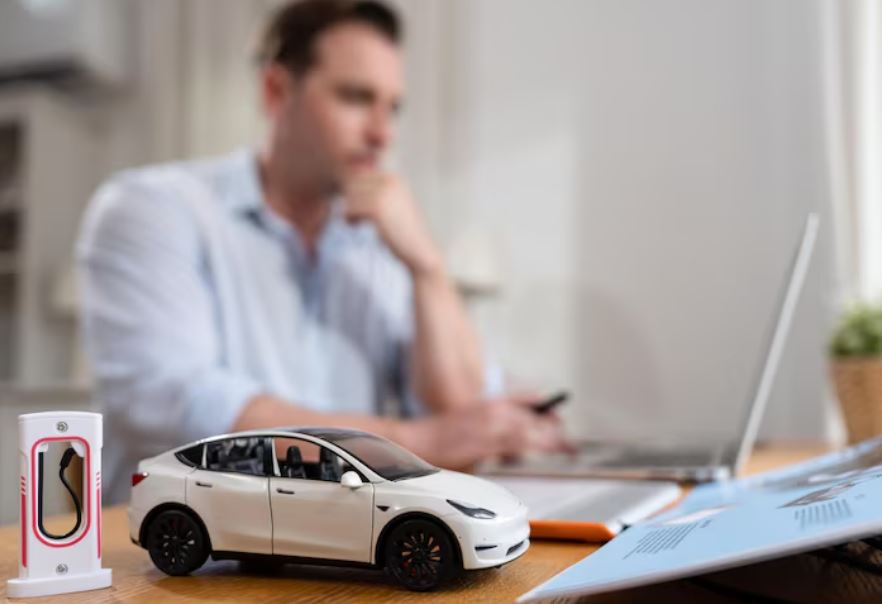
The similarities to the early 2010s, when GM and Chrysler dumped fleets of subsidized leases into the market to stabilize their post-bailout businesses, are difficult to ignore. The same pattern can be seen in the short-term math that keeps factories running and the longer-term math that is solved by someone else downstream. This time, the scale is different. In 2026, about 300,000 EVs—more than twice as many as the previous year—are anticipated to return from lease. The total number of vehicles in the cohort will surpass 650,000 by 2027. Rows of Model 3s, ID.4s, Mach-Es, recently installed charging stations, and remarketing teams inspecting battery health like used-car appraisers once thumped tires are all visible in any Manheim auction lane today.
It’s an odd kind of golden age for consumers. A comparable gas crossover costs more than a two-year-old Ioniq 5 with 24,000 miles that is still covered by the battery warranty. Pre-owned EVs used to cost closer to ten thousand dollars more than comparable internal combustion vehicles, but today they only cost about $900 more. This arrangement seems acceptable to younger consumers, who grew up believing that everything was a subscription anyhow. Lease it, drive it, return it, and so on.
The automakers will claim that this is a tactic. Perhaps it is. However, as it develops, it seems more like an industry buying time, flooding the market with low-cost monthly payments because the alternative—a yard full of unsold cars—is worse. The EVs will be sold. The losses will be reimbursed. Next Saturday, a new number will be written on another windshield somewhere in a New Jersey dealership.
