New Defense Deal Puts Mestersvig US Military Base at the GIUK Chokepoint

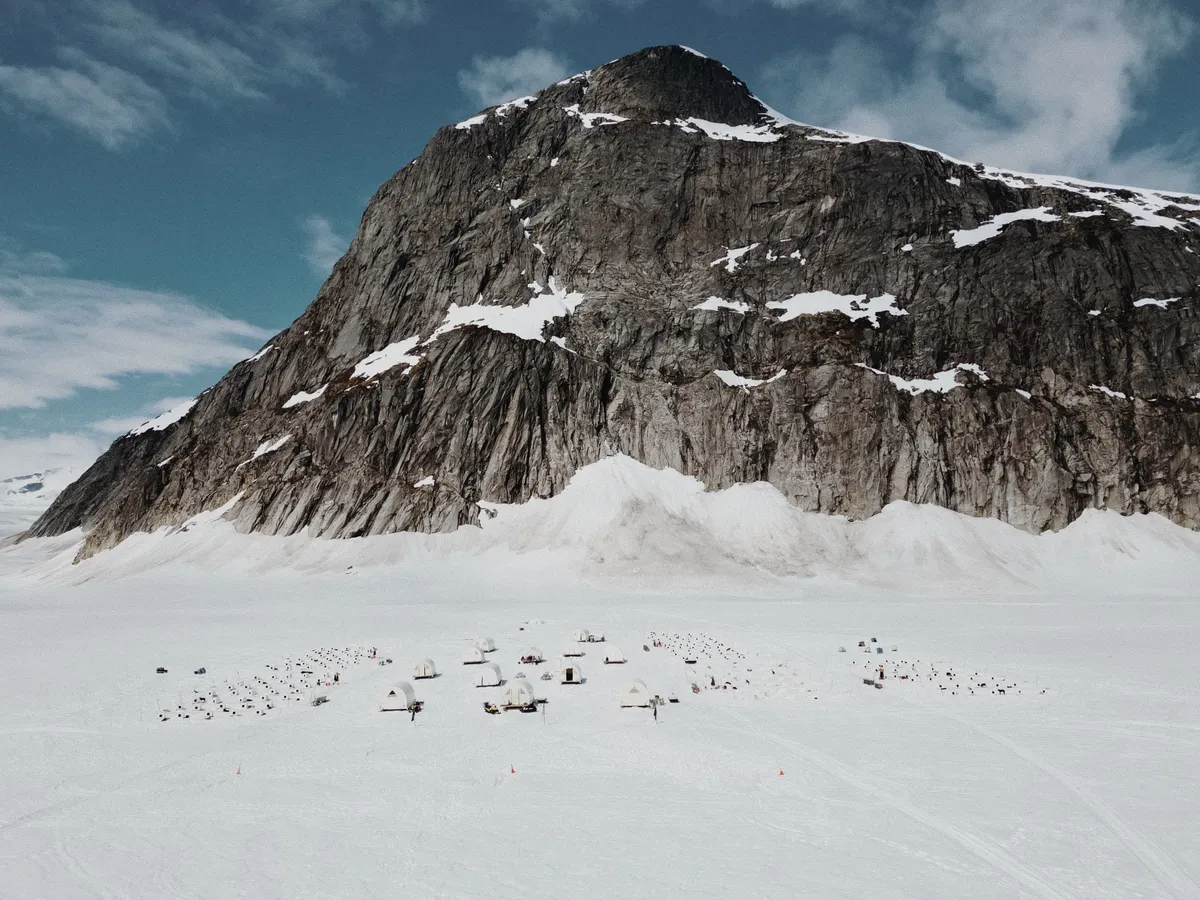
A new trilateral defense agreement has put the proposed Mestersvig US military base at the center of a rapidly shifting Arctic strategy, one where military access, critical minerals, and untested oil reserves are converging in one of the world’s least hospitable corners. The deal, signed at the United Nations General Assembly in New York on 22 September 2026, does more than authorize a new outpost. It signals Washington’s intent to hold the eastern flank of the Arctic for the long term.
Why the Mestersvig US Military Base Changes the Strategic Calculus
The base’s value is geographic first. Mestersvig sits on the eastern coast of Greenland, overlooking the Greenland-Iceland-UK gap, the stretch of ocean Russia’s Northern Fleet must cross to reach the Atlantic. For NATO, denying that corridor is a core deterrence objective, and a permanent American presence on its western shore changes the cost-benefit calculation for any Russian naval sortie.
The White House agreement text grants the United States free access to and movement between Defense Areas through Greenland, including Territorial Waters, by land, air, and sea. The deal amends the original 1951 Agreement on the Defense of Greenland and adds two new locations: Mestersvig and Narsarsuaq in the south. It also authorizes modernization of the existing Pituffik Space Base in north-western Greenland.
Denmark framed the signing as bringing Arctic security under NATO’s umbrella rather than leaving it as a bilateral US-Danish matter, according to Reuters. Danish Prime Minister Mette Frederiksen described it at the signing as “an even bigger and better agreement, a deal that can last forever,” while affirming it “respects sovereignty and territorial integrity of the Kingdom of Denmark, as well as Greenland’s right to self-determination,” per the BBC.
On the ground, the logistics are formidable. Mestersvig lies 149 miles from the nearest settlement, population 330, at the edge of a national park larger than Germany and France combined. The existing facility, built in the 1960s, currently houses just three soldiers, though barracks can accommodate 150. Its 1.1-mile airstrip, long enough for military transport aircraft, accumulates up to 5 meters of snow annually. Anders Ibsen, a former officer with Denmark’s elite Sirius dog sled patrol, put it plainly: “This is as remote, as cold, and as extreme as you can find in the world. You have to go to Antarctica to find similar conditions.”
Critical Minerals and Oil Make This More Than a Military Story
The military picture is inseparable from the resource picture unfolding in the same geography. Greenland Resources Inc. (MOLY.NLB) holds a 30-year mining permit, granted in June 2025, for the Malmbjerg molybdenum project located about 12 miles from Mestersvig airport. The open-pit mine is projected to produce an average of 32.8 million pounds of concentrated molybdenum per year, enough to supply roughly 25% of Europe’s total molybdenum consumption, according to Reuters.
The timing matters. China imposed export controls on molybdenum-related products in early February 2025, tightening supply for European defense and aerospace manufacturers. The Malmbjerg project, backed by the European Raw Materials Alliance, is structured to potentially cover 100% of EU defense consumption of the metal, per Greenland Resources Inc., which also cites debt commitments exceeding $700 million from AAA-rated lenders.
Then there is oil. Greenland Energy Company (NASDAQ: GLND) is working with British partner 80 Mile Plc to explore the Jameson Land Basin, which covers more than 2 million acres south of Mestersvig and has never been drilled. An independent engineering assessment cited by the company points to upside potential of as much as 13 billion barrels of recoverable oil. The project has hit a regulatory snag: equipment including an excavator and more than a dozen shipping containers was brought ashore at the port of Nerlerit Inaat in late July without prior government approval, prompting a warning from Greenland’s Ministry of Mineral Resources, according to Yahoo Finance. Drilling, previously targeted for late 2026, is now pushed to winter 2027.
In an 8-K filed August 12, 2026, CEO Robert Price acknowledged the setback, stating: “Operating in the Arctic requires patience, flexibility and a long-term perspective,” per the Greenland Energy 8-K filing. Price had separately told the original outlet that infrastructure improvements in Greenland would be “very welcome,” a view that may prove more prescient than promotional if US military construction accelerates nearby.
The investment read here is straightforward: US military infrastructure in eastern Greenland raises the probability that logistical constraints on nearby resource projects ease over time. Airstrip upgrades, improved port access, and year-round personnel all reduce the operational risk that makes Arctic extraction economics so difficult to model. The risk is the sequencing. Washington has made no public announcement about the pace or scale of construction at Mestersvig. Until it does, the resource optionality stays exactly that: optional. The catalyst that closes the gap between the agreement’s promise and its investment reality is the first US appropriation earmarked for eastern Greenland construction.