Contributed content: this article was written by a third-party contributor and does not necessarily reflect the views of Primaryignition.com. Editorial and Advertising Policy
Ask most BMW owners to name an engine part, and you’ll probably hear “turbocharger”, “timing chain” or perhaps “water pump”. In reality, an engine depends on a much longer list of components working together. BMW’s own parts catalogue includes hundreds of engine-related components, from oil pumps and timing-chain parts to cooling-system components, intake parts and fuel injectors.
Not every part deserves the same level of attention, though. Some are fundamental to the engine’s operation, while others are there to support a particular system or control how the engine behaves. For a BMW owner trying to understand where problems can become expensive, these are ten of the BMW engine parts worth knowing.
1. Oil pump and lubrication system
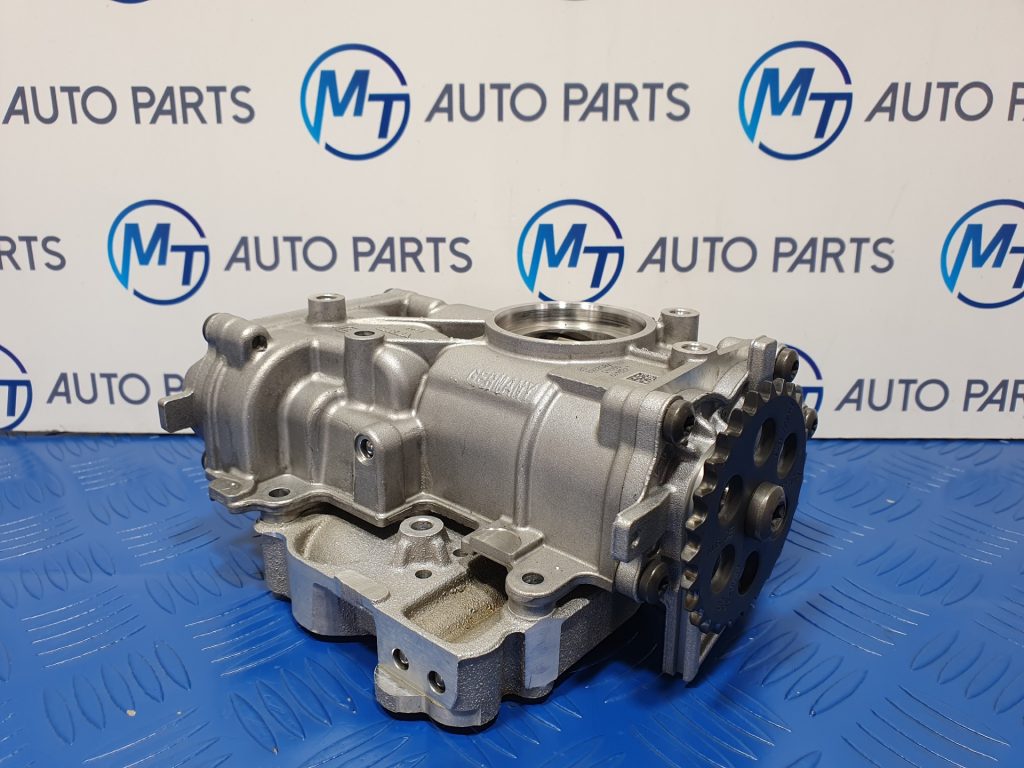
Engine oil has a much bigger job than simply keeping the dipstick at the correct level. It needs to reach bearings, moving components and other lubricated areas of the engine, while also helping to carry heat away. The oil pump is what keeps that circulation going.
BMW lists oil pumps as engine components across its range, with different pumps used for different applications. This is also why using the correct oil and keeping up with servicing matters. A lubrication problem can affect several parts at once rather than producing one isolated failure.
2. Timing chain and related components
The timing system keeps the crankshaft and camshafts synchronised so that the valves open and close at the right point in the engine cycle. Depending on the BMW engine, the system can include a chain, guides, tensioners and camshaft adjustment components.
It is a part of the engine that owners tend to hear about when something starts to go wrong. BMW’s current parts catalogue includes timing-chain repair kits and tensioners, as well as camshaft adjustment units. A timing problem can become a serious engine repair, so unusual noises or running problems are worth investigating rather than ignoring.
3. Cooling system
An engine produces a considerable amount of heat, and the cooling system has to keep temperatures within the range the engine was designed to operate in. Water pumps, thermostats, radiators, expansion tanks and coolant hoses all have a part to play.
BMW’s parts catalogue currently lists more than 200 cooling and heating components, including water pumps, thermostats, radiators and expansion tanks. A failed hose might be a relatively simple repair; allowing an engine to continue running while it is overheating is another matter entirely.
4. Turbocharger
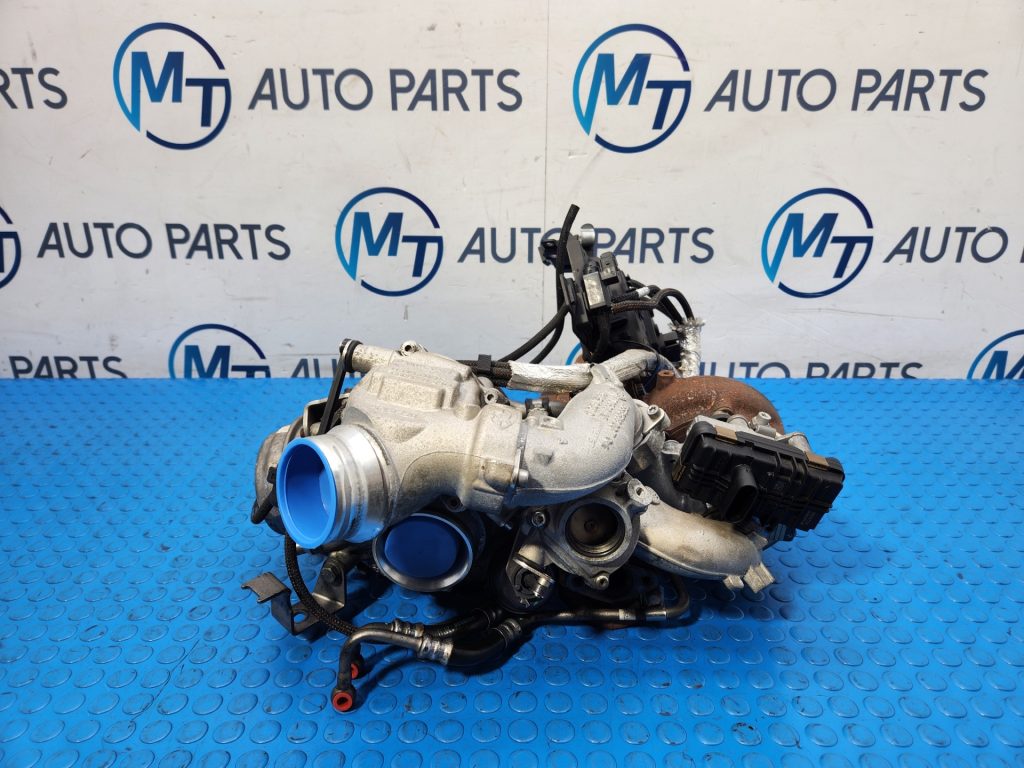
Turbochargers are now common across BMW’s petrol and diesel engines. They use exhaust gases to drive a turbine and compressor, allowing more air into the engine and helping it produce more power from its displacement.
A turbo operates at high temperatures and speeds, so it depends on the surrounding systems being in good order. BMW’s catalogue includes turbocharger pressure-control components and charge-air parts among its engine listings. Loss of power, unusual noises or smoke can have several possible causes, so a suspected turbo problem should be diagnosed rather than assuming the turbo itself has failed.
5. Cylinder head and valve train
The cylinder head is home to a large number of important engine components. Camshafts, valves, valve springs, guides and other parts control the movement of air into and out of the cylinders.
BMW’s warranty documentation lists the cylinder head, valves, springs, guides, camshaft, bearings, followers and hydraulic lifters among its covered engine components. These aren’t normally items an owner thinks about during routine maintenance, but problems in this area can lead to substantial repair work.
6. Pistons and connecting rods
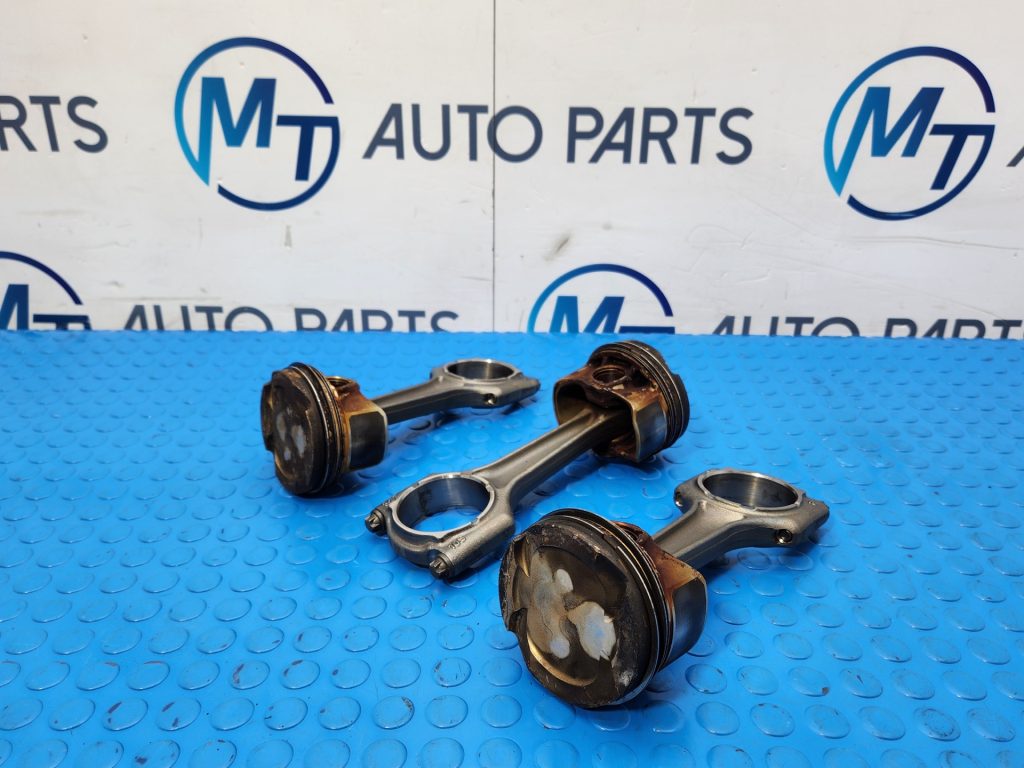
Deep inside the engine, pistons move up and down inside the cylinders while connecting rods transfer that movement to the crankshaft. They work under considerable heat and mechanical load every time the engine is running.
These are obviously not normal replacement items in the way an oil filter is. When pistons, rings or connecting rods need attention, you’re generally looking at a major engine repair. BMW identifies these components among the major internally lubricated engine components in its warranty documentation.
7. Crankshaft and bearings
The crankshaft is what turns the pistons’ up-and-down movement into the rotation that eventually drives the wheels. Its bearings allow it to rotate within the engine while maintaining the necessary clearances.
Again, this is where the lubrication system comes back into the picture. BMW lists the crankshaft, crankshaft bearings and oil pump among its major engine components. Serious problems here are not something a routine service will fix, which makes proper lubrication and maintenance particularly important.
8. Fuel injection system
An engine needs the correct amount of fuel delivered at the correct time. BMW uses different injection arrangements across its petrol and diesel engines, so injectors and associated components aren’t interchangeable simply because two cars carry the same badge.
A fuel-system problem can show itself in several ways, including difficult starting, rough running, poor performance or increased fuel consumption. BMW’s parts catalogue includes fuel injectors and related components, with compatibility depending on the specific vehicle and engine.
9. Intake and charge-air system
Fuel is only half of the equation. The engine also needs a controlled supply of air, and turbocharged BMWs have additional charge-air components between the turbocharger and engine.
BMW lists intake manifolds and charge-air lines among its engine parts. A leak or damaged component can affect how the engine runs, particularly where a turbocharged engine is unable to maintain the expected air pressure.
10. Engine sensors and controls
Modern BMW engines rely heavily on electronic management. Sensors monitor conditions such as engine temperature and other operating parameters, allowing the control system to adjust fuelling, timing and other functions.
BMW’s own documentation includes engine-management sensors among its engine components, while its parts catalogue contains a wide range of engine electrical and control parts. A sensor may be a relatively small component, but a fault can have a noticeable effect on how the engine behaves.
Buying BMW engine parts online
When looking for replacement engine components, it is worth using a supplier that deals specifically with BMWs and understands the differences between engines and model generations. MT Auto Parts is one UK supplier offering a wide range of BMW car engine parts, from complete engines to individual parts such as turbochargers, cylinder heads, crankshafts, oil pumps, intake manifolds, rocker covers, pistons and engine mounts.
The range covers everything from smaller replacement components to complete petrol and diesel engines, as well as electric drive motors for newer BMW models. Stock can include engines from popular B-series and N-series units through to higher-performance S-series engines, with individual components available where replacing the whole engine is unnecessary.
As with any used component, the important part is checking exactly what you are buying. Engine code, part number, vehicle specification and compatibility should all be confirmed before ordering. This is particularly important with complete engines, where two BMWs with the same model badge can have different engine specifications.
For owners searching for BMW engine parts online, buying from a specialist can also make it easier to discuss compatibility before committing to a part. Having the VIN and original part number available gives the supplier a much better chance of identifying the correct component and avoiding an expensive mistake.