
Levi Strauss Profit Guidance Climbs on Tariff Refunds, But the Revenue Picture
Levi Strauss (LEVI) lifted its full-year profit guidance after pocketing a substantial tariff refund in its fiscal third...
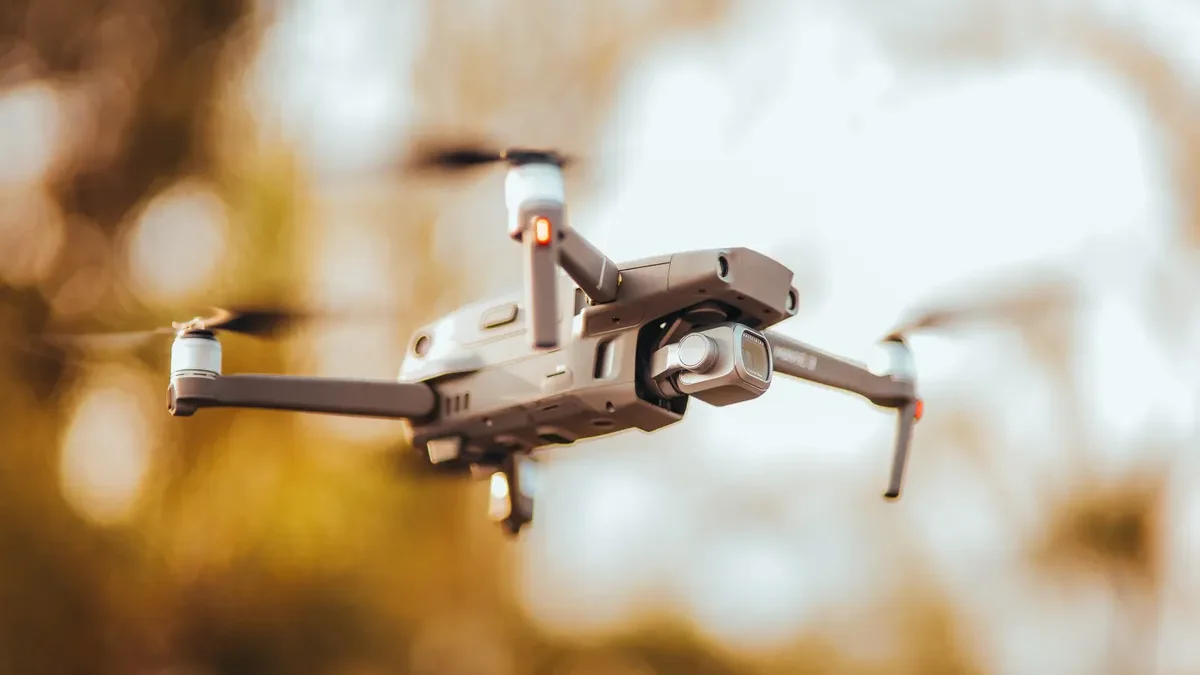
The Air Force CCA program crossed two milestones at once this week: the service christened its autonomous fighters and laid out a timeline that, if met, would reshape US air power by the end of the decade. Secretary of the Air Force Troy Meink unveiled the names “Vengeance” for General Atomics’ FQ-42A and “Fury” for Anduril’s FQ-44A at the Air & Space Forces Association’s 2026 Air, Space & Cyber Conference, alongside a target of at least 500 autonomous aircraft in service by 2032. For investors tracking the defense prime and autonomous-systems space, the budget numbers that followed the naming ceremony are what matter most.
Meink framed the development pace as the program’s defining credential. The aircraft went from contract award to first flight in fewer than 18 months, “almost unheard of in aircraft development,” he said. General Atomics’ FQ-42A flew its first test flight in August 2025; the Air Force awarded both engineering and manufacturing development and production contracts to General Atomics and Anduril four months ahead of schedule. General Atomics received its formal production contract on June 17, 2026, with GA-ASI President David Alexander saying in a company release that “manufacturing is already well underway.”
Anduril’s FQ-44A completed flight testing in October 2025 and rolled its first production aircraft off the assembly line in July 2026. The more consequential data point came on July 15, 2026, when the YFQ-44A prototype fired a live AIM-120 AMRAAM at a digital target over the Mojave Desert, flying from Edwards Air Force Base, according to Air & Space Forces Magazine. Anduril’s autonomous Lattice software received the target data; a human operator then authorized the strike. That sequencing matters: the Air Force confirmed that weapon release authority stays exclusively with a human operator at all times, a detail that addresses the most persistent political objection to autonomous combat systems.
That live-fire followed a structured test progression. DefenseScoop reported that the Air Force began captive-carry tests with an inert AIM-120 strapped to the YFQ-44A in February 2026, validating structural integrity and aerodynamic performance before any weapon was released. Mission autonomy software from Anduril, Shield AI, and RTX Collins Aerospace were also down-selected for further development alongside the production contracts, per Inside Defense. Air Force Chief of Staff Gen. Kenneth S. Wilsbach called the July 15 test “an important next step in the development of Collaborative Combat Aircraft,” adding: “We’re one step closer to delivering capabilities to the warfighter.”
The scale of the financial commitment is where the investment case crystallizes. For FY2027, the Air Force requested $996.5 million in CCA procurement, plus $150 million in advanced procurement for the following year and $1.37 billion in continued research and development, for a total program request of $2.37 billion. That makes the Air Force CCA program the single biggest addition to the service’s FY2027 aircraft procurement budget, which totals $30.64 billion, a 1.67% increase over FY2026, according to Air & Space Forces Magazine. Since FY2024, the service had spent almost $1.91 billion developing CCAs before this procurement request landed.
The Increment 1 production contracts cover the first 150 CCA aircraft, with delivery expected before the end of the decade. Shephard Media’s Defence Insight estimates the Increment 1 procurement alone could cost around $4.5 billion, with the full Increment 1 procurement and development valued at approximately $8.9 billion. A further 2,350 aircraft could follow in subsequent increments. Those are estimates from a specialty trade source, not confirmed government figures, but they bracket the long-term revenue opportunity for General Atomics and Anduril and their autonomy-software subcontractors.
Beyond CCAs, Meink outlined plans for Massed Modular Aircraft, low-cost multi-role strike platforms intended to succeed the MQ-9 Reaper. The service intends to field 100 MMAs in 2029 at lower unit cost than the CCAs and “a fraction of the cost of manned aircraft,” with tens of thousands projected in inventory by 2030. That is a demand signal aimed directly at lower-tier autonomous-systems suppliers, not at the traditional primes.
The bear case is real: Meink explicitly told the conference that hitting these targets requires Congress to fund the requests and industry to deliver at scale, two variables that have derailed ambitious defense modernization programs before. The bull case is that the CCA program has already beaten its own development schedule, completed a live-fire weapons test, and secured a line-item position as the Air Force’s top FY2027 procurement priority. Both General Atomics and Anduril enter the production phase with demonstrated hardware and a customer that has put $2.37 billion on the table for a single fiscal year. The critical test now is whether the industrial base can convert that funding into 500 fielded aircraft before 2032, a timeline that leaves almost no margin for the program-execution failures that have become routine in major defense acquisition.
Levi Strauss (LEVI) lifted its full-year profit guidance after pocketing a substantial tariff refund in its fiscal third...
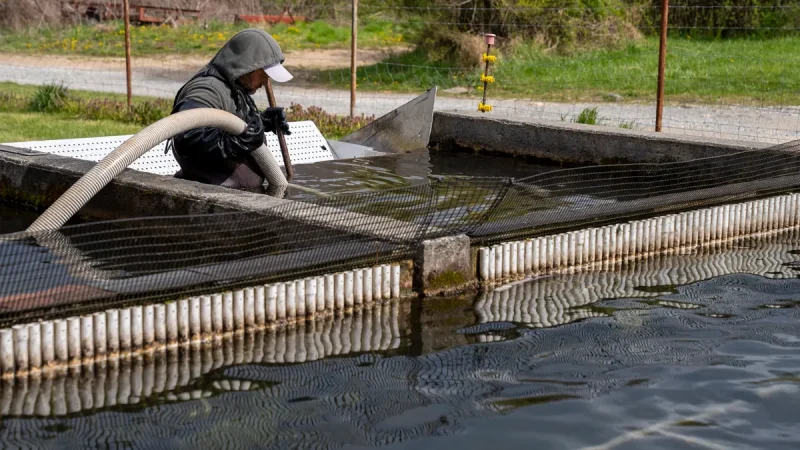
Mazda microalgae biodiesel has cleared its first institutional hurdle: Japan’s New Energy and Industrial Technology Development Organization (NEDO)...
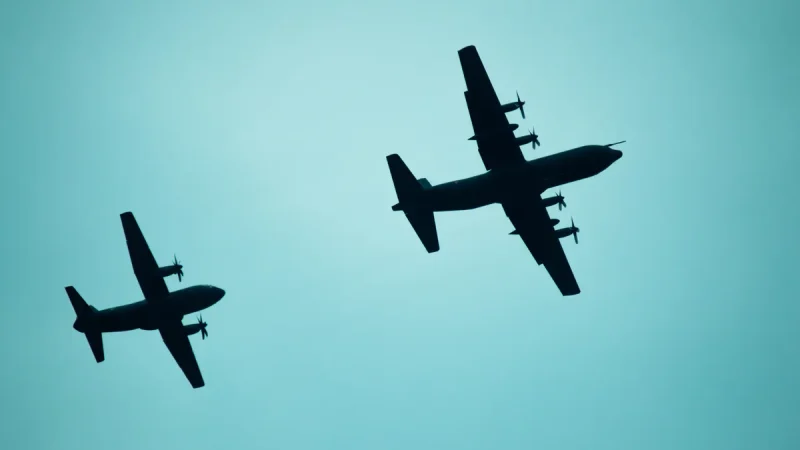
India’s military transport aircraft competition, a $10.5 billion procurement for 60 medium transports for the Indian Air Force...