
Xiaomi Sky Nomad Orders Can’t Close the 2026 Delivery Gap
Xiaomi Sky Nomad orders crossed 70,000 in the model family’s first month, a result that lifted the stock...
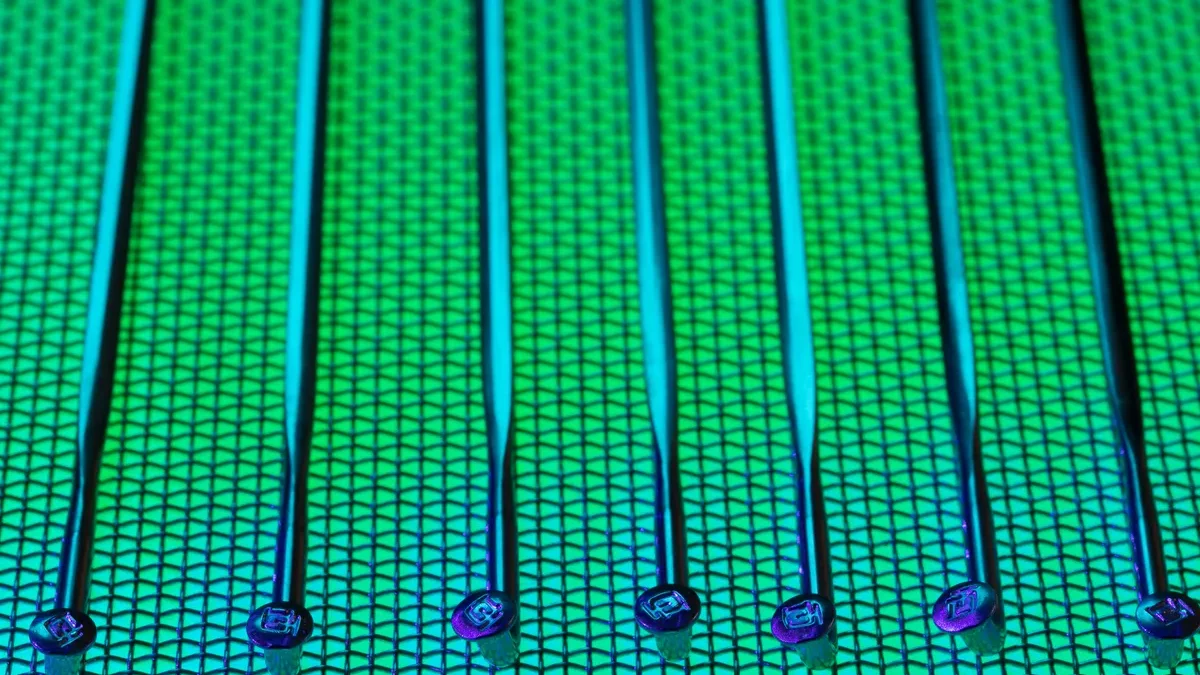
The Samsung foundry price hike of up to 15% on new orders is the most concrete evidence yet that the company’s long-struggling contract chipmaking division has found real pricing leverage, but the source of that leverage matters as much as the number itself. Reported by Reuters, the increases land squarely on TSMC’s overflow, not on any fundamental shift in Samsung’s own competitive standing.
The mechanics are straightforward. Samsung’s SF4 4nm process took the steepest increases in July: Chinese and US customers absorbed rises of 10% to 15% in a single month, while customers in Taiwan paid 5% to 10%. SF5 5nm wafers rose a similar 10% to 15%, and the older 8nm technology climbed nearly 10%. Samsung declined to comment to Reuters.
BNK Investment and Securities analyst Lee Min-hee put the dynamic plainly: “As TSMC faces tight capacity and raises prices, customers are shifting to rivals such as Samsung and Intel, prompting Samsung to raise its prices as well.” She added that continued increases could return the foundry business to profit “as early as next year, earlier than previously expected.”
For context on just how dominant TSMC’s position remains: TSMC reported Q1 2026 net revenue of $35.90 billion, with a gross margin of 66.2% and Q2 2026 guidance of $39.0 to $40.2 billion. Samsung held roughly 7% of global foundry revenue in Q1 2026 against TSMC’s more than 70%. The pricing power flowing to Samsung is a direct function of that gap: TSMC cannot serve everyone, so some volume shifts, and Samsung can charge more for it.
The SF4 line at Samsung’s Pyeongtaek plant has run at full capacity since late 2025, supplying logic chips to Qualcomm and base dies for Samsung’s own high-bandwidth memory. That full utilization rate is what allows the price hike to stick. Chinese customers, blocked from securing advanced chipmaking equipment domestically by US export restrictions, have accepted the steepest increases of any market, even knowing Samsung cannot fulfil every order. That willingness to pay illustrates how US policy toward China is, in effect, channelling revenue to a rival Asian manufacturer.
The recovery story extends well beyond memory overflow. Samsung signed a $16.5 billion, eight-year deal in 2025 to manufacture Tesla’s next-generation AI6 chips at its Texas facility, covering autonomous driving systems and planned humanoid robots. BYD has held separate talks with Samsung about future autonomous driving chips. Samsung also supplies infotainment and connectivity processors to BMW, Volkswagen, Hyundai, and Ferrari.
The Texas facility underpins these ambitions. Samsung announced an estimated $17 billion investment in its Taylor, Texas fab, its largest-ever US outlay, expected to create 2,000 direct jobs. That project secured up to $6.4 billion in direct CHIPS Act funding, with the US government explicitly citing automotive, aerospace, and IoT as target sectors for the capacity being built.
Samsung’s process roadmap ties directly to that automotive ambition. At its 2023 Foundry Forum, the company outlined plans to begin 2nm (SF2) mass production for mobile in 2025, expand to high-performance computing in 2026, and reach automotive-grade qualification in 2027. If that timeline holds, the automotive revenue currently flowing from AI6 chip production and infotainment supply could be backed by leading-edge process technology by the end of the decade.
Samsung expects advanced process nodes to generate more than half of foundry revenue this year, with AI and high-performance computing applications alone accounting for over 30%, up from 15% to 20% in late 2025. That mix shift is the financial payoff of the Samsung foundry price hike working in tandem with volume growth in premium segments.
The risk is structural and the article’s own evidence states it. TSMC is investing tens of billions to expand its own capacity. The bottleneck that is currently sending customers to Samsung will ease over time, and when it does, the pricing power disappears with it. Samsung’s foundry division has lost money every year since 2022; a pricing cycle driven by a competitor’s temporary constraint is not the same as a cost structure and yield trajectory that can sustain margins independently.
The Samsung foundry roadmap points toward 2nm automotive production in 2027 as the point where the recovery becomes self-reinforcing rather than borrowed. Until then, investors are effectively pricing a TSMC-overflow trade dressed up as a structural turnaround. The catalyst to watch is whether automotive design wins, particularly the Tesla AI6 deal, convert into recurring volume at margins that hold when TSMC capacity returns. If they do, the thesis graduates. If TSMC eases its bottleneck before Samsung’s own yield and automotive relationships mature, the 15% price hike will look less like a turning point and more like a peak.
Xiaomi Sky Nomad orders crossed 70,000 in the model family’s first month, a result that lifted the stock...
Delta Air Lines (DAL) slashed its Delta Air Lines 2026 outlook on Friday, cutting full-year adjusted earnings per...
The Tesla (TSLA) production outlook for 2026 points to a genuine volume recovery, but the more pressing question...