
China Automotive Systems Is About to Report Its 2025 Full-Year Financials, The Previews Are More Interesting Than Expected
There is a specific type of business that works hard but receives very little recognition for it. For...
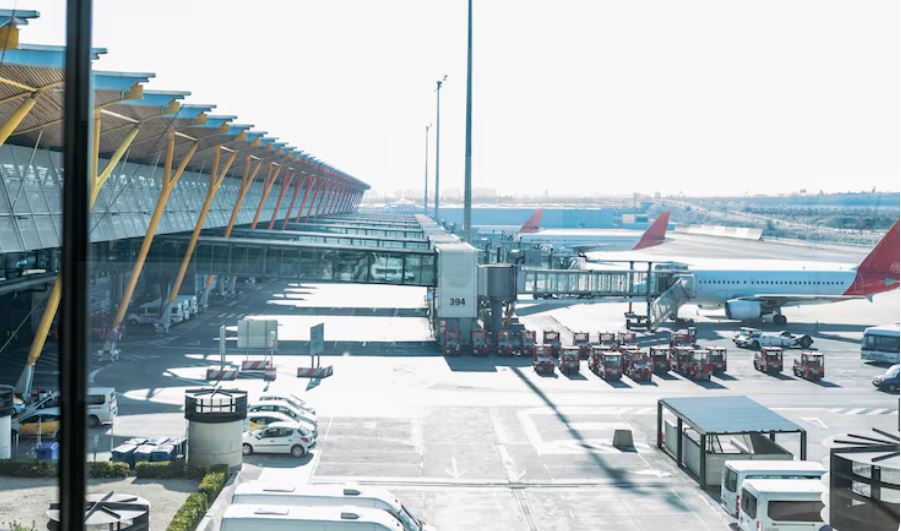
These days, you’ll notice something strange if you walk past any large construction site close to an American airport. The city does not own the cranes. Most passengers wouldn’t recognize the logos on the trucks. A fund manager is calculating returns over a thirty-year period while watching the concrete pour in real time somewhere in a glass tower in Sydney or Toronto. When politicians cut ribbons, that’s the part no one discusses.
The current building boom has a more complex and fascinating financial story than the press releases portray. Consider Charlotte Douglas, which is set to issue airport revenue bonds worth about $210 million with an AA- rating from Fitch. In the past, that type of paper was a dormant area of municipal finance. It is no longer the case. It is desired by pension funds. The desks of sovereign wealth want it. Speaking with people in the industry, it seems that infrastructure debt has subtly emerged as the new safe-haven asset, where capital goes when tech multiples appear stretched and stocks feel erratic.
Although they are dressed differently, auto plants operate on a similar logic. Nowadays, it is rare to build a new EV facility in Georgia or Tennessee with just one check. State incentives, federal loan guarantees, supplier co-investments, and equipment leasing arrangements are all part of a stack that most of us would be unable to understand without the presence of a corporate lawyer. The factory appears to be a factory. It’s a roofed financial instrument underneath.
It’s difficult to ignore how much of this relies on a faith that no one can adequately describe. Even when the quarterly numbers fluctuate, investors seem to think the planes will continue to fly and the EV transition will continue. Rivian is still not entirely profitable. Everyone is aware of that. However, the bondholders are being paid and the plants are operating.
Airports provide a more tangible version of the same narrative. In California, Ontario International is starting an environmental review for a third terminal. The project is expected to be finished by 2036, which is ten years away and is predicated on a future we haven’t yet seen. Pittsburgh recently received $10.7 million in FAA grants for emergency generators and taxiway construction. This is a small amount of money in the grand scheme of things, but it’s the kind of multi-layered federal-private agreement that now determines how nearly every runway is rebuilt. While waiting at the gate, most travelers will never consider the 48,000 square meters of Boeing’s new MRO hangar in Shanghai Pudong, which is housed inside a financing structure.
All of this has a more subdued reality. Governments no longer pretend that they can finance the capacity that will be required over the next 20 years. For years, ACI World has maintained that private capital is now the only practical option. On that gap, companies like Vinci, Fraport, and Macquarie have built whole business models. They arrive with resources, knowledge, and contractual commitments that public agencies frequently are unable to match on time or within budget.
Depending on who you ask, that may or may not be a good thing. Critics are concerned about the rise in user fees and the covert privatization of public assets. Defenders cite terminals that did, in fact, open on schedule. We won’t truly know until the bonds mature and the planes either fill those new gates or don’t, but the truth is probably somewhere in the middle.
It seems like we’re funding a future we haven’t completely decided on as we watch this develop. Nevertheless, the cranes continue to move.
There is a specific type of business that works hard but receives very little recognition for it. For...

When an industry consistently delivers on its promises, a certain kind of weariness descends upon it. That fatigue...

These days, you notice a certain kind of silence at car dealerships. Something quieter was taking place inside...