
Why Warren Buffett Was Right About Airline Stocks — Until He Wasn’t — and What His Original Logic Teaches You Now
For almost forty years, Warren Buffett warned anyone who would listen that investing in airlines was a bad...
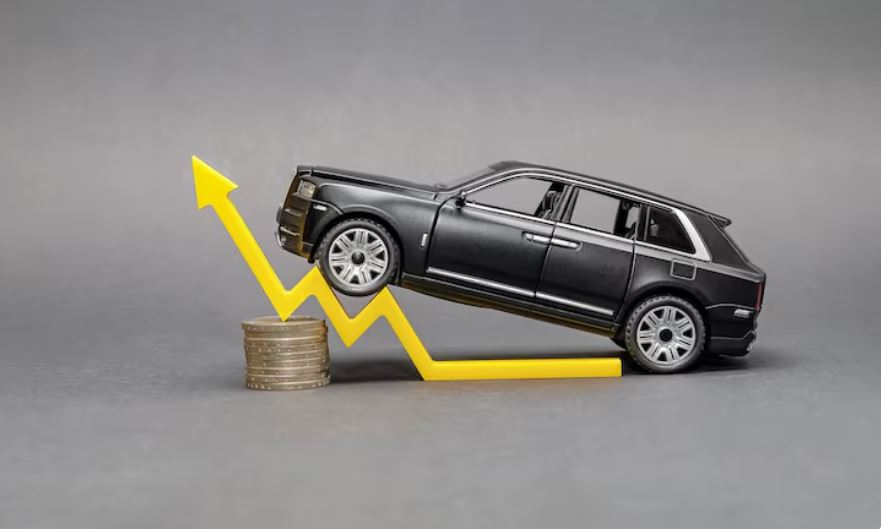
Ford has a tendency to be obstinate. On a Friday afternoon in early May, the stock is at $12.32, hardly moving despite an earnings report that, on paper, ought to have sent it skyrocketing. In contrast to the analyst consensus of roughly $0.19, adjusted earnings per share were $0.66. Revenue exceeded projections by $43.25 billion and increased by more than 6% annually. The market, however, shrugged. A gain of 1.15%. That’s all. Though only partially, investors appear to accept the positive news.
It’s difficult to ignore the pattern. For years, Ford has been doing this dance: exceeding forecasts, increasing guidance, paying out one of the largest dividends on the S&P 500 at almost 4.9%, and continuing to trade in the same worn-out range between roughly $10 and $14, where it has bounced for what seems like ten years. The current value of the 200-day moving average is $13.00. $12.24 for 50 days. A chart that resembles a patient’s heartbeat monitor rather than a narrative and shows no signs of improvement or decline.
If you look at the company’s quarterly figures, you will see that it is, for the most part, operating profitably. It is now anticipated that Ford Pro, the commercial vehicle division that was previously considered an afterthought, will produce between $6.5 billion and $7.5 billion in EBIT for 2026—more than Ford Blue, the company’s traditional consumer division. Money is still printed by the F-Series. Even the EV division known for losing billions of dollars, the Model E division, has reduced its projected losses. Additionally, Ford received a $1.3 billion tariff refund in late April, which may seem like a blessing until you consider the company’s more pressing issues.
Across the Pacific lies the most urgent of those issues. By March 2026, Chinese automakers’ market share of passenger cars in Europe had increased to 9.4%, having already doubled to 6% last year. They are now targeting commercial vehicles, which are Ford Pro’s primary market. It’s possible that Ford won’t be saved in Frankfurt or Madrid by the tariffs that protect it in America. There’s a feeling that fleet purchasers in Europe, who have historically supported the Transit, are beginning to consider less expensive, electrified options from BYD and other manufacturers. From the outside, this appears to be a slow-motion version of an issue Detroit has already encountered.
In a sense, Ford has been present. Before a single new model line, created in eighteen hectic months, saved everything in 1949, the company was on the verge of bankruptcy. In Dearborn, Henry Ford II personally drove the first one off the assembly line. On the day of opening, more than 100,000 orders were placed. It’s still unclear if Jim Farley has a similar miracle planned. While the Lightning, Mach-E, and Transit Custom electric are legitimate products with legitimate consumers, none of them have achieved the same level of success as the 1949 sedan or the original Mustang.
Institutional funds continue to accumulate in silence. In the most recent quarter, ASR Vermogensbeheer increased its Ford position by 28.3%. Currently, institutions and hedge funds own roughly 58.74% of the business. The cluster of analyst price targets around $13.56 indicates that Wall Street isn’t exactly overjoyed, but it’s also not fleeing. JPMorgan raised its goal to $15. Its rating was lowered to hold by Zacks. The mixed signal of conviction is arguably the most truthful statement made about Ford in a long time.
A sense that Ford is waiting for something, whether it be a moment, a model, or a change in the wind, permeates everything. Investors are kept patient by the dividend. The doubters are prevented from leaving completely by the earnings beats. However, the question is not whether Ford can survive, given that its stock closed Friday nearly exactly where it was five years ago. Of course it can. Whether it can ever surprise anyone again is the question.
For almost forty years, Warren Buffett warned anyone who would listen that investing in airlines was a bad...

There is a specific type of business that works hard but receives very little recognition for it. For...

When an industry consistently delivers on its promises, a certain kind of weariness descends upon it. That fatigue...