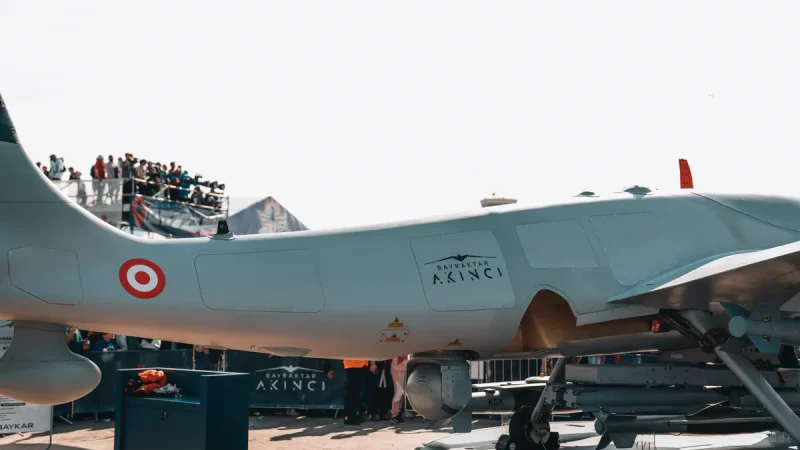
Vector and Nammo Armed Drones Scale Up for Mass Production
Vector Defense and Nammo announced an expanded partnership Monday at the Association of the United States Army’s annual...
Tesla’s first-quarter earnings report on April 22 arrives at a pivotal moment, caught between a bold strategic pivot and immediate operational headwinds. The electric vehicle giant is navigating a complex landscape where aggressive expansion in Asia clashes with disappointing delivery figures and a costly trade dispute.
The company’s Q1 2026 performance fell short of expectations. Tesla delivered 358,023 vehicles, missing analyst estimates by approximately 7,600 units. More concerning was the growing inventory glut: with production of 408,386 vehicles, the company added over 50,000 units to its stock in a single quarter. The energy storage division fared even worse, deploying just 8.8 GWh—a 38% drop from the previous quarter and far below the anticipated 14.4 GWh.
This segment had been viewed as a reliable growth pillar, making its underperformance a significant complication. Analysts project earnings of $0.24 per share for the quarter, up from $0.15 a year earlier. However, Tesla has missed consensus estimates in each of the past four quarters, casting a shadow over these projections.
Amid these challenges, Tesla is executing a profound transformation. The company is phasing out production of its Model S and Model X to free up manufacturing capacity for the Optimus robot and the Robotaxi Cybercab, with mass production slated to begin later in 2026. The first Cybercab series vehicle rolled off the line at Gigafactory Texas in February, though CEO Elon Musk warned the production ramp would be “excruciatingly slow” due to new technology integration.
Concurrently, Tesla is significantly bolstering its offerings in China and key Asian export markets. The Gigafactory Shanghai has introduced a new “Zen Grey” interior for the Model Y, replacing the previous white option at no extra cost. This warm light grey with vegan leather surfaces is now available for all premium five-seat models and will also reach customers in Australia, New Zealand, South Korea, Japan, and the Philippines.
The timing is strategic. Despite selling over 1.2 million Model Y units in China, competitive pressure from local rivals like BYD is intensifying. BYD alone recorded roughly 20,000 new orders in Australia during March 2026—a critical export market for Tesla’s Shanghai operations.
Additional pressure stems from geopolitical tensions. China’s 34% retaliatory tariffs on U.S. goods are hitting Tesla particularly hard in its energy business, which sources LFP battery cells from China. Regulatory uncertainty also clouds the Robotaxi venture, as a vehicle without a steering wheel or pedals requires explicit exemptions from federal safety standards in the U.S.; Tesla has not disclosed which countries have granted such approvals.
To fund its ambitious transition, Tesla plans capital expenditures exceeding $20 billion in 2026, spread across six new factories. The company maintains a solid liquidity base of over $44 billion to support this spend.
Analyst sentiment reflects the company’s uncertain trajectory. Of the 43 covering Tesla, 15 recommend Buy, 16 advise Hold, and 10 advocate for Sell. The average price target sits at $405.64. Perspectives are polarized: JPMorgan sees nearly 60% downside potential with a December 2026 target of $145, while Wedbush is bullish on Tesla’s AI and autonomy platform, anticipating a Robotaxi rollout in over 30 U.S. cities this year.
The upcoming earnings call is expected to provide financial details on the halted Model S/X production and an outlook for the Optimus program, which will occupy the freed production lines at the Fremont factory. Investors may also receive an update on the new Roadster, expected to be unveiled in late April.
With a market valuation recently pegged at $1.5 trillion, Tesla’s April 22 report must reconcile its long-term vision for autonomy and robotics with the immediate realities of a delivery miss, energy segment weakness, and fierce global competition.
Vector Defense and Nammo announced an expanded partnership Monday at the Association of the United States Army’s annual...

The TSMC earnings season preview is the week’s focal point, with Taiwan Semiconductor Manufacturing (TSMC) reporting Thursday as...
The EU-China hybrid deal announced on October 9 in Beijing is less a resolution than a redirect: Brussels...