
US Army Brain Health Assessment Hits 97%, but Gaps Loom Large
The US Army brain health assessment program has reached 97% completion across active duty, National Guard, and Reserve...

Boeing is charting a course for a significant production acceleration in its commercial airplane division, setting aggressive internal targets for 2025. This push for higher output comes alongside notable advances in autonomous flight technology. However, this progress is tempered by persistent delays in key defense programs and ongoing regulatory certifications, presenting a complex outlook for the aerospace giant’s stock valuation.
Current financial models indicate Boeing’s shares may be undervalued. A discounted cash flow analysis dated December 19, 2025, calculates a fair value of $299.56 per share. Compared to a recent trading level around $208, this implies a potential discount of approximately 30.5%.
Key valuation indicators include:
* Price-to-Sales Ratio: 1.96x, which sits notably below the industry average of 2.91x.
* Analyst Consensus: The average price target from market researchers stands at $240.89, suggesting an upside potential of over 15% from current levels.
* Market Capitalization: Approximately $163.07 billion.
In European trading, the stock recently showed stability, quoted at €177.86, marking a gain of over 10% on a 30-day view.
Central to Boeing’s strategy is a steep increase in aircraft deliveries. Internal company goals for 2025 aim for 650 handovers, a substantial jump from recent years. Independent analysis from the IBA Group supports this upward trajectory, forecasting 537 commercial deliveries for 2025. This would represent a 69% increase over 2024’s 318 deliveries and a 16% rise compared to 2023.
The 737 MAX program remains the primary driver. The Federal Aviation Administration (FAA) has approved a production rate of 42 units per month for this model. A critical efficiency gain is visible in the production timeline: the average duration between an aircraft’s first flight and its delivery has plummeted to 37 days in 2025, down from 318 days the previous year. This streamlined process is essential for meeting the elevated delivery objectives.
Technological innovation is advancing alongside core manufacturing. Wisk Aero, a Boeing subsidiary, successfully completed the maiden flight of its Generation 6 autonomous eVTOL (electric vertical take-off and landing) aircraft in Hollister, California. This all-electric vehicle is the first candidate for FAA certification of an autonomous passenger eVTOL in the United States, with mid-term deployment targets in major metropolitan areas including Houston, Los Angeles, and Miami.
The defense business, however, presents a mixed picture marked by delays:
* New Contract: Boeing, in partnership with Anduril Industries, secured a U.S. Army contract for the “Indirect Fire Protection Capability” (IFPC) Increment 2 Interceptor program.
* Significant Setbacks: The high-profile VC-25B Air Force One program has been delayed again, with delivery of the two new presidential aircraft now expected in 2028. As an interim measure, the U.S. Air Force will purchase two additional Boeing 747-8 aircraft from Lufthansa, slated for delivery by the end of 2026.
* Drone Program: The first test flight for the MQ-25A Stingray aerial refueling drone has been postponed to early 2026.
These holdups pressure fixed-price defense contracts, while technological milestones like Wisk’s flight represent longer-term potential.
On the operational front, Boeing finalized its acquisition of Spirit AeroSystems on December 8, 2025, and is now integrating those manufacturing sites. Concurrently, negotiations with the SPEEA engineering union have stalled. Talks covering approximately 1,600 former Spirit engineers were suspended and are scheduled to resume on January 5, 2026.
Regulatory approval remains a pivotal factor. The FAA continues its review of the cockpit warning system for the 737 MAX 10 variant. Certification of this largest MAX model is a crucial component for Boeing’s product lineup and its planned delivery volumes. Any further delays in this process could directly impact the achievability of the internal target of 650 deliveries.
Boeing’s current narrative combines a demonstrable efficiency drive in commercial production and strides in autonomous aviation with a still-challenging defense segment and unresolved regulatory questions. Valuation signals—from DCF analysis to the price-to-sales ratio and analyst targets—point to latent recovery potential. The critical determinant for the stock’s trajectory will be the company’s ability to execute on its ambitious delivery targets while simultaneously containing delays in its fixed-price defense programs.
The US Army brain health assessment program has reached 97% completion across active duty, National Guard, and Reserve...
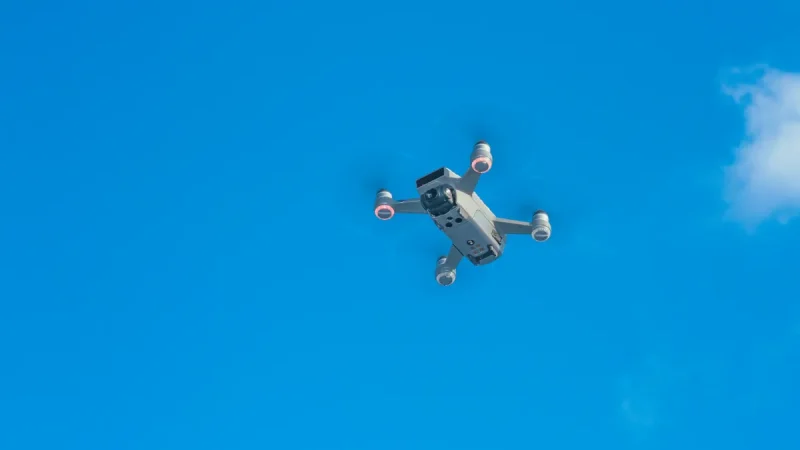
Kongsberg’s Poland counter-drone factory plan, announced at the Warsaw Security Forum on October 12, is more than a...

Three U.S. Army soldiers received Purple Hearts for their actions during the Operation Epic Fury Purple Hearts ceremony...