
The BYD Vertical Integration Premium: Why the EV King is Still Rated a Wall Street “Strong Buy”
BYD’s expansive Pingshan complex in Shenzhen is one of those factory tours that leave a lasting impression. One...
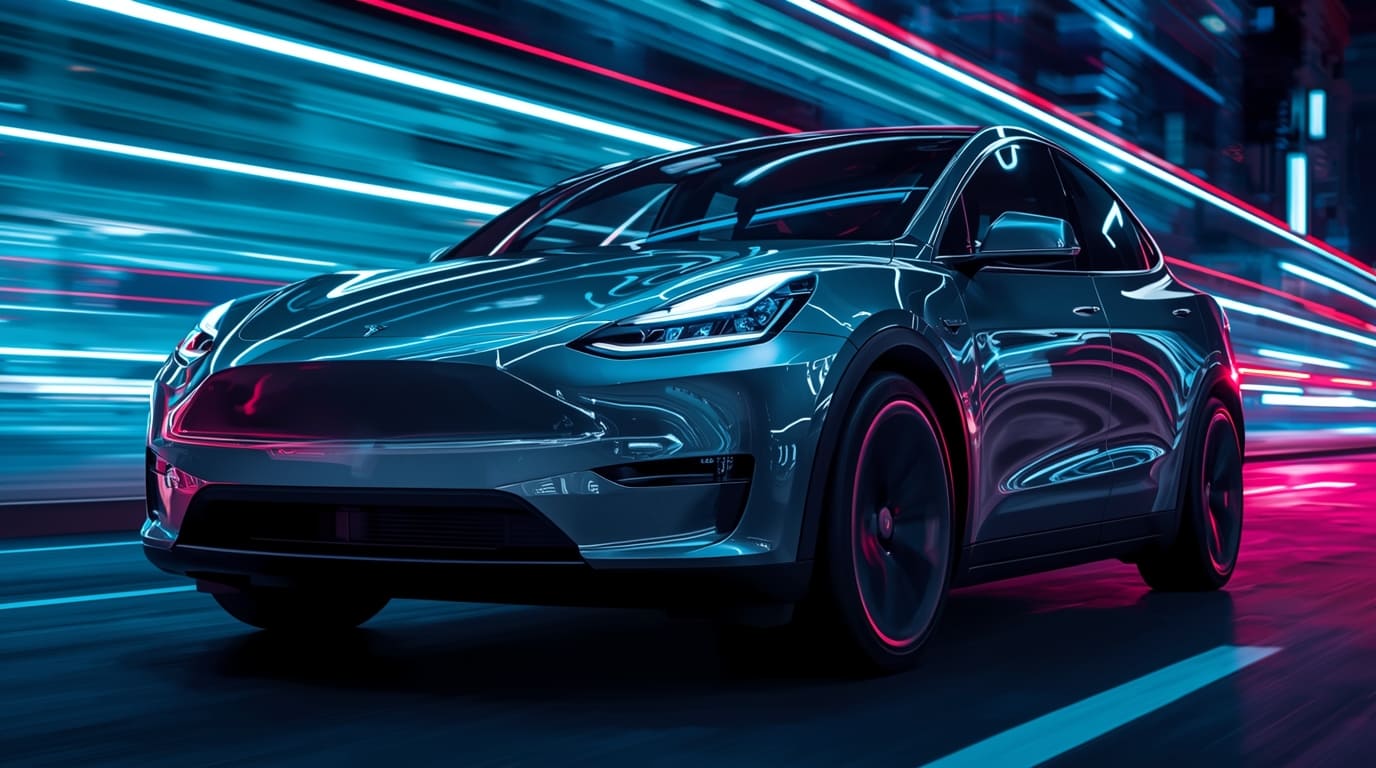
In full-year 2024 global rankings, the Tesla Model Y finished #2 worldwide—just a whisker behind the Toyota RAV4. After becoming the first pure EV to claim #1 in 2023, the Model Y remained within a few thousand units of the top spot in 2024, underscoring its mainstream, high-volume appeal across China, the U.S., and Europe.
Annual “most sold” lists are built from national registration databases and consolidated manufacturer reporting. Different trackers may handle regional twins and late registrations slightly differently, so final tallies can vary by a small margin. Even with those normal variances, the big picture stays consistent: Model Y sits at the very top of the global table—either first (2023) or a razor-close second (2024).
The 2024 outcome wasn’t a step backward so much as a snapshot of a rapidly maturing market:
The Model Y’s world-beating scale rests on a balanced three-continent footprint. In China, local manufacturing and periodic price recalibrations kept the car at the center of urban EV adoption. In the United States, the Supercharger network and brand familiarity continued to make the Y a default choice for first-time EV families. In Europe, the car’s efficiency and long-trip charging convenience sustained high share in key markets. That diversification cushions regional slowdowns and helps the nameplate maintain a top-two global position even in an intensely competitive year.
The big story is not that Model Y “fell”—it’s that an EV stayed within touching distance of the global crown for a second straight year. In 2023, the Y’s combination of efficiency, packaging, and charging convenience converged with pent-up EV demand to make history. In 2024, the continuing rise of hybrid purchasing—especially in markets with less developed fast-charging—gave the RAV4 a marginal edge. That swing illustrates how finely balanced the top of the table has become and how sensitive it is to product cycles and infrastructure readiness.
| Rank | Model | Approx. global sales | Notes |
|---|---|---|---|
| 1 | Toyota RAV4 (incl. regional twin) | ≈ 1.19 million | Hybrid breadth; strong production depth |
| 2 | Tesla Model Y | ≈ 1.18 million | Narrow gap of only a few thousand units |
Methodology varies slightly by source; figures above reflect the consensus view across well-known industry trackers.
An EV holding the global #1 spot one year and #2 the next is a watershed. It proves that battery-electric cars are no longer niche—they’re core to mainstream demand. The typical buyer isn’t chasing novelty; they want reliable range, strong resale, low running costs, and stress-free long trips. Model Y’s success flows directly from those fundamentals: efficient aerodynamics, mature fast charging, straightforward software updates, and a cabin that prioritizes utility. As competing brands adopt common plug standards and expand access to high-power chargers, the addressable market for EVs grows, lifting the entire category.
What keeps the Model Y in contention globally is not just the headline price; it’s the running-cost profile. Electricity typically undercuts gasoline on a cost-per-mile basis, and routine maintenance is simpler than with combustion SUVs. For many households, the monthly payment plus energy cost can be competitive with similarly sized crossovers—even before considering time savings from at-home charging. In regions offering EV incentives or discounted off-peak electricity, the delta can be decisive.
The Model Y’s periodic updates often land without fanfare: tweaks to ride isolation, noise reduction, cabin materials, and infotainment speed. Individually, these are small; taken together, they make the car feel incrementally better with each build cycle. Over-the-air updates continue to refine route planning, charging behavior, and driver-assist features—an approach that keeps the vehicle current long after delivery and helps protect residual values.
Yes. In 2023, the Model Y was the world’s best-selling vehicle—the first all-electric car to claim that title.
Extremely close. The gap between the RAV4 and Model Y was only a few thousand units out of roughly 1.18 million each—well under one percent.
Tracking firms differ in how they treat regional “twins,” late registrations, or certain fleet channels. Those differences are small and don’t change the overall conclusion: Model Y finished second globally for 2024 by a very narrow margin.
The Tesla Model Y didn’t “fall off” the podium; it helped redefine it. After an unprecedented #1 global finish in 2023, it delivered another million-plus year in 2024 and missed the crown by a rounding error. Whether it retakes #1 in 2025 will hinge on refresh timing, regional incentives, and how quickly charging access expands in markets still leaning on hybrids. Either way, the Model Y has secured its place as a default family crossover worldwide—and as proof that EVs now play in the very top tier of global automotive demand.
BYD’s expansive Pingshan complex in Shenzhen is one of those factory tours that leave a lasting impression. One...

A Chinese car is still not available for purchase at an American dealership. Through two administrations, multiple rounds...

You’ll notice something that wasn’t there five years ago if you stroll through a BYD showroom in Bangkok...