
Close Menu
  • Automotive Stocks
  • Defense & Aerospace
  • Industrial
  • ETFs
  • News
What's Hot

FSLY Stock Is Up 127% in a Year — So Why Are Investors Still Nervous?

May 28, 2026

IonQ’s $1.8 Billion Bet: How a Quantum Underdog Is Trying to Outbuild Everyone

May 27, 2026

Why the Fed Holding Rates Steady Is More Important to Auto Industry Financing Than to Almost Any Other Sector

May 27, 2026
  • Contact Us
  • Privacy Policy
  • About Primary Ignition
  • Terms & Conditions
  • Disclaimer
  • Automotive Stocks
  • Defense & Aerospace
  • Industrial
  • ETFs
  • News
Home » Jaguar Land Rover Extends UK Plant Shutdown After Cyberattack
News

Jaguar Land Rover Extends UK Plant Shutdown After Cyberattack

David ChenBy David ChenSeptember 18, 2025Updated:September 18, 2025No Comments4 Mins Read
Share Facebook Twitter Pinterest LinkedIn Tumblr Reddit Telegram Email
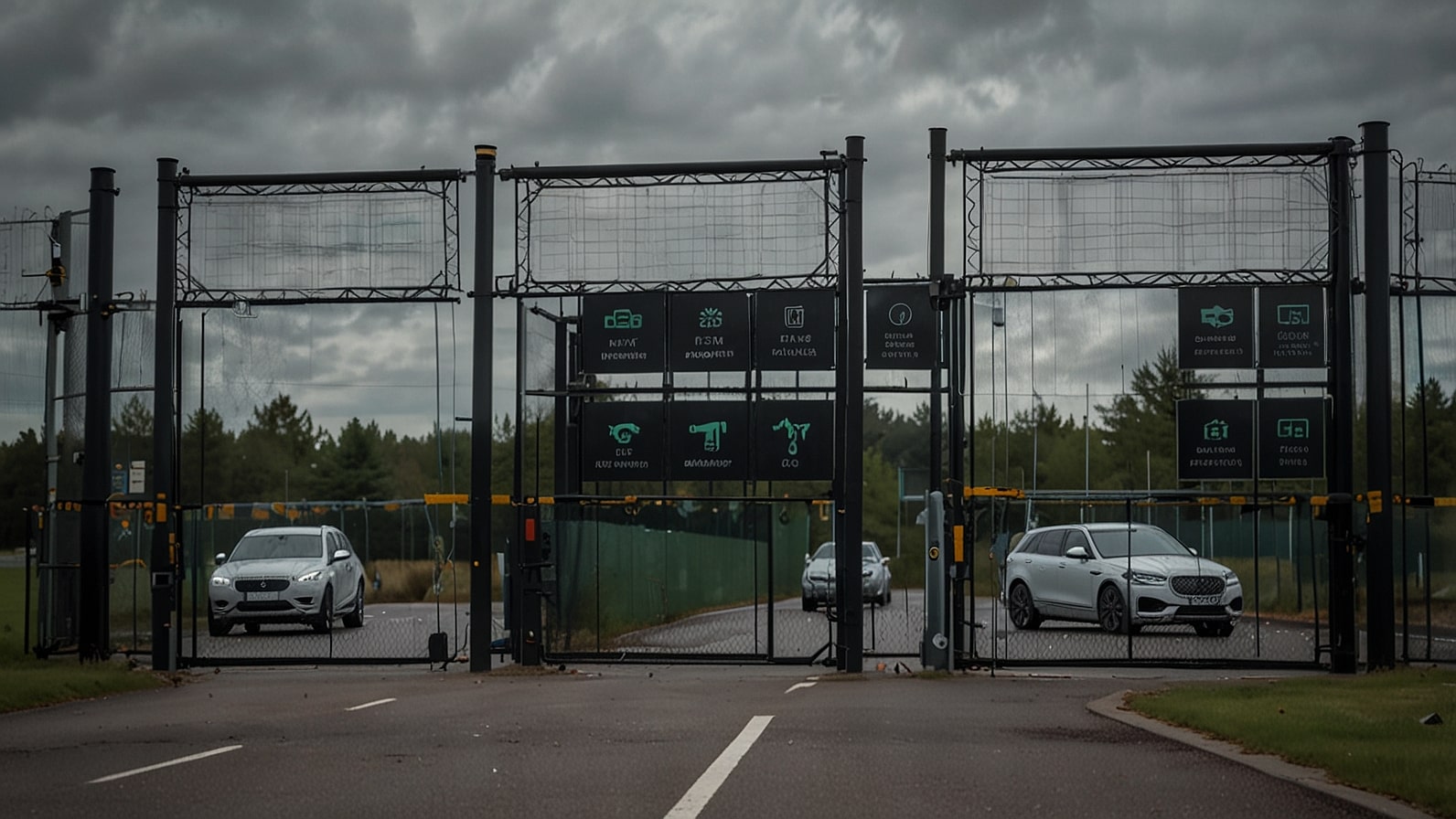
Closed gates of Jaguar Land Rover’s Solihull plant with digital cyberattack graphics, illustrating the 2025 shutdown of UK facilities caused by a cybersecurity breach.
Jaguar Land Rover’s Solihull plant stands idle amid a major cyberattack that forced an extended shutdown of UK manufacturing facilities in September 2025, disrupting production of Range Rover and other models.
Share
Facebook Twitter LinkedIn Pinterest Email

The legendary British car manufacturer Jaguar Land Rover (JLR) has prolonged the closure of its manufacturing facilities in the UK after a sophisticated cyberattack took down its operations, the company reported on September 17, 2025.

The attack, which targeted the key production systems of JLR, has rocked the automotive sector and raised concerns about the vulnerability of global supply chains. As the company scrambles to restore operations at Solihull, Halewood, and Wolverhampton, here’s what’s happening and why it matters.
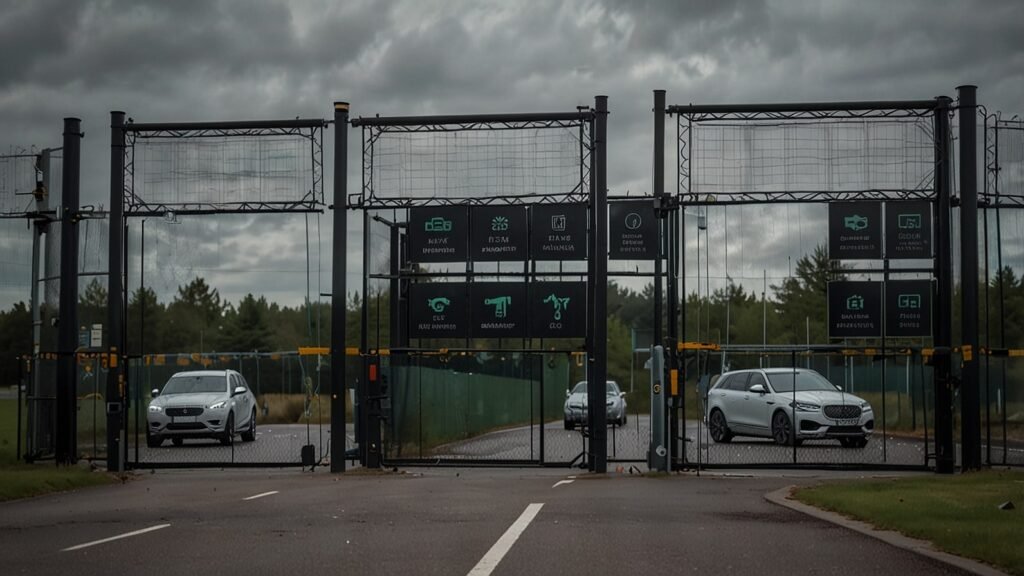
Closed gates of Jaguar Land Rover’s Solihull plant with digital cyberattack graphics, illustrating the 2025 shutdown of UK facilities caused by a cybersecurity breach.
Jaguar Land Rover’s Solihull plant stands idle amid a major cyberattack that forced an extended shutdown of UK manufacturing facilities in September 2025, disrupting production of Range Rover and other models.

Hacktivism Paralyses Manufacturing

The cyberattack, detected earlier this week, disrupted JLR’s digital infrastructure and forced a shutdown of production lines responsible for models like the Range Rover, Jaguar F-Pace, and Discovery. Although JLR has not confirmed whether ransomware or a data breach was involved, insiders suggest the attack struck the company’s manufacturing execution systems, which control assembly operations. The result: an immediate halt at major UK facilities.

The Solihull plant, where the Range Rover is built, and the Halewood plant, which produces the Discovery, were among the worst hit. Wolverhampton’s engine facility, critical to JLR’s powertrains, also remains offline. JLR has not given a timeline for full recovery but confirmed it is working around the clock with cybersecurity specialists. Customers awaiting vehicle deliveries are now bracing for extended delays.

Supply Chain and Worker Impact Ripples

The prolonged closure is hitting JLR’s 40,000 UK employees hard, with many facing furloughs or reduced hours. Dealerships are preparing for inventory shortages, a serious blow in the competitive luxury SUV market. As part of Tata Motors of India, JLR is also a key contributor to the UK economy, meaning disruptions are reverberating across suppliers and local communities.

Analysts estimate the financial toll could reach millions of dollars daily, adding further strain to a company already grappling with supply chain issues. The incident highlights how modern auto manufacturing, which relies on just-in-time supply chains and automated systems, has become a prime target for cybercriminals.

JLR’s Response and Industry Implications

JLR has brought in external cybersecurity experts to assess the full scale of the attack and prevent further breaches. The company has notified the UK government, including the National Cyber Security Centre, and is cooperating fully to trace the origins of the attack. While JLR has confirmed no customer data has been compromised, employees and partners have been urged to remain cautious of phishing and other secondary threats.

The wider auto industry is watching closely. As vehicles become increasingly reliant on software from infotainment systems to autonomous driving, cybersecurity is emerging as a critical frontier. The JLR attack may accelerate investment in more resilient digital infrastructure and potentially influence the company’s push into electric vehicles (EVs), where secure systems will be central.

What This Means for JLR Customers

For now, JLR customers face uncertainty. Buyers awaiting deliveries should contact their dealers for updates, while potential customers may encounter limited stock in showrooms. JLR has pledged to honour existing orders, though delays are inevitable until production resumes. A special support line has been made available on the company’s UK website to address customer queries.

The Future of Manufacturing in the Digital Era

This cyberattack serves as a wake-up call for the entire automotive industry. As factories become more digitally interconnected, robust cybersecurity measures are no longer optional; they are essential. JLR’s ongoing battle to restore Solihull, Halewood, and Wolverhampton plants underscores the urgent need for industry-wide security standards.

While JLR fights to recover from what could be the most significant crisis in its modern history, the bigger question remains: can the global auto industry build resilience in an age where digital threats can bring even the most advanced production lines to a standstill? The coming weeks will determine not only JLR’s recovery path but also how the industry adapts to the realities of the digital era.


Share. Facebook Twitter Pinterest LinkedIn Tumblr Email
Previous ArticleGenesis GMR-001 Hypercar Unveiled: Specs, Top Speed, Price & Concept
Next Article BMW iX3 2025 – Premium SUV Delivering Bold Design, Futuristic Safety, And Smooth Ride Built For Enthusiastic Global Generations
David Chen
David Chen

David Chen is an automotive and mobility markets writer at Primary Ignition, focused on the financial side of how the world builds and buys vehicles. His coverage centers on electric vehicles and the global EV competition, including BYD's vertical integration, Chinese automakers scaling abroad, and the legacy OEMs adapting to them. He also digs into the financing layer that rarely makes headlines but moves the numbers: auto-loan structures, the EV lease revival, and how Fed rate decisions ripple through dealer floors and automaker balance sheets. His work extends to emerging mobility, from eVTOL timelines to AI-driven mobility finance. David writes for readers who want the investment story underneath the product story, the reason a factory tour or a leasing promotion actually matters to a stock. His coverage spans automotive stocks, e-mobility, earnings, and market commentary.

Related Posts

Electric Vehicles

The BYD Vertical Integration Premium: Why the EV King is Still Rated a Wall Street “Strong Buy”

May 27, 2026
Automotive & E-Mobility

Behind the Tariff Whiplash: Calculating the True Cost of Banning Chinese Autos from the U.S.

May 24, 2026
Automotive & E-Mobility

How the Rise of Chinese Auto Brands in Southeast Asia Is Creating a Financing Vacuum That Global Banks Are Racing to Fill

May 22, 2026
Add A Comment
Leave A Reply Cancel Reply

Dividends

FSLY Stock Is Up 127% in a Year — So Why Are Investors Still Nervous?

Sarah MitchellMay 28, 2026

If you look at a chart of Fastly’s stock long enough, it nearly resembles a…

IonQ’s $1.8 Billion Bet: How a Quantum Underdog Is Trying to Outbuild Everyone

May 27, 2026

Why the Fed Holding Rates Steady Is More Important to Auto Industry Financing Than to Almost Any Other Sector

May 27, 2026

The BYD Vertical Integration Premium: Why the EV King is Still Rated a Wall Street “Strong Buy”

May 27, 2026

Why Warren Buffett Was Right About Airline Stocks — Until He Wasn’t — and What His Original Logic Teaches You Now

May 26, 2026
Our Picks

FSLY Stock Is Up 127% in a Year — So Why Are Investors Still Nervous?

May 28, 2026

IonQ’s $1.8 Billion Bet: How a Quantum Underdog Is Trying to Outbuild Everyone

May 27, 2026

Why the Fed Holding Rates Steady Is More Important to Auto Industry Financing Than to Almost Any Other Sector

May 27, 2026
ABOUT PRIMARY IGNITION

Primary Ignition is your trusted source for automotive, defense, and industrial stock news. We deliver real-time analysis, market insights, and expert commentary to help you navigate the dynamic world of equity news.
Primary Ignition Media

QUICK LINKS
  • Home
  • Automotive & E-Mobility
  • Defense & Aerospace
  • ETFs
TOP CATEGORIES
  • Automotive & E-Mobility
  • Electric Vehicles
  • ETFs
  • Industrial
  • Tech & Software
INVESTMENT DISCALIMER

Investment Warning: All information provided on Primary Ignition is for educational and informational purposes only. Stock markets involve substantial risk of loss and are not suitable for every investor. Past performance is not indicative of future results. Always conduct your own research and consult with licensed financial advisors before making investment decisions. We do not provide investment advice, and no content should be considered as such.

  • Imprint
  • Privacy Policy
  • Terms of Service
  • Editorial Standards
© 2026 Primary Ignition Media. All rights reserved.

Type above and press Enter to search. Press Esc to cancel.