
Why Warren Buffett Was Right About Airline Stocks — Until He Wasn’t — and What His Original Logic Teaches You Now
For almost forty years, Warren Buffett warned anyone who would listen that investing in airlines was a bad...
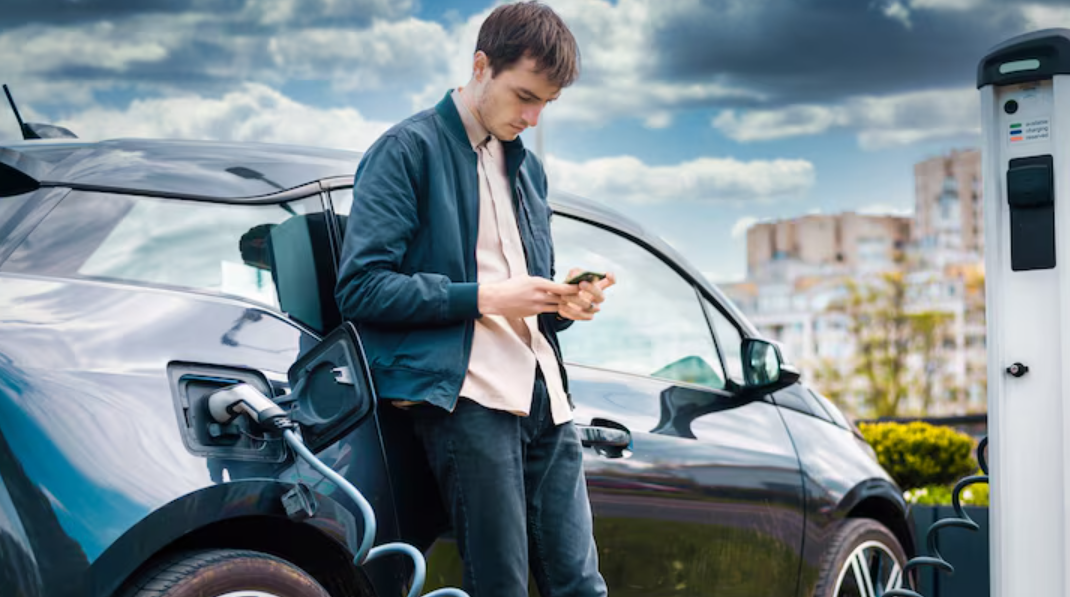
The current movement of Tesla stock has an almost theatrical quality. The shares closed at $428.35 on Friday, May 8, up more than four percent in a single session. As is always the case when this specific ticker bounces, you could feel the relief spread across trading desks. The stock had been battered two weeks prior, hovering around $373 following an unsettling earnings report. Now that it’s back, the bulls are writing notes about robotaxis and AI as if the previous quarter had never occurred.
It’s difficult to ignore how disconnected the price has become from the typical metrics used to evaluate automakers. A trailing P/E close to 391 is an act of faith rather than a metric. Forward P/E is not much more favorable around 208. However, investors appear to firmly believe that the outdated framework is inapplicable in this situation. Tesla isn’t priced like a business that sold 1.64 million vehicles in the previous year. It is priced as something else, such as a self-driving network, a robotics platform, or a wager on what Elon Musk might create in the future.
But the dip in April was instructive. The market momentarily realized that money still matters when Tesla warned of capital expenditures exceeding $25 billion and hinted at negative free cash flow through the remainder of 2026. Needham reissued a hold rating that sounded more like a shrug than a verdict as shares fell and analysts fell silent. Soft EV demand in some markets, vertical integration costs, and margin pressure all persisted. Something louder simply drowned it out once more.
This time, it was a combination of headlines. Sales in China increased. The 2026 Model Y was the first car to pass the revised advanced driver assistance standards after passing new federal safety tests. Without requiring a recall, the NHTSA discreetly concluded its investigation into steering problems with the 2023 Model Y. Then came the Intel story, which claimed that Tesla would be using Intel’s 14A process for future chip development. This collaboration put Tesla in the same conversation as Apple and Alphabet. That’s powerful fuel for a business whose investors thrive on storytelling.
The rows of completed Model Ys are still waiting for transport carriers outside the Austin gigafactory, just as they always have. The factories are operational. Deliveries are made. However, that is no longer the primary focus of the stock, and it may not have been for years. There’s a feeling that Tesla investors are pricing in a future that hasn’t yet materialized: a fleet of robotaxis making actual money, humanoid robots at scale, and an AI compute layer that justifies the expenditure. Cathie Wood remains optimistic. Wedbush remains optimistic. Sherwood News referred to them as the faithful, and they continue to pour in.
The SpaceX question is also present in the background. Some analysts question whether Tesla will lose some of its mystique if SpaceX eventually goes public and whether the Musk premium, which is an intangible component of the share price, will be redistributed. It is feasible. Since belief in this stock has never moved in a straight line, it’s also possible that nothing changes.
It’s not the rally or the dip that sticks out when you watch this unfold. It’s the extent to which Tesla has taught its investors to look beyond the current quarter. Sales have stagnated. There is pressure on margins. There is a negative cash flow. As long as the next chapter sounds intriguing, none of it seems to matter. The market continues to respond to the question of whether that holds true for the remainder of 2026 on a weekly basis.
For almost forty years, Warren Buffett warned anyone who would listen that investing in airlines was a bad...
From the street, a building in Santa Monica doesn’t seem like much. It’s a low-key, beachfront location where...
Oklo’s headquarters are located in a section of an office park in Santa Clara. From the outside, it...