
Forvia Anand India Seating JV Targets 10% Market Share
The Forvia Anand India seating joint venture, announced October 7, 2026, is the clearest sign yet that even...
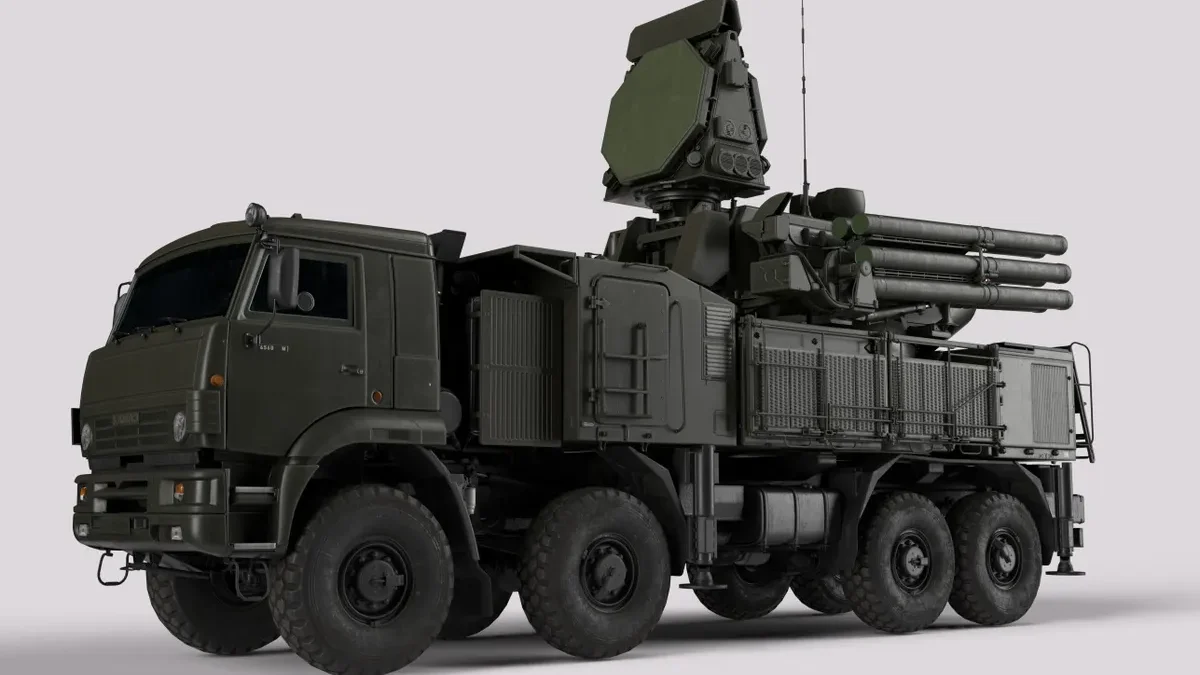
A Congressional Budget Office analysis has put the cost of US combat operations against Iran at roughly $38 billion through August 1, but the more consequential finding is the scale of US missile interceptor depletion: the conflict has consumed between one-half and two-thirds of the combined inventory of four key interceptor systems, and rebuilding those stocks could take at least five years even if production rates increase.
The four systems covered by the estimate are Patriot, Terminal High Altitude Area Defense (THAAD), Standard Missile-3 (SM-3), and Standard Missile-6 (SM-6). According to the CBO’s cost analysis of combat operations against Iran, these interceptors accounted for $13.1 billion of the $21.7 billion the Pentagon would need to spend to replace expended munitions. Land-attack cruise missiles accounted for another $7.3 billion, with $1.2 billion for other munitions categories.
Unit costs help explain why the inventory problem is so hard to fix quickly. The CBO report confirms costs of roughly $4 million per Patriot or SM-6 interceptor, $12 million for a THAAD interceptor, and $28 million for an SM-3. These are weapons produced at relatively low rates, and the US had already drawn down stocks defending Israel before Operation Epic Fury began.
The CBO noted that the Department of Defense does not publicly disclose total interceptor inventory levels and declined to respond to CBO’s information requests. Analysts instead compared reported expenditures against historical procurement data. The agency cautioned that its estimate carries considerable uncertainty as a result.
Operation Epic Fury launched on February 28 with the stated objective of dismantling Iran’s security apparatus, including its missile production and naval capabilities, and ensuring Iran never acquires nuclear weapons, according to the DoD Inspector General’s quarterly report to Congress. The initial phase involved roughly 250 tactical aircraft, including approximately 90 from two carrier strike groups, supported by bombers, tankers, and Army air-defense and artillery units.
The CBO’s $38 billion figure covers expended munitions, equipment losses, increased flying hours, fuel, and other operational costs through August 1. The largest non-munitions items were $10.4 billion for increased flying hours, $2.7 billion for fuel, and $1.9 billion to replace equipment lost in combat, including a THAAD radar destroyed by Iran.
A separate DoD IG estimate placed the cost at $33.4 billion through June 29. That figure breaks down as $7.4 billion in cumulative incremental obligations, $22.3 billion in expended munitions, and $3.7 billion in equipment losses, per the IG’s quarterly report. It excludes infrastructure repair costs. The CBO’s higher figure reflects both the later cutoff date and a broader cost methodology.
The administration requested $87.6 billion in supplemental funding in June, including $67.1 billion for the DoD and $42.3 billion identified as directly conflict-related. That conflict-related figure runs about 10% above CBO’s own estimate through August 1. CBO estimates each additional month of relatively low-intensity operations would add roughly $2 billion to $3 billion to the total.
For defense investors, the US missile interceptor depletion story points squarely at RTX (RTX), which produces Patriot, SM-3, and SM-6 interceptors, and Lockheed Martin (LMT), the THAAD manufacturer. A five-year minimum rebuild timeline, even under optimistic production assumptions, means the order pipeline is structural rather than a one-time procurement surge.
The bull case is straightforward: inventory levels that took years to accumulate have been drawn down in months, and CBO has handed Congress a public accounting of the gap. The supplemental appropriations request provides the funding mechanism, assuming it clears the legislative calendar.
The bear case sits in two places. First, the Pentagon’s refusal to share inventory data with CBO introduces real uncertainty into the one-half to two-thirds depletion estimate; the actual drawdown could be shallower. Second, production rate increases take time to negotiate and fund, and the five-year rebuild clock does not start until contracts are signed and appropriations are enacted.
CBO also flagged the depleted interceptor stocks as a particular liability in a potential conflict with China, given Beijing’s large inventories of ballistic and cruise missiles. That framing elevates the rebuild from an Iran-specific accounting exercise to a broader readiness question, and it gives Congress a harder argument against delay. The pending supplemental vote is the near-term trigger to watch.
The Forvia Anand India seating joint venture, announced October 7, 2026, is the clearest sign yet that even...

The Morgan Stanley Wells Fargo upgrade, issued Monday ahead of the bank’s earnings next Tuesday, is more than...

Stellantis Italy output rose 28% to 340,745 vehicles in the first nine months of 2026, putting the automaker...