
US Army Brain Health Assessment Hits 97%, but Gaps Loom Large
The US Army brain health assessment program has reached 97% completion across active duty, National Guard, and Reserve...

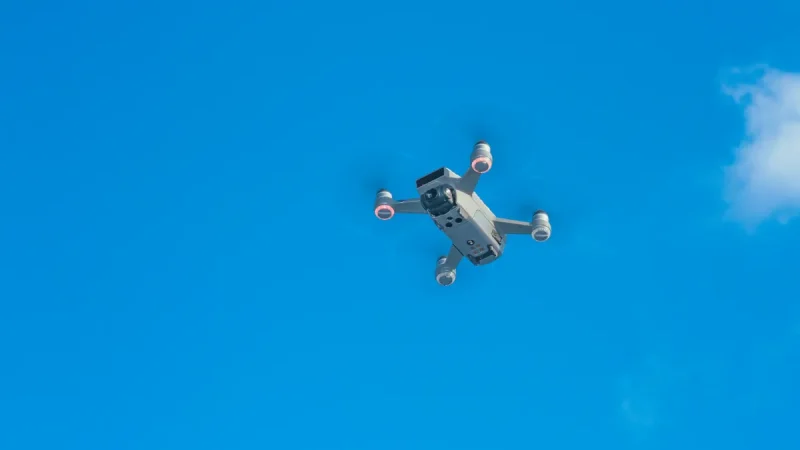
A decisive move by the U.S. Federal Communications Commission (FCC) is reshaping the competitive landscape for American drone manufacturers. By implementing Section 1709 of the FY25 National Defense Authorization Act ahead of schedule, the regulator has erected significant barriers for foreign-made unmanned aerial systems, potentially benefiting domestic players like Red Cat Holdings Inc. While this provides a structural advantage, the company’s financial metrics reveal the substantial challenge of converting regulatory support into sustainable profitability.
On December 23, the FCC announced the immediate enforcement of the new rule, which places certain foreign drones and their critical components on a “Covered List.” This action effectively blocks FCC authorizations for these products, making their lawful operation in the U.S. market impossible. The policy stems from an interagency review, led by the White House, that categorized foreign drones as an “unacceptable risk” to national security and sovereignty.
Market analysts at Needham & Company highlight that all newly affected foreign UAS and components are now excluded from FCC approvals. The consequences are multifaceted:
* A prohibition on market access for newly listed foreign unmanned systems.
* Opportunities for U.S. manufacturers compliant with the NDAA to fill the resulting supply gaps.
* A pronounced competitive edge for platforms like Red Cat’s Black Widow, which is developed and manufactured entirely within the United States.
The company’s latest earnings report, released on November 13 for the third quarter of fiscal 2025, paints a picture of aggressive expansion coupled with deep losses. Key figures include:
* Q3 2025 revenue of $9.65 million, representing a staggering 646% increase year-over-year.
* Nine-month revenue for 2025 totaling $14.49 million.
* A net loss for the first nine months of approximately $52.42 million.
* A substantial cash position of $206.43 million, providing runway for operations and development.
Valuation ratios, such as a price-to-sales multiple of around 70 and a price-to-book ratio of approximately 3.8, indicate that investor sentiment is heavily predicated on future growth rather than current earnings. Management’s guidance projects Q4 2025 revenue between $20 million and $23 million, with full-year 2025 revenue anticipated to be in the range of $34.5 million to $37.5 million.
Following the FCC announcement, Red Cat’s shares experienced notable intraday volatility. On December 23, the stock initially gained nearly 5% before reversing course to close the session down 1.1%. The equity currently trades around $9, equating to a market capitalization of roughly $1.1 billion. Its 52-week range of $4.58 to $16.70, combined with an average daily trading volume exceeding 10 million shares, underscores the high volatility inherent to the defense drone sector.
The company’s strategic position is bolstered by its involvement in key U.S. Army programs. Its Black Widow drone is part of the Short Range Reconnaissance (SRR) program. Recently, the Low Rate Initial Production contract (Tranche 2) under this program was expanded to a value of approximately $35 million. The company has also made executive changes, promoting Christian Ericson to Chief Operating Officer and appointing Christian Morrison as Chief Financial Officer.
Needham maintains a Buy rating on Red Cat but adjusted its price target downward to $12 in November from a previous $17. The average analyst consensus price target stands at $15, suggesting perceived upside from current levels. However, the wide dispersion among analyst estimates reflects significant uncertainty regarding the company’s ability to execute and scale its business model.
The evolving regulatory environment clearly favors domestic drone providers. For Red Cat, the coming quarters will be critical. The core challenge remains translating political and regulatory tailwinds into accelerating revenue and a scalable, profitable operation—all while navigating substantial current losses, ambitious growth targets, and a valuation that already prices in significant future success.
The US Army brain health assessment program has reached 97% completion across active duty, National Guard, and Reserve...
Kongsberg’s Poland counter-drone factory plan, announced at the Warsaw Security Forum on October 12, is more than a...

Three U.S. Army soldiers received Purple Hearts for their actions during the Operation Epic Fury Purple Hearts ceremony...